
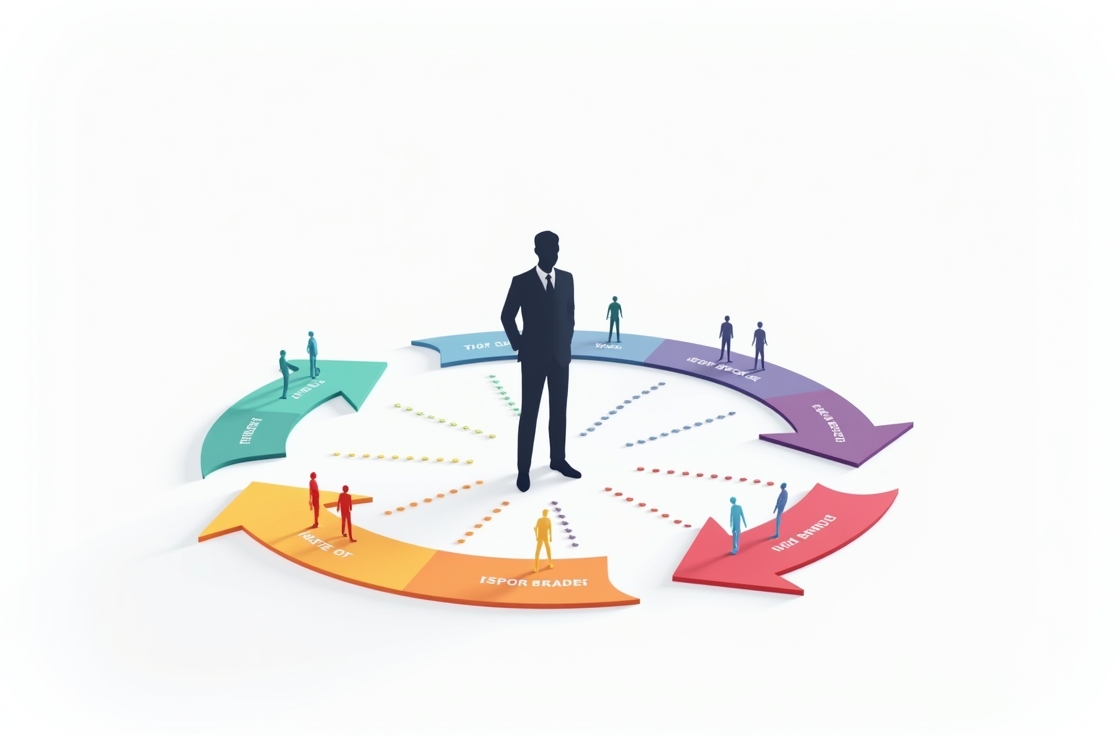
You’ve just promoted your top performer to a leadership role. Six months later, their team is disengaged, projects are stalling, and you’re wondering what went wrong. The problem? That high performer never saw their blind spots coming.
A 360 degree leadership assessment solves this by collecting feedback from every angle—supervisors, peers, direct reports, and the leaders themselves. Unlike traditional top-down reviews that rely on a single manager’s perspective, 360 assessments reveal the full picture of how leaders actually show up in the workplace. With 85% of Fortune 500 companies now using this approach, it’s become the gold standard for developing authentic, self-aware leaders who can navigate today’s complex organizational challenges.
In this comprehensive guide, you’ll discover exactly how 360 degree leadership assessments work, why they outperform traditional reviews, and how to implement them for maximum impact in your organization.
What Is a 360 Degree Leadership Assessment?
A 360 degree leadership assessment is a structured feedback process that collects performance observations from multiple sources surrounding a leader. Unlike traditional reviews where only a manager evaluates performance, 360 assessments gather input from supervisors, peers, direct reports, and the leader themselves.
Think of it as creating a complete view—literally 360 degrees—of how a leader operates. Each rater group sees different aspects of leadership behavior, and together they reveal patterns that single-source feedback simply cannot capture.
The Core Components
Every effective 360 degree leadership assessment includes these elements:
- Self-Assessment: Leaders rate their own performance across key competencies
- Manager Feedback: Direct supervisors evaluate leadership effectiveness and strategic alignment
- Peer Reviews: Colleagues at the same level provide insights on collaboration and influence
- Direct Report Input: Team members share how the leader’s decisions and behaviors impact them daily
- Competency Framework: Standardized criteria measuring specific leadership behaviors
According to research by Jack Zenger, Chief Research Officer at Zenger Folkman, “360 is excellent at helping people understand when they really are doing something wrong—when they have a fatal flaw.” The multi-source approach reveals discrepancies between self-perception and how others experience a leader’s behavior.
360 Assessment vs. Traditional Performance Review
| Dimension | 360 Degree Assessment | Traditional Review |
|---|---|---|
| Feedback Sources | Multiple (peers, reports, supervisors, self) | Single (manager only) |
| Bias Risk | Lower (diverse perspectives) | Higher (single-source bias) |
| Self-Awareness Development | High (reveals blind spots) | Moderate (limited perspective) |
| Primary Purpose | Development & growth | Evaluation & compensation |
| Behavioral Change Impact | Stronger (d = 0.25 for developmental use) | Weaker (evaluative focus) |
The distinction matters. Meta-analytic research by Smither, London, and Reilly analyzed 26 longitudinal studies and found that developmental 360 programs produce three times stronger behavioral change than administrative evaluations.
Why 360 Degree Leadership Assessments Outperform Traditional Reviews
The power of 360 assessments lies in what psychologists call “perceptual accuracy”—the gap between how we think we show up versus how others actually experience us.
The Self-Other Agreement Gap
Most leaders suffer from what researchers call “illusory superiority.” We genuinely believe we’re better listeners, more collaborative, and more decisive than we actually are. Traditional reviews from a single manager can’t fully expose these blind spots because that manager only observes a fraction of our daily interactions.
Key Finding: Leaders who rate themselves significantly higher than others report more negative reactions to 360 feedback—but they also show the greatest potential for improvement once they accept the data.
Dr. Lisa A. Steelman from Florida Institute of Technology found that “leaders who work in a favorable feedback environment prior to attending a leadership-development program that incorporates 360-degree feedback had better outcomes than those who work in an unfavorable feedback environment.”
Bias Reduction Through Multiple Perspectives
Single-source reviews are vulnerable to numerous biases—recency bias, halo effects, personal conflicts, and unconscious prejudices. When you aggregate feedback from 7-15 raters across different relationships, individual biases wash out while consistent patterns emerge.
A leader might appear decisive to their manager but controlling to their team. They might seem collaborative with peers but dismissive with vendors. These nuances only surface through multi-rater feedback.
The Development vs. Evaluation Framework
Here’s what separates effective 360 programs from failed ones: purpose. Research shows that when 360 feedback is used for development rather than evaluation, behavioral change increases dramatically.
- Developmental approach: Focus on growth, coaching, and action plans (Effect size: 0.25)
- Evaluative approach: Tied to compensation, promotion decisions, or performance ratings (Effect size: 0.08)
The difference? When stakes are low and support is high, leaders engage openly with difficult feedback rather than defending against it.
Proven Results: Statistics That Demonstrate ROI
The business case for 360 degree leadership assessments isn’t theoretical—it’s backed by compelling data from organizations worldwide.
Performance and Engagement Metrics
- 14.9% average performance improvement for organizations implementing 360 feedback (SHRM, 2024)
- 25% boost in employee engagement reported by companies using structured 360 programs (SHRM, 2024)
- 15.9% better turnover rates among employees receiving regular 360 feedback (9cv9, 2024)
- 78% of professionals more likely to stay with companies investing in continuous feedback (Industry Research, 2024)
Real-World Case Studies
Microsoft’s Manager Excellence Review Program demonstrates the transformation possible with well-executed 360 assessment. After implementing their comprehensive system, Microsoft saw:
- 40% improvement in employee satisfaction scores
- 20% increase in team collaboration metrics
- Successful cultural shift from annual reviews to continuous feedback
Similarly, Deloitte’s replacement of traditional reviews with 360 feedback drove 14% surge in engagement and 40% improvement in leadership capabilities within just one year.
Market Growth and Adoption Trends
The 360 assessment market tells its own story. Currently valued at $1.11 billion in 2024, projections show growth to $2.49 billion by 2032—a 10.6% compound annual growth rate that reflects increasing organizational confidence in multi-rater feedback.
This isn’t just large enterprises either. 70% of high-performing companies across all sizes now use multi-source feedback systems as a core component of their leadership development strategy.
For organizations seeking faster, more affordable alternatives to traditional 360 platforms, AI-powered solutions like RuleYourMind deliver comprehensive leadership insights in minutes rather than weeks, at a fraction of traditional costs.
How to Implement a 360 Degree Leadership Assessment Successfully
Implementation makes or breaks 360 programs. Follow this proven framework to maximize results while avoiding common pitfalls.
Step 1: Define Clear Objectives and Competencies
Start with the end in mind. What specific leadership behaviors drive success in your organization? The Center for Creative Leadership recommends mapping competencies to organizational challenges and strategic priorities.
Effective competency frameworks typically include:
- Strategic thinking and decision-making
- Communication and influence
- Team development and coaching
- Collaboration and relationship building
- Accountability and execution
- Adaptability and change leadership
Keep assessments focused—20-30 questions measuring distinct competencies prevent rater fatigue while maintaining data quality.
Step 2: Select the Right Raters
Quality matters more than quantity. Research shows optimal rater selection includes:
- Minimum threshold: At least 2-3 raters per group for anonymity
- Ideal range: 7-15 total raters for statistical reliability
- Selection criteria: Regular interaction (weekly/monthly) and direct observation of behaviors
Collaborate with participants on rater selection. When leaders help choose their raters, they’re more likely to accept and act on feedback.
Step 3: Ensure Confidentiality and Psychological Safety
Anonymity drives honesty. Clearly communicate that individual rater responses remain confidential, with results reported only in aggregate by group. This increases candor by 25-40% according to platform research.
Use secure platforms with role-based access controls. Set minimum group sizes (3+ raters) to prevent identification. Emphasize repeatedly that 360 feedback is developmental, not punitive.
Step 4: Provide Context and Training
Both raters and recipients need preparation. Brief training sessions should cover:
- How to provide specific, behavioral feedback (not vague generalities)
- Rating scale interpretation and calibration
- Common biases to avoid (halo effect, recency bias)
- Time commitment expectations (15-20 minutes per assessment)
Organizations offering rater training see 37% improvement in feedback quality.
Step 5: Facilitate Professional Interpretation
Raw data without context creates confusion. Every 360 participant should receive one-on-one debriefing with a trained coach or HR partner to:
- Process emotional reactions to feedback
- Understand discrepancies between self and others’ ratings
- Identify 2-3 priority development areas
- Create specific, measurable action plans
Dr. Kenneth M. Nowack emphasizes that “meta-analytic findings suggest these interventions can lead to significant change in behavior, but the effect sizes are typically modest, and when done poorly may lead to both disengagement and a decline in performance.”
Professional coaching increases 360 effectiveness by 55-60% according to longitudinal studies.
7 Best Practices from Leading Organizations
These evidence-based practices separate high-impact 360 programs from those that waste time and erode trust.
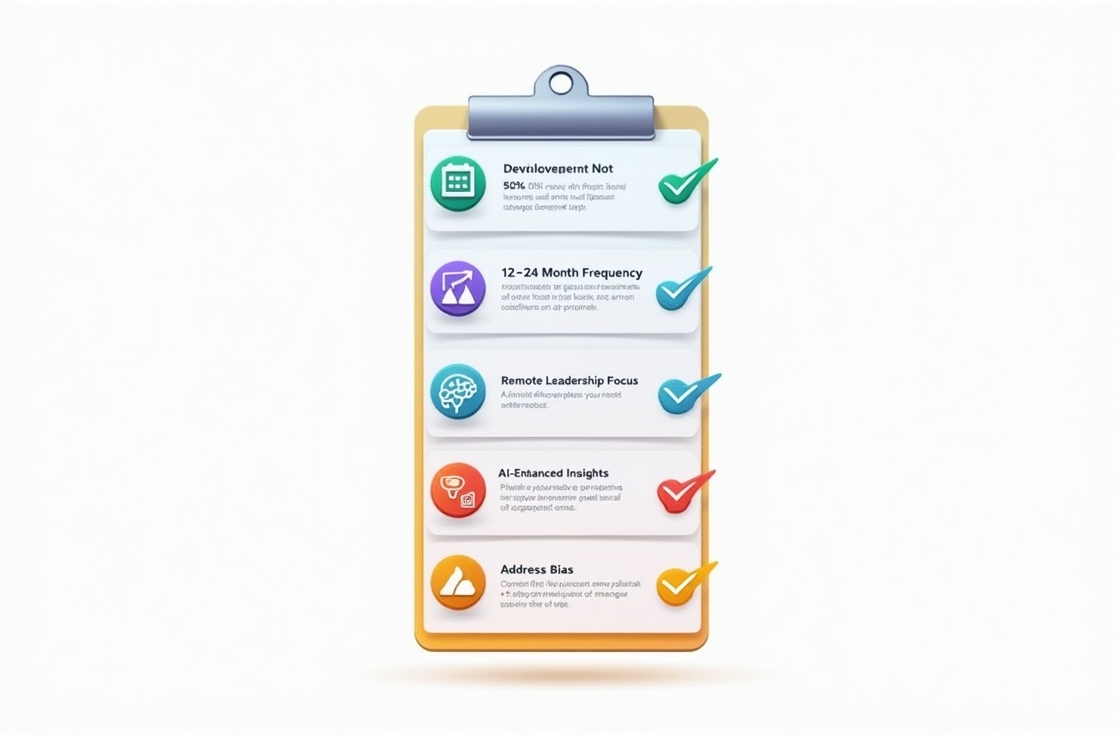
1. Use 360 for Development, Not Evaluation
Keep 360 feedback separate from performance reviews, compensation decisions, and promotion considerations. When leaders know their candid feedback won’t affect their bonus, they engage authentically rather than defensively.
Companies mixing 360 with evaluations see 60% report employee buy-in challenges according to SHRM research.
2. Maintain Optimal Frequency
The ideal cycle is 12-24 months. This timeframe allows leaders to implement feedback, demonstrate behavioral change, and measure progress without causing feedback fatigue.
Supplement annual comprehensive assessments with quarterly pulse surveys on specific competencies aligned with current organizational priorities.
3. Balance Positive and Developmental Feedback
Research on feedback ratios shows that a 3:1 ratio of positive to constructive feedback optimizes engagement and receptivity. Pure deficit-focused feedback triggers defensiveness and disengagement.
Strengths-based development—building on what leaders do well—produces better results than exclusively fixing weaknesses.
4. Customize Competencies for Remote Leadership
With hybrid work now standard, update competency models to measure remote-specific behaviors. Research by Zenger Folkman identified five critical remote leadership competencies:
- Cultivating trust across distance
- Anticipating problems proactively
- Supporting virtual collaboration
- Clear, consistent communication
- Resilience under pressure
5. Integrate AI for Enhanced Insights
Modern platforms use artificial intelligence to analyze patterns invisible to human reviewers. AI capabilities now include:
- Sentiment analysis identifying themes in written comments
- Predictive analytics forecasting performance and engagement trends
- Bias detection flagging potential rating inconsistencies
- Automated development plan recommendations
Organizations implementing AI-enabled 360 platforms report 45% increases in participation and 27% rises in engagement scores.
Platforms like RuleYourMind leverage AI to deliver personalized leadership insights instantly, eliminating the 6-12 week wait typical of traditional 360 processes.
6. Create Accountability Systems
Feedback without follow-up generates cynicism. Build accountability through:
- Individual development plans with specific, measurable goals
- Quarterly check-ins with coaches or managers
- Progress tracking dashboards
- Public commitments to 1-2 priority behaviors
The most effective programs repeat 360 assessments after 12-18 months to measure behavioral change and celebrate improvements.
7. Address Bias Systematically
Despite multiple raters, 360 assessments remain vulnerable to bias. Mitigate through:
- Rater training on unconscious bias recognition
- Behavioral anchors defining each rating point with specific examples
- Diverse rater panels representing different demographics and perspectives
- AI-powered bias detection identifying suspicious patterns
Organizations implementing bias-reduction strategies see 25-30% improvement in perceived fairness.
Common Mistakes That Undermine 360 Degree Leadership Assessments
Even well-intentioned programs fail when organizations make these critical errors.
Mistake #1: Survey Fatigue and Overload
Questionnaires exceeding 40 questions cause fatigue; beyond 70 questions, disengagement becomes severe. Best practice is 20-30 focused questions taking 15-20 minutes to complete.
Stagger assessment cycles so raters aren’t simultaneously evaluating multiple people. Rotate rater selection to prevent burnout.
Mistake #2: Lack of Clear Purpose
When participants don’t understand why they’re completing 360 feedback or how results will be used, response quality plummets. Communicate objectives explicitly: “This assessment supports your leadership development. Results won’t affect your performance rating or compensation.”
Mistake #3: Poor Facilitation of Results
Handing someone a 15-page report without interpretation creates more confusion than clarity. Research by Steelman and colleagues shows that feedback environment dramatically impacts outcomes.
Leaders need skilled facilitators to help them understand rating discrepancies, process emotional reactions, and translate insights into actionable development plans.
Mistake #4: Confusing Anonymity with Confidentiality
Anonymity means raters’ identities aren’t revealed. Confidentiality means data is protected from unauthorized access. Both matter, but they’re not interchangeable.
Maintain anonymous feedback collection but ensure confidential data handling. Never share individual leader results publicly without explicit consent.
Mistake #5: One-and-Done Approach
Single assessments without follow-up waste resources and damage credibility. The Center for Creative Leadership recommends treating 360 as an ongoing development tool, not a checkbox exercise.
Successful programs repeat assessments on 12-24 month cycles, track progress, and celebrate improvements publicly.
Top 360 Degree Leadership Assessment Tools and Platforms for 2025
Choosing the right platform impacts participation, data quality, and ultimately ROI. Here’s how leading solutions compare.
Enterprise-Grade Platforms
Qualtrics 360: Offers advanced survey logic, sentiment analysis, and enterprise security. Best for organizations needing sophisticated analytics and customizable dashboards. Pricing is custom for enterprise clients.
Culture Amp: Integrates 360 feedback with engagement surveys and continuous feedback tools. Ideal for culture-driven companies focused on holistic employee experience. Serves over 6,500 organizations globally.
DDI Leadership Mirror: Research-backed competency frameworks with extensive validation. Tailored for large enterprises with complex leadership development needs.
Mid-Market Solutions
Lattice: Combines 360 feedback with performance management, goal tracking, and 1-on-1 tools. Strong integration with HR systems makes it popular with growing companies.
15Five: Focuses on continuous feedback culture with regular check-ins supplementing periodic 360 assessments. Particularly effective for companies transitioning from annual reviews.
Budget-Friendly Options
Primalogik: Offers competitive pricing ($5-10/employee/month) with customizable surveys and goal tracking. Solid choice for small to mid-sized teams.
SurveyMonkey 360: Leverages familiar survey interface with 360-specific features. Plans start around $25/user/month.
AI-Powered Alternative
Traditional 360 platforms require 6-12 weeks from launch to results delivery. For organizations needing faster insights, RuleYourMind’s AI-powered assessment delivers comprehensive leadership analysis in minutes, not months.
Using advanced algorithms trained on leadership competency data, RuleYourMind identifies blind spots, provides development recommendations, and creates personalized growth plans—all at a fraction of traditional 360 costs. It’s particularly valuable for startups and agile organizations that can’t afford lengthy feedback cycles.
| Platform Type | Best For | Typical Cost | Implementation Time |
|---|---|---|---|
| Enterprise Platforms | Large organizations (1,000+ employees) | Custom ($15-25/user/month) | 6-12 weeks |
| Mid-Market Solutions | Growing companies (100-1,000 employees) | $10-20/user/month | 4-8 weeks |
| Budget Options | Small teams (10-100 employees) | $5-10/user/month | 2-4 weeks |
| AI-Powered | Fast-moving organizations | $249-499 per assessment | 15-60 minutes |
Frequently Asked Questions About 360 Degree Leadership Assessments
How often should we conduct 360 degree leadership assessments?
The optimal frequency is 12-24 months according to research by the Center for Creative Leadership. This timeframe allows leaders adequate time to implement feedback, demonstrate behavioral change, and measure progress without causing rater fatigue. Fast-paced industries may benefit from 9-12 month cycles, while stable environments can extend to 18-24 months. Supplement annual comprehensive assessments with quarterly pulse surveys on specific competencies.
What’s the ideal number of raters for a 360 assessment?
Research recommends 7-15 total raters for statistical reliability, with at least 2-3 people per rater group (supervisors, peers, direct reports). Studies show that having at least 4 supervisors, 8 peers, and 9 direct reports achieves reliability coefficients above 0.70. However, practical constraints often require fewer raters—the minimum should be 2-3 per group to maintain anonymity while still capturing patterns. Collaborate with participants on rater selection to increase feedback acceptance.
Should 360 feedback be anonymous or identified?
Best practice is anonymous feedback collection with results reported in aggregate by rater group. Anonymity increases candor by 25-40% according to platform research. However, some organizations allow optional identification in one-on-one coaching sessions when the recipient agrees. The key is maintaining anonymity in the initial data collection while allowing flexibility for deeper developmental conversations. Never reveal individual rater responses without explicit consent from both parties.
Can 360 assessments be used for performance evaluation and compensation decisions?
While technically possible, it’s not recommended. Research shows developmental 360 programs produce three times stronger behavioral change (effect size 0.25) compared to evaluative use (0.08). When 360 feedback is tied to compensation, promotion, or performance ratings, participants become defensive rather than open to growth. Raters also become less candid when they know their input affects someone’s livelihood. Keep 360 separate from formal performance management to maximize effectiveness and maintain trust.
How do we address bias in 360 degree feedback?
Implement multiple bias-reduction strategies: (1) Train raters on unconscious bias recognition, (2) Use behavioral rating scales with specific examples rather than vague descriptors, (3) Ensure diverse rater panels representing different demographics, (4) Aggregate feedback across multiple raters to dilute individual biases, (5) Use AI-powered platforms that detect suspicious rating patterns. Organizations taking these steps see 25-30% improvement in perceived fairness. No system is perfectly bias-free, but multi-source feedback significantly reduces bias compared to single-rater evaluations.
What happens if someone receives overwhelmingly negative feedback?
Negative feedback triggers neurophysiological pain responses, so professional facilitation is critical. Every participant receiving difficult feedback should have a one-on-one debrief with a trained coach who can: (1) Help them process emotional reactions constructively, (2) Reframe feedback as growth opportunities rather than personal attacks, (3) Identify 2-3 priority development areas rather than trying to fix everything, (4) Create specific action plans with accountability measures. Research shows that coaching support increases 360 effectiveness by 55-60%. Without skilled facilitation, negative feedback can lead to disengagement and performance decline rather than improvement.
How much does a 360 degree leadership assessment cost?
Costs vary widely by platform and organization size. Budget platforms: $5-10 per employee per month. Mid-market solutions: $10-20 per employee per month. Enterprise platforms: Custom pricing typically $15-25 per user monthly. For a 20-person team, expect annual costs between $3,000-10,000. Traditional executive coaching with 360 assessment ranges $5,000-15,000 per person. AI-powered alternatives like RuleYourMind offer comprehensive assessments for $249-499, delivering enterprise-quality insights at a fraction of traditional costs with near-instant results.
Transform Your Leadership Development with 360 Degree Assessments
The evidence is clear: 360 degree leadership assessment works when implemented thoughtfully. With 85% of Fortune 500 companies using multi-rater feedback and proven performance improvements of 14.9%, this approach has moved from experimental to essential.
The key differentiators between successful and failed programs are straightforward: use 360 for development rather than evaluation, ensure professional facilitation and coaching, maintain confidentiality and psychological safety, and create accountability systems that drive sustained behavioral change.
Traditional 360 platforms require months to implement and thousands of dollars in annual fees. For organizations seeking faster insights without sacrificing depth, modern alternatives exist. RuleYourMind’s AI-powered leadership assessment delivers the comprehensive feedback and development recommendations of traditional 360 programs in minutes rather than months, at a fraction of the cost.
Ready to Uncover Your Leadership Blind Spots?
Get personalized leadership insights powered by AI in just 15 minutes. Discover your strengths, identify development areas, and receive a customized growth plan—no lengthy feedback cycles or enterprise budgets required.
Whether you choose a traditional 360 platform or an AI-powered alternative, the most important step is starting. Your blind spots aren’t going to reveal themselves.