
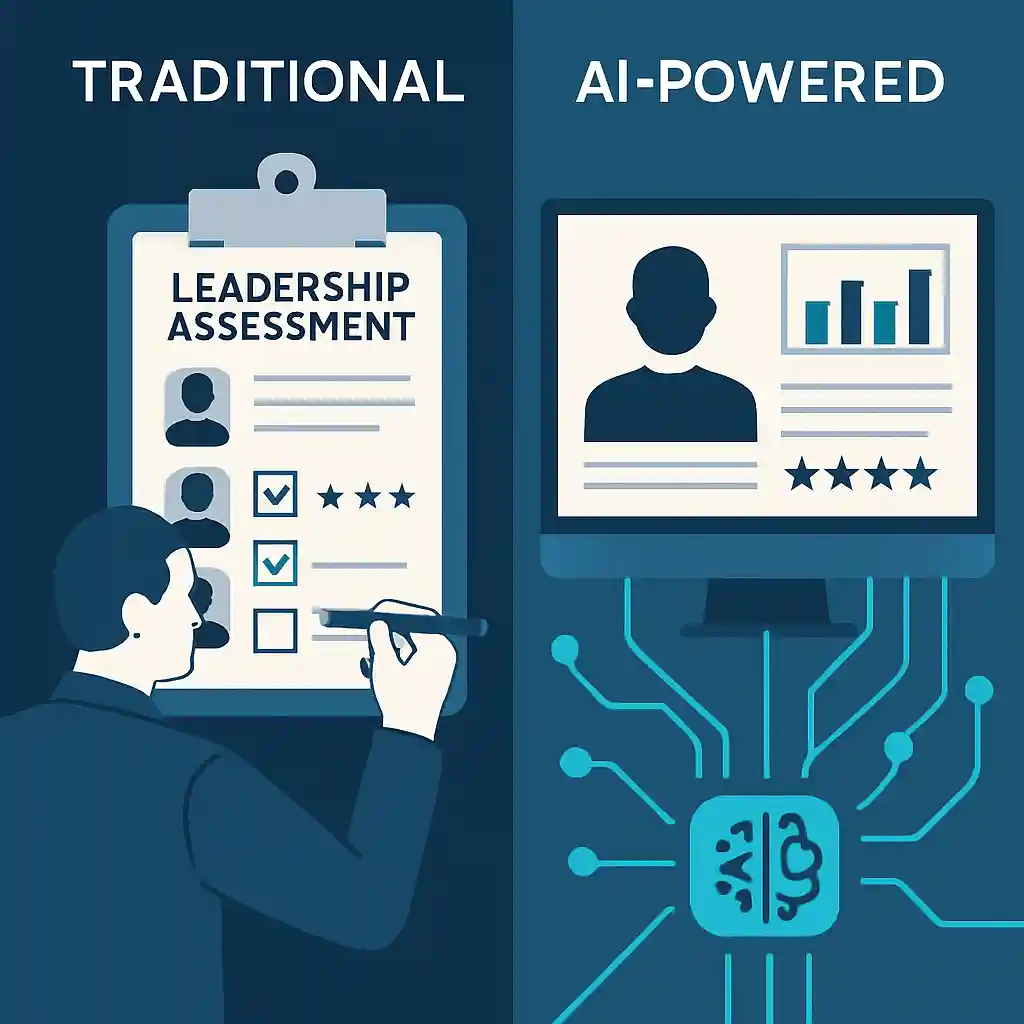
Your organization just promoted someone to team lead. Six months later, they’re struggling. The team is frustrated. Projects are delayed. Sound familiar? You’re not alone. Traditional methods of identifying future leaders miss the mark more often than they hit it.
This is where artificial intelligence enters the picture. AI tools analyze patterns that humans miss, process feedback faster than any manual system, and identify leadership potential with surprising accuracy. But how well do they actually work? Can algorithms really spot qualities like emotional intelligence and strategic thinking?
The short answer is yes, but with important nuances. Let’s explore what the research actually shows about AI’s ability to identify your organization’s next generation of leaders.
What the Data Shows About AI Accuracy
Let’s start with the numbers. Organizations using predictive talent analytics are 25% more successful at achieving leadership results compared to those relying on traditional methods. This statistic from iMocha’s 2025 research highlights a significant performance gap.
But here’s the sobering reality about traditional approaches. Only 44% of organizations report being correct when predicting leadership potential using conventional methods. The Talent Strategy Group’s 2025 Potential Report reveals that just 36% of organizations agree their current potential assessment process is even effective.
AI-enhanced decision-making shows measurable improvements. Research published in academic journals demonstrates that AI-weighted leadership decisions achieve 22% accuracy gains compared to human judgment alone. This 2025 study from SSRN analyzed over 60 peer-reviewed studies on AI in leadership contexts.
The momentum behind AI adoption is undeniable. According to Accenture’s Technology Vision 2025, 98% of executives globally believe AI will play a critical role in their organization’s strategies by the end of the decade. This near-universal recognition signals a fundamental shift in how organizations approach talent management.
How AI Tools Identify Leadership Potential
AI doesn’t work like a magic crystal ball. Instead, it processes multiple data points simultaneously to identify patterns that predict leadership success.
First, AI analyzes behavioral patterns. When you complete a leadership style assessment, AI examines how you respond across dozens of scenarios. It compares your answers against thousands of successful leaders in similar roles and industries.
Second, these tools measure competencies that matter. Modern AI platforms evaluate decision-making speed, emotional intelligence indicators, communication preferences, and strategic thinking patterns. They don’t just ask if you’re a leader. They measure how you think and respond under different conditions.
Third, AI eliminates common biases. Traditional interviews favor candidates who look or sound like current leaders. AI focuses on actual behavioral indicators and cognitive patterns rather than superficial characteristics. This doesn’t mean AI is bias-free, but it reduces certain types of human bias when properly designed.
Consider RuleYourMind’s approach. The platform uses AI to analyze your responses across multiple leadership dimensions, generating detailed reports comparable to expensive 360-degree assessments. You complete the evaluation on any device, receive insights within minutes, and get customized development plans based on your specific profile.
Key Advantages Over Traditional Methods
AI-powered leadership assessments offer several compelling advantages that traditional methods struggle to match.
Speed and efficiency stand out immediately. A comprehensive leadership assessment that once took weeks now delivers results in hours. Research from the Center for Creative Leadership shows that leaders using AI tools produced higher quality leadership challenges, scoring an average of 21 out of 24 versus 17 out of 24 for those using traditional methods. This one-week-old study demonstrates measurable quality improvements.
Cost savings matter for most organizations. Traditional 360-degree assessments range from $150 to $500 per participant for basic surveys, with comprehensive enterprise solutions exceeding $1,500 per person. According to recent analysis, AI-powered alternatives deliver enterprise-quality assessments at $50 to $150 per participant while maintaining scientific rigor.
Scalability transforms talent programs. A startup with 10 employees can access the same quality of assessment as a Fortune 500 company. You don’t need HR staff to coordinate feedback from multiple raters or manually compile reports. AI handles the heavy lifting automatically.
Data-driven insights replace guesswork. Instead of subjective opinions like “Sarah seems like leadership material,” you get specific scores across competencies like strategic thinking, team development, and change management. These metrics enable targeted development rather than generic training programs.

Understanding the Limitations
AI tools aren’t perfect, and it’s important to understand their boundaries before relying on them exclusively.
Training data quality directly affects results. If an AI system learns from data reflecting historical biases—such as leadership success patterns based primarily on late-career men—it may miss high-potential candidates who don’t fit that mold. Research from the Center for Creative Leadership emphasizes this risk across neurodivergent employees and underrepresented groups.
Cultural context can’t be ignored. An AI trained on American corporate leadership data might poorly evaluate leadership potential in organizations with different cultural values. Leadership qualities valued in hierarchical cultures differ significantly from those prized in flat organizational structures.
Human judgment still matters. Leadership involves inspiring others, building trust, and making ethical decisions in complex situations. While AI excels at pattern recognition and data analysis, it doesn’t replace the human elements of leadership assessment entirely. The most effective approaches combine AI insights with human judgment.
Implementation requires expertise. Simply buying an AI tool doesn’t guarantee results. Organizations need clear objectives, proper training for users, and processes to act on the insights generated. Without these elements, even the best AI assessment becomes another unused report gathering digital dust.
Real-World Applications and Success Stories
Organizations across industries are applying AI leadership assessment in practical ways that deliver measurable results.
Succession planning becomes proactive. Companies identify high-potential employees years before critical roles open up. When a department head announces retirement, organizations already have developed internal candidates ready to step up rather than scrambling for external hires.
First-time managers get targeted support. A college student running their first club project or an intern managing a small team can receive the same caliber of feedback as seasoned executives. RuleYourMind’s platform, for instance, provides personalized action plans that help new leaders focus on their specific development areas rather than generic advice.
Hiring decisions improve significantly. According to LinkedIn, 56% of professionals identify new interview tools as the top trend impacting how they hire. Predictive analytics research shows these tools enhance candidate sourcing by identifying the most promising talent sources and predicting success rates.
Retention challenges get addressed early. Over 50% of organizations globally struggle to retain valued talent. HR analytics data reveals that AI can identify potential factors contributing to employee turnover by analyzing engagement rates, performance metrics, and satisfaction scores.
Choosing the Right AI Leadership Assessment
Not all AI leadership tools are created equal. Here’s what to look for when evaluating options.
Scientific validation matters most. Look for tools backed by research and validated against real leadership outcomes. Platforms like DISC assessment tools and personality-based assessments should demonstrate proven correlations with leadership success.
Privacy and data security are non-negotiable. Your assessment data reveals personal information about capabilities, weaknesses, and career aspirations. Choose platforms with clear privacy policies, secure data handling, and transparent practices about how information gets used.
Actionable insights beat raw scores. Getting a number like “strategic thinking: 73” means nothing without context and guidance. Quality tools provide specific recommendations like “strengthen strategic thinking by practicing scenario planning with your team monthly.”
Accessibility supports diverse needs. The best tools work on any device, accommodate different learning styles, and remain affordable for organizations of all sizes. RuleYourMind exemplifies this approach by offering enterprise-quality assessments accessible through web or mobile interfaces at prices that don’t require Fortune 500 budgets.
Integration capabilities streamline workflows. If you already use HR management systems or learning platforms, choose tools that connect with your existing infrastructure rather than creating data silos.
For context, established tools like Hogan Assessments have long provided personality-based leadership evaluation. These traditional platforms offer validated assessments measuring routine behaviors and derailment risks. However, newer AI-powered alternatives now deliver comparable insights with greater speed, lower costs, and enhanced accessibility.
Frequently Asked Questions
Can AI really measure soft skills like emotional intelligence?
Yes, but indirectly. AI doesn’t measure emotional intelligence the way humans do, but it can identify behavioral patterns that correlate with high EQ. For example, AI analyzes how you respond to scenarios involving team conflicts, feedback delivery, and stakeholder management. These response patterns show strong correlations with emotional intelligence as measured by traditional methods. The key is understanding that AI identifies indicators of emotional intelligence rather than measuring the trait directly.
How accurate are AI leadership assessments compared to human evaluators?
Current data shows AI-enhanced methods outperform traditional human-only evaluation by significant margins. Organizations using predictive analytics achieve 25% higher success rates in leadership outcomes. However, the most effective approach combines both. AI excels at pattern recognition across large datasets while humans provide contextual judgment and evaluate qualities like authenticity and inspiration that algorithms struggle to measure.
Are these tools suitable for students and early-career professionals?
Absolutely. AI leadership assessments work for anyone from a college sophomore leading a study group to a mid-career manager overseeing a department. The tools adapt to your experience level and provide relevant insights regardless of where you are in your career journey. For students, these assessments can reveal leadership potential long before formal management opportunities arise, helping guide course selection and internship choices.
How much time does an AI leadership assessment typically take?
Most comprehensive AI assessments take 20 to 40 minutes to complete. You answer questions about how you handle various leadership situations, make decisions, and interact with teams. The platform then processes your responses and generates detailed reports within hours rather than the weeks required for traditional 360-degree feedback that involves coordinating multiple human evaluators.
What happens if the AI assessment identifies significant development needs?
Quality platforms provide specific action plans alongside assessment results. Rather than just highlighting gaps, they recommend concrete steps for improvement. For instance, if your assessment shows lower scores in delegation, you might receive suggestions like assigning stretch projects to team members, conducting weekly check-ins to monitor progress, and gradually releasing control as confidence builds. The goal is turning insights into action rather than just providing a scorecard.
Can AI assessments replace traditional performance reviews?
Not entirely, but they serve different purposes. Traditional performance reviews evaluate past job performance and set future goals. AI leadership assessments identify potential, predict future success, and guide development. Many organizations use both: performance reviews for accountability and compensation decisions, AI assessments for succession planning and targeted development. The combination provides a more complete picture than either approach alone.