Finding the best 360 leadership assessment tools can feel overwhelming when you’re trying to develop better leaders on a realistic budget. Whether you’re a student leading your first group project, a new manager building your team, or an executive refining your leadership style, getting honest feedback from multiple perspectives is one of the most powerful ways to grow. But with dozens of assessment platforms available—ranging from $95 to over $400 per person—how do you choose the right one?
This guide cuts through the noise. You’ll learn what makes a 360 assessment effective, which tools deliver the best value, and how to pick an option that fits your needs without breaking the bank. We’ll also explore why AI-powered alternatives like RuleYourMind are changing the game for people who want comprehensive leadership insights without the traditional price tag.
What Is a 360 Leadership Assessment?
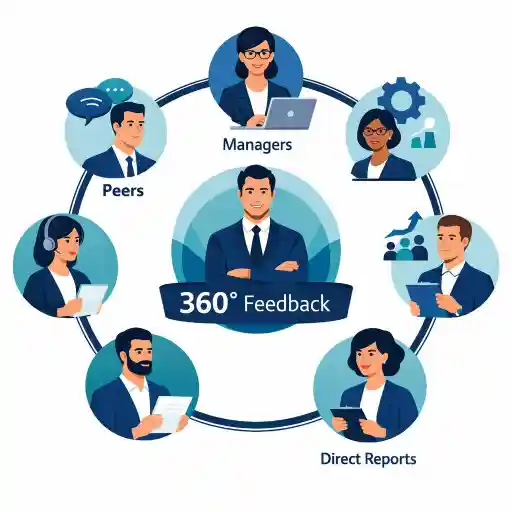
A 360 leadership assessment gathers confidential feedback about your leadership from multiple angles. Instead of just hearing from your boss, you get input from peers, direct reports, and yourself through a self-evaluation. This full-circle view—that’s where the “360 degree” name comes from—shows you how different people experience your leadership style.
Think of it like checking mirrors before changing lanes. Your rearview mirror (your boss) shows one perspective, but you also need your side mirrors (peers and team members) to see the complete picture. According to research from organizational psychologist Dr. Tasha Eurich, 95% of people believe they’re self-aware, but only 10-15% actually are.
The assessment typically includes questions about specific leadership behaviors—things like communication clarity, decision-making, team development, and strategic thinking. Your responses and those from your colleagues are then compared to identify strengths, blind spots, and development opportunities.
Why 360 Assessments Matter for Leadership Growth
Research shows that 360 feedback delivers measurable results when done right. Organizations using 360-degree feedback see 12.5% higher employee engagement compared to those relying solely on top-down reviews.
But here’s what makes these assessments truly valuable:
They uncover blind spots you can’t see on your own. You might think you’re an excellent communicator, but your team might feel differently. When feedback is combined with follow-up coaching, performance improves by an average of 14.9%.
Organizations that pair 360 assessments with professional development support see 55-60% increases in leadership effectiveness. Teams led by leaders who completed 360 assessments show a 26% boost in employee engagement.
For students running clubs or taking on internship leadership roles, this feedback helps you understand how others perceive your ideas and collaboration style. For first-time managers, it reveals whether your team feels supported or micromanaged. For executives, it provides the strategic-level insights needed to inspire entire organizations.
The return on investment is clear. Data from the Center for Creative Leadership shows organizations implementing comprehensive 360 programs see 15-20% productivity improvements within 18 months. Plus, Gallup research indicates that for every $1 invested in leadership development, the ROI is approximately $7.25 per employee.
Key Features of the Best 360 Leadership Assessment Tools
Not all 360 assessment platforms are created equal. When evaluating the best 360 leadership assessment tools, look for these essential features that separate effective systems from basic survey tools.
Validated competency frameworks: The best tools measure behaviors that actually predict leadership success. Look for assessments backed by research showing which competencies differentiate high performers from average ones. Avoid platforms that simply ask generic questions without proven validity.
Guaranteed anonymity: People give more honest feedback when they know their responses are truly confidential. Quality platforms protect respondent identity while still providing meaningful insights. This anonymity fosters trust and leads to more accurate assessments.
Clear, actionable reports: Raw data isn’t helpful if you can’t understand it. The best 360 assessment tools transform feedback into visual reports with specific development recommendations. You should be able to see patterns, identify gaps between self-perception and others’ views, and create targeted action plans.
Customization options: Every organization has different values and priorities. Look for tools that let you tailor questions, competencies, and rating scales to match what matters most in your context. A tech startup needs different leadership metrics than a healthcare organization.
Integration capabilities: Your assessment platform should work with your existing systems—HRIS platforms, learning management systems, or communication tools like Slack. Seamless integration means feedback becomes part of your regular workflow instead of an isolated event.
Automated workflows: The best platforms handle routine tasks automatically—sending invitations, tracking responses, generating reminders, and producing reports. This reduces administrative burden and ensures consistent, timely completion of assessment cycles.
Top 360 Assessment Platforms to Consider
Several established platforms have earned reputations as some of the best 360 leadership assessment tools available. Here’s what you need to know about the market leaders.
Center for Creative Leadership (CCL) Benchmarks: CCL offers comprehensive 360 assessments for managers and executives with over 50 years of research behind them. Their Benchmarks for Managers measures 16 critical leadership competencies plus 5 potential career derailers. Pricing starts at $380 per participant with a $2,000 setup fee. The depth and research backing are excellent, but the cost puts it out of reach for many individuals and smaller organizations.
Leadership Circle Profile: This assessment combines Creative Competencies and Reactive Tendencies, examining both inner mindset and outer behaviors. It’s been psychometrically validated and is available in 20 languages. The Leadership Circle Profile reveals itself quickly, putting leaders in touch with what’s working and what’s not. However, pricing is typically customized and tends to be premium.
Zenger Folkman Extraordinary Leader: Built on extensive research of over 1.5 million assessments, this platform measures 19 leadership competencies that differentiate extraordinary leaders from average ones. It uses high benchmark comparisons (75th and 90th percentiles) to set ambitious standards. Their approach focuses on building profound strengths rather than fixing weaknesses.
Software-based platforms: Modern tools like Qualtrics, Culture Amp, and BambooHR offer 360 functionality as part of broader HR platforms. These typically cost $135-$150 per employee with setup fees ranging from $800-$2,000. They integrate well with existing systems and offer good automation, but may lack the specialized leadership focus of dedicated assessment providers.
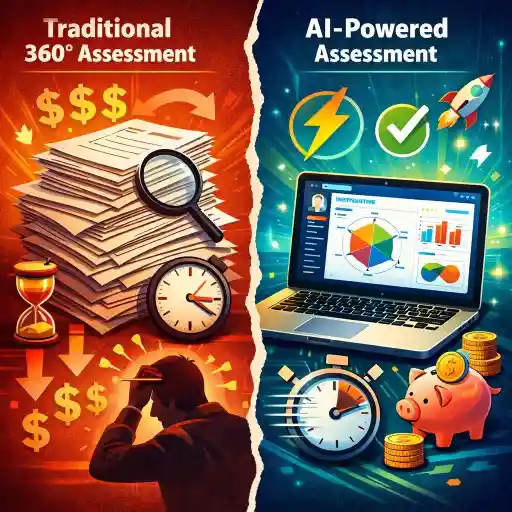
While these tools represent solid options, their cost—often $300-$500+ per person for comprehensive assessments—can be prohibitive for students, early-career professionals, or organizations with limited budgets.
How to Choose the Right 360 Assessment Tool
Selecting from the best 360 leadership assessment tools requires matching features to your specific needs and constraints. Here’s a practical framework for making your decision.
Start with clear objectives: Why are you doing this assessment? Research shows that assessments without defined goals deliver 40% less actionable insights than those with clear development objectives. Are you developing emerging leaders, identifying succession candidates, or addressing specific skill gaps?
Consider your budget realistically: Traditional 360 assessments range from $95 to over $400 per participant. If you’re assessing 10 leaders, that’s $950 to $4,000 just for the assessments—before any coaching or development support. Factor in setup fees, facilitator costs, and follow-up resources when calculating total investment.
Evaluate technical requirements: Does the platform work on all devices? Can team members complete it on mobile phones? Is the interface intuitive enough that busy executives will actually use it? Look for platforms with modern, user-friendly designs that minimize technical barriers.
Check for development support: Getting feedback is just the first step. The best 360 leadership assessment tools provide action planning resources, development guides, and implementation support. Some even offer coaching services, though these typically cost extra.
Review privacy and security: Given the sensitive nature of feedback data, verify that platforms offer data encryption, role-based access controls, and compliance with regulations like GDPR. Transparent privacy policies and control over data retention are essential.
Think about timing and frequency: How often will you run assessments? Some organizations do 360s annually, others every 18 months. Make sure your chosen platform can accommodate your timeline and track progress over multiple assessment cycles.
Affordable Alternatives to Traditional 360 Assessments
What if you want the insights from professional 360 assessments without spending $300-500 per person? Technology is creating new options that make leadership development more accessible.
RuleYourMind represents a new generation of leadership assessment platforms that use AI to deliver comprehensive feedback at a fraction of traditional costs. The platform offers privacy-focused self-assessments accessible on any device, producing detailed reports comparable to expensive 360-style assessments. You’ll get customized leadership action plans, career-fit insights, and even negotiation tactics—all without requiring colleagues to complete lengthy surveys.
This AI-powered approach works well for students exploring leadership roles, early-career managers building foundational skills, or anyone who wants honest feedback without the politics of involving their entire team. It’s particularly useful when you need quick insights or want to assess yourself before requesting formal feedback from others.
Hybrid approaches: Some professionals use affordable AI assessments like RuleYourMind for initial self-discovery and development planning, then invest in traditional 360s at key career milestones—promotion to senior leadership, joining a new organization, or after significant role changes. This strategy balances cost-effectiveness with comprehensive feedback at critical moments.
DIY options with structure: For very small teams or limited budgets, you can create structured feedback processes using survey tools, though you’ll miss the validated frameworks and benchmarking data of professional platforms. If you go this route, focus on specific observable behaviors rather than vague traits, and ensure true anonymity to get honest responses.
The key is matching your approach to your current situation. A college student leading a project team doesn’t need the same depth as a C-suite executive, but both benefit from understanding how others perceive their leadership. Platforms like RuleYourMind make it possible to start building self-discipline and self-awareness early in your leadership journey.
Frequently Asked Questions
How much do 360 leadership assessments typically cost?
Traditional 360 leadership assessments range from $95 to over $400 per participant, depending on the platform and services included. You’ll also typically pay setup fees of $800-$2,000 for the first batch. High-end options from providers like CCL cost around $380 per person plus setup. AI-powered alternatives like RuleYourMind offer significantly lower costs while still providing comprehensive insights, making professional-quality assessments more accessible to individuals and smaller organizations.
What makes a 360 leadership assessment tool effective?
The best 360 leadership assessment tools combine validated competency frameworks, guaranteed anonymity for feedback providers, clear actionable reports, and development resources. Look for platforms backed by research showing which behaviors predict leadership success. The tool should transform raw feedback into specific recommendations you can actually implement. Integration with your existing systems and automated workflows also increase effectiveness by making the process seamless.
How often should leaders complete 360 assessments?
Most organizations conduct 360 assessments every 12-18 months to track development progress. This timing allows enough time to work on feedback and implement changes while maintaining momentum in leadership development. Some companies use lighter pulse surveys or check-ins between full assessments. The key is consistency—regular feedback cycles create continuous improvement rather than one-time events.
Can 360 assessments work for early-career professionals and students?
Absolutely. Understanding how others perceive your leadership is valuable at any stage. Students leading clubs, managing group projects, or taking on internship responsibilities benefit from knowing how teammates experience their communication and collaboration style. Early-career professionals building foundational management skills use 360 feedback to develop self-awareness before bad habits become entrenched. AI-powered platforms make this more practical since you don’t need budget approval or extensive colleague participation.
What’s the difference between 360 assessments and performance reviews?
Performance reviews typically focus on job-specific metrics and recent results, often from a single manager’s perspective. 360 assessments measure leadership behaviors and competencies from multiple viewpoints—supervisors, peers, direct reports, and self-evaluation. They’re development-focused rather than evaluative, designed to increase self-awareness and guide growth rather than determine compensation or employment decisions. The multi-perspective approach provides richer, more balanced insights.
Do I need to involve my whole team for a 360 assessment?
Traditional 360s require 7-15 raters from different groups who’ve worked with you for at least 3-6 months. However, AI-powered assessment tools like RuleYourMind offer an alternative approach—you complete a comprehensive self-assessment and receive detailed feedback based on validated leadership frameworks, without requiring colleague participation. This works well when you want privacy, need quick insights, or aren’t in a position to request formal feedback from your team.
Take the Next Step in Your Leadership Development
Choosing the best 360 leadership assessment tools comes down to balancing quality, cost, and your specific development goals. Traditional platforms offer deep insights backed by decades of research, but they require significant investment. Modern AI-powered alternatives provide accessible entry points for building self-awareness without breaking the bank.
The most important decision isn’t which tool you choose—it’s the commitment to actually use the feedback you receive. Research shows the real growth happens when leaders combine assessment insights with intentional development work and follow-through.
Ready to understand how others experience your leadership? Try RuleYourMind’s AI-powered assessment to get started with comprehensive leadership insights that fit your budget and schedule. Whether you’re taking your first leadership role or refining your executive presence, honest feedback is the foundation for meaningful growth.