
You just got promoted to team lead, and suddenly you’re responsible for five people who all work completely differently. One person needs detailed instructions and gets anxious without structure. Another thrives on spontaneity and hates being micromanaged. A third person wants to know how every decision affects team morale before moving forward.
Sound familiar? This is where DISC assessment leadership styles become incredibly useful. Instead of guessing what makes each team member tick, you get a framework that explains why people behave the way they do at work.
DISC isn’t about putting people in boxes or labeling personalities. It’s about understanding behavioral preferences so you can communicate better, reduce conflict, and help everyone do their best work. Over 50 million people have taken DISC assessments since 1972, with more than 1 million new profiles created annually.
What Is DISC Assessment for Leadership?
DISC measures how people prefer to behave in work situations. It’s not a personality test that tells you who you are as a person. Instead, it shows how you tend to act when you’re leading a meeting, handling conflict, or making decisions under pressure.
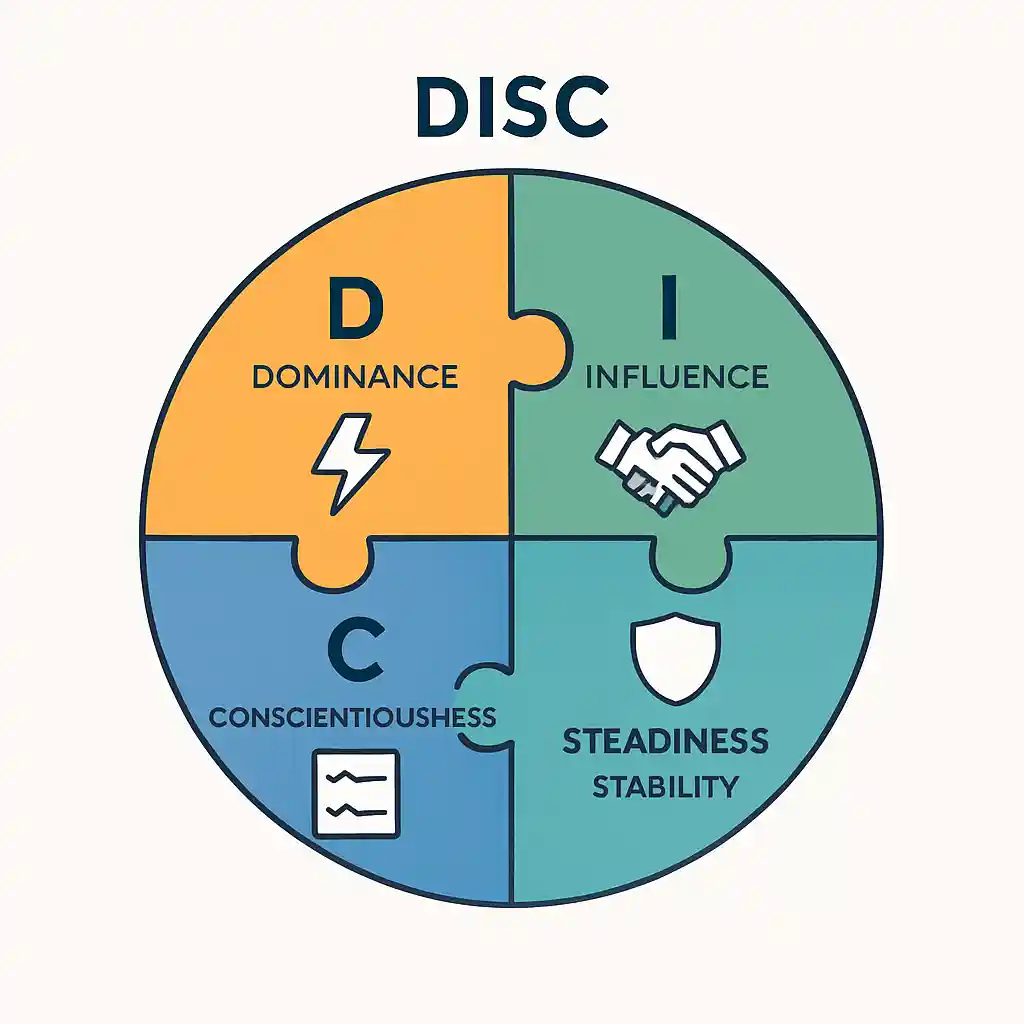
The assessment looks at four behavioral dimensions: Dominance, Influence, Steadiness, and Conscientiousness. Most people show a blend of these styles, but usually one or two dominate. Think of it like being right-handed or left-handed—you can use both hands, but one feels more natural.
Here’s what makes DISC practical for leaders: it only takes about 10-15 minutes to complete, the results make sense immediately, and you can apply them the same day. A recent study showed DISC has a 0.87 reliability coefficient, meaning the results stay consistent over time.
Unlike more complex assessments, DISC focuses specifically on workplace behavior. When you understand your natural leadership style through DISC, you can recognize when you’re working with your strengths and when you might need to adapt your approach. For a broader look at different assessment options, check out this leadership style assessment guide.
The Four DISC Leadership Styles Explained
Let’s break down each DISC assessment leadership style with real examples you’ll recognize from your own experience.
Dominance (D-Style) Leaders
D-style leaders are direct, results-focused, and comfortable making quick decisions. They’re the managers who cut through long discussions with “What’s the bottom line?” and “When can we get this done?”
These leaders excel during crises or when projects need urgent turnaround. They set clear goals and hold people accountable. The challenge? They can come across as too blunt or impatient with team members who need more time to process information.
Example: A D-style shift supervisor at a restaurant doesn’t spend time on small talk during rush hours. They assign stations quickly, monitor performance actively, and adjust on the fly. Their team knows exactly what’s expected, but newer employees might find the pace overwhelming.
Influence (I-Style) Leaders
I-style leaders are enthusiastic, people-oriented, and great at building team morale. They’re the ones organizing team lunches, celebrating small wins, and making sure everyone feels included in decisions.
These leaders create positive work environments where people actually want to show up. They excel at motivating teams through tough projects. The downside? They might avoid difficult conversations or lose track of details while focusing on the big picture and team relationships.
Example: An I-style club president spends the first 20 minutes of meetings checking in with members and sharing funny stories before diving into business. Membership stays high because people feel connected, but sometimes deadlines slip because the leader prioritizes harmony over accountability.
Steadiness (S-Style) Leaders
S-style leaders are patient, supportive, and focused on creating stability for their teams. They’re the managers who remember your work anniversary, notice when you’re struggling, and create consistent routines everyone can rely on.
These leaders build incredibly loyal teams because people trust them. They listen well and make thoughtful decisions. The challenge comes when rapid change is needed—S-style leaders might resist reorganization or struggle to deliver tough feedback quickly.
Example: An S-style team lead at a retail store creates detailed onboarding checklists for new hires and pairs them with experienced mentors. Turnover is low because people feel supported. However, when corporate announces a new inventory system, this leader needs extra time to process the change before helping the team adapt.
Conscientiousness (C-Style) Leaders
C-style leaders are analytical, precise, and focused on quality and accuracy. They’re the project managers who spot errors everyone else missed and the supervisors who want data before making decisions.
These leaders create high standards and systematic processes that prevent mistakes. They excel in technical fields or situations requiring careful analysis. The potential problem? They can seem overly critical or slow to decide when perfection isn’t actually necessary.
Example: A C-style lab supervisor reviews every experiment protocol thoroughly before approval and maintains detailed documentation of all procedures. The team produces excellent research with few errors, but sometimes misses opportunities because the supervisor wants more data before moving forward.
According to recent population studies, the four DISC types are nearly evenly distributed: Dominance (24.8%), Influence (25.1%), Steadiness (25.7%), and Conscientiousness (24.4%). This means every team likely includes all four styles.
Why DISC Matters for Today’s Leaders
Understanding DISC assessment leadership styles isn’t just theoretical—it creates measurable improvements in how teams perform. Research shows that teams using DISC assessments had a 34% increase in overall productivity compared to teams that didn’t use behavioral assessments.
Here’s why this matters more than ever in 2025. With over 70% of businesses using hybrid work models, leaders can’t rely on reading body language in the office anymore. You need to understand how your D-style employee prefers quick Slack messages while your S-style team member needs video calls to feel connected.
The financial impact is real too. Companies that invested in leadership development using behavioral assessments saw 30% higher sales conversion rates and 22% better employee retention. When you adapt your leadership style to match your team’s needs, people perform better and stick around longer.
Consider this scenario: You’re managing a project team with tight deadlines. Your D-style developer wants you to state the problem and get out of their way. Your C-style designer needs detailed requirements and quality benchmarks. Your I-style marketer wants to brainstorm with the group. And your S-style coordinator is worried about how the rushed timeline will stress everyone out. Without understanding these different styles, you’d probably default to your own preference and frustrate three-quarters of your team.
For leaders dealing with complex feedback needs across diverse teams, combining DISC with other approaches can be powerful. Learn more about comprehensive feedback methods in this 360-degree leadership assessment guide.
How to Actually Use Your DISC Results
Getting your DISC results is the easy part. Applying them every day is where the real work happens. Here’s how to make DISC assessment leadership styles practical instead of just interesting.
Start With Self-Awareness
Read your DISC report and identify two things: your natural strengths and your blind spots. If you’re a D-style leader, you’re probably great at making quick decisions but might rush team members who need processing time. If you’re an S-style leader, you create stability but might delay addressing performance problems.
Write down one specific situation where your style caused friction recently. Then plan how you’ll adapt next time. This isn’t about changing who you are—it’s about stretching your comfort zone when the situation demands it.
Map Your Team’s Styles
If possible, have your whole team take DISC assessments. Create a simple chart showing everyone’s primary style. You’ll immediately see patterns: maybe you have three C-style analysts who want detailed data and one I-style coordinator who just wants to know the big picture and move forward.
This visual map helps you anticipate conflicts before they happen. When your D-style and S-style employees clash over project pacing, you’ll understand it’s not personal—they just have different natural rhythms.
Adapt Your Communication
Here’s a practical framework: Before important conversations, ask yourself what style the other person is. Then adjust how you communicate. Give your D-style reports brief, bottom-line updates. Spend time building rapport with your I-style employees before diving into criticism. Provide clear, step-by-step plans for your S-style team members. Come prepared with data and analysis for your C-style colleagues.
This sounds like extra work, but it actually saves time. A five-minute conversation with the right approach beats three frustrating 20-minute meetings with the wrong one.
Use DISC for Conflict Resolution
When two team members aren’t getting along, DISC often reveals the root cause. Your D-style sales rep thinks your C-style analyst is nitpicking and slowing everything down. Your analyst thinks the sales rep is careless and making promises you can’t keep. Both are partly right—and both are just operating from their natural styles.
Help them see the behavioral mismatch. Then create processes that honor both styles: quick decisions on low-risk items (D-style happy) with thorough analysis on high-stakes projects (C-style satisfied).

Mistakes Leaders Make With DISC
Even with good intentions, leaders often misuse DISC assessments. Here are the biggest mistakes to avoid.
Mistake 1: Using DISC as an Excuse
“I’m a D-style, so I’m just naturally blunt” is not an acceptable excuse for being disrespectful. DISC explains your preferences, but you’re still responsible for professional behavior. The whole point of knowing your style is to recognize when you need to adapt, not to justify behavior that damages relationships.
Mistake 2: Putting People in Permanent Boxes
DISC measures behavior, not fixed personality traits. People adapt based on situations, stress levels, and experience. Your intern who shows up as a C-style during their first month might reveal more I-style behaviors once they feel comfortable. Don’t assume someone can’t develop new capabilities because of their DISC profile.
According to research on common DISC misconceptions, one of the most harmful mistakes is treating results as unchangeable destiny rather than current behavioral preferences.
Mistake 3: Taking the Assessment and Doing Nothing
Organizations waste thousands of dollars on assessments that end up in desk drawers. Studies show the knowledge-action gap is the biggest implementation challenge—people learn about their DISC style but never actually change how they lead.
Set specific behavioral goals after taking DISC. “I will pause for five seconds before responding in meetings to give S-style team members time to contribute” is actionable. “I will be more aware of different styles” is too vague to create change.
Mistake 4: Ignoring the Data on What Works
DISC isn’t a perfect tool, and that’s okay. The validation research shows strong reliability (0.86 test-retest correlation), but it shouldn’t be your only leadership development tool. Use it alongside coaching, feedback, and other assessments for the best results.
Getting Started With DISC Assessment
Ready to use DISC assessment leadership styles with your team? Here’s a straightforward path forward.
Choose the Right Assessment
Several platforms offer DISC assessments, with Everything DiSC by Wiley being one of the most established options. Pricing typically ranges from $73.50 to $90 per assessment depending on volume, with specialized versions costing up to $210 for comprehensive 360-degree feedback profiles.
For teams looking for an affordable alternative, platforms like RuleYourMind offer AI-powered leadership assessments that provide detailed behavioral insights at a fraction of traditional costs. These modern platforms deliver comparable results to expensive options while remaining accessible for students, new managers, and small teams working with tight budgets.
Plan Beyond the Assessment
Don’t just buy assessments and hope for the best. Schedule a team workshop within two weeks of everyone completing their DISC profiles while the insights are fresh. Use that session to discuss communication preferences, potential conflicts, and how you’ll work together more effectively.
Then build DISC into your regular operations. Reference it during project kickoffs, performance conversations, and team retrospectives. The goal is making behavioral awareness part of your culture, not a one-time event.
Measure What Changes
Track specific metrics before and after implementing DISC. Monitor team conflict incidents, project completion rates, employee engagement scores, or turnover numbers. Case studies show organizations saved $60,000 on individual projects and generated millions in additional revenue after implementing DISC-based communication improvements.
For a complete overview of assessment options and how they compare, explore this detailed leadership assessment guide covering various approaches to understanding leadership styles.
Frequently Asked Questions
How accurate are DISC assessment leadership styles?
DISC assessments show strong reliability, with median test-retest correlation of 0.86, meaning results stay consistent when people retake the assessment. However, DISC measures behavioral preferences, not fixed personality traits. Your results reflect how you tend to behave in work situations, which can evolve with experience and conscious effort. The assessment is most accurate when you answer honestly based on your actual behavior rather than how you wish you behaved.
Can your DISC leadership style change over time?
Yes, absolutely. DISC measures behavior, not unchangeable personality traits. As you gain leadership experience, receive coaching, or work in different environments, your behavioral preferences can shift. Many leaders find their style adapts when they move from individual contributor to manager roles, or when they transition to leading remote teams. This is why organizations typically recommend reassessing annually or when major role changes occur.
Which DISC style makes the best leader?
There’s no single “best” DISC assessment leadership style. Effective leaders exist in all four categories. D-style leaders excel in turnaround situations requiring quick decisions. I-style leaders build strong team cultures. S-style leaders create stability and loyalty. C-style leaders ensure quality and accuracy. The key is understanding your natural style and learning when to adapt it. Research shows diverse teams with multiple DISC styles working together effectively boost engagement by 17%.
How much does a DISC assessment cost?
Traditional DISC assessments range from $73.50 to $90 per person for basic workplace profiles, with specialized versions costing up to $210. Volume discounts typically apply for organizations assessing 20 or more people. However, newer platforms like RuleYourMind provide comprehensive behavioral assessments at significantly lower costs, making leadership development accessible for students, first-time managers, and small organizations without large training budgets.
Do I need to hire a consultant to use DISC results?
Not necessarily, though it can help. Many modern DISC platforms provide detailed reports and application guides that leaders can understand and implement independently. That said, working with a certified DISC practitioner is valuable for complex situations like organizational restructuring, resolving deep team conflicts, or developing senior leadership. Start with the resources included in your assessment, and consider professional help if you’re not seeing results or facing particularly challenging dynamics.
Can DISC be used for hiring decisions?
DISC should never be the sole factor in hiring decisions. It describes behavioral preferences, not capabilities or potential for success. Two candidates with different DISC styles could both excel in the same role using different approaches. Some organizations use DISC after hiring to onboard new employees more effectively and build strong team dynamics. If you do incorporate DISC into hiring, combine it with skills assessments, interviews, work samples, and reference checks for a complete picture.
Taking Your Next Step
Understanding DISC assessment leadership styles gives you a practical framework for the messy, everyday work of leading people. It won’t solve every problem or eliminate all conflicts. But it will help you understand why that direct report who drives you crazy isn’t trying to be difficult—they just process information differently than you do.
The leaders who get the most from DISC are the ones who use it as a starting point for growth, not a permanent label. They recognize their natural style, appreciate its strengths, acknowledge its limitations, and consciously adapt when the situation demands it.
If you’re ready to explore how your leadership style impacts your team, consider taking a comprehensive assessment that goes beyond basic categorization. RuleYourMind offers AI-powered leadership assessments that provide detailed behavioral insights, customized action plans, and practical communication strategies—all accessible from any device and designed for leaders at every level, from student organization presidents to experienced executives. The platform delivers results comparable to expensive traditional assessments while remaining affordable for individual leaders and small teams.
Start with understanding yourself. Then use that knowledge to connect with, motivate, and develop the people who depend on your leadership.