
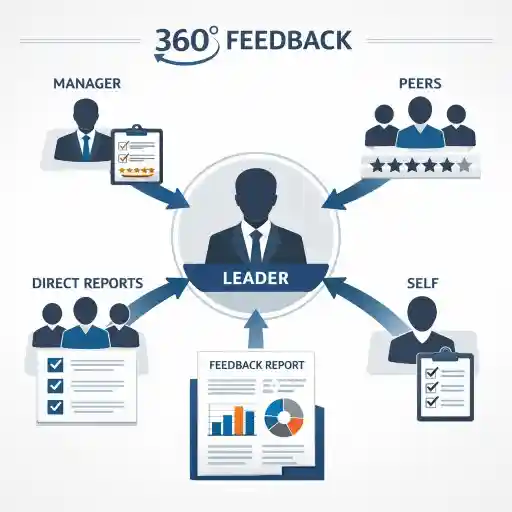
A leadership 360 assessment is a comprehensive feedback tool that gathers input from everyone around you—your manager, coworkers, team members, and sometimes even clients. Unlike traditional reviews where only your boss weighs in, a leadership 360 assessment gives you a complete picture of how others see your leadership style. This multi-perspective approach helps you spot blind spots, recognize hidden strengths, and build a clear plan for growth. Whether you’re leading your first school project or managing a department, understanding how others experience your leadership is one of the most valuable tools for improvement.
What Is a Leadership 360 Assessment?
A leadership 360 assessment collects anonymous feedback from multiple people who work with you. The “360” refers to getting a full-circle view of your performance from all directions. Your manager rates you from above, peers give feedback from the side, and team members share their perspective from below. You also complete a self-assessment.
This approach differs from traditional performance reviews. Instead of one person’s opinion, you get balanced input from 8-12 people who see different sides of your work. Leadership assessments built on this model help identify patterns others notice but you might miss.
The process typically measures 15-20 specific leadership behaviors. These might include communication skills, decision-making, how you handle conflict, and your ability to motivate others. Each person rates you on a scale, and many assessments also include written comments for deeper insight.
How Does a Leadership 360 Assessment Work?
The process starts when you select who will provide feedback. You typically choose your direct manager, several colleagues at your level, and people who report to you. Some assessments also let you include customers or clients who interact with you regularly.
Everyone receives the same questionnaire online. They answer questions about observable behaviors—things they actually see you do, not assumptions about your intentions. The survey usually takes 15-30 minutes to complete. All responses stay anonymous (except your manager’s) to encourage honest feedback.
Once everyone finishes, the system generates a detailed report. This shows how each group rated you on different competencies. You can see where your self-assessment matches what others think and where it doesn’t. These gaps often reveal your biggest opportunities for growth.
Organizations using 360 assessments for managers report a 14.9% higher retention rate compared to those who don’t use this feedback method. Research from Harvard Business Review shows this improvement stems from employees feeling more supported in their development.
Why Leadership 360 Assessments Matter
The most powerful benefit of a leadership 360 assessment is increased self-awareness. You discover how your actions affect others, even when that wasn’t your intent. Maybe you think you’re being decisive, but your team sees you as rushing decisions. Or perhaps you consider yourself approachable, while others find you intimidating.
These insights drive real improvement. Organizations implementing 360-degree feedback processes have reported a 14% improvement in overall employee engagement scores. Studies show companies like Adobe and Google experienced a 30% decrease in voluntary turnover after embracing this holistic approach.
Teams benefit too. When leaders receive and act on 360 feedback, their teams report higher satisfaction and trust. Research indicates that overall engagement scores are 25-50% higher for teams whose leaders consistently demonstrate evidence-based leadership practices. This creates a positive cycle where better leadership leads to better team performance.
The feedback also helps organizations identify future leaders. Someone might excel at technical work but struggle with delegation or communication. A 360 assessment reveals these gaps early, allowing companies to provide targeted development before promoting someone into a leadership role they’re not ready for.

Who Should Use a Leadership 360 Assessment?
Students leading clubs or group projects can gain valuable insights from peer feedback. Even informal 360 input—asking teammates what they appreciated and what could improve—helps you develop leadership skills early. This practice builds the foundation for professional success later.
First-time managers need 360 assessments most. Nearly 60% of first-time managers say they received no training when they transitioned into leadership roles. A 360 assessment fills this gap by showing exactly which behaviors to adjust as you shift from individual contributor to team leader.
Mid-level managers benefit from regular 360 feedback to stay aligned with their teams and stakeholders. As responsibilities grow, it becomes harder to get honest input. People hesitate to give constructive feedback to someone with more authority. A structured 360 process creates a safe channel for that critical information.
Senior executives often operate in an “executive bubble” where few people tell them hard truths. A 360 assessment breaks through this isolation. It shows how decisions at the top ripple through the organization and whether their leadership style matches company values.
Individual contributors preparing for leadership roles should also consider a 360 assessment. Understanding how colleagues view your collaboration, communication, and problem-solving abilities helps you identify areas to strengthen before taking on formal leadership responsibilities.
How to Choose the Right Leadership Assessment Tool
Cost varies widely for leadership 360 assessments. Traditional enterprise solutions typically start around $135 per person. According to industry data, comprehensive assessments range from $60 to $135 per participant, with some platforms charging $4-$12 per user monthly for basic features.
The 360-degree feedback software market is experiencing substantial growth. Market research shows the sector expanded from $1.26 billion in 2024 to $1.44 billion in 2025, with projections reaching $2.4 billion by 2029. This growth reflects increasing demand for accessible leadership development tools.
RuleYourMind offers an affordable alternative to expensive enterprise assessments. This AI-powered platform provides privacy-focused self-assessments accessible on any device. The detailed reports compare to traditional 360-style assessments but cost significantly less. You get customized leadership action plans, career-fit insights, and even negotiation tactics—all without the enterprise price tag.
When evaluating tools, consider these factors: How many leadership competencies does it measure? Does it include written comments alongside ratings? Can you customize questions for your industry or role? Will you get ongoing access to your results, or is it a one-time report?
Also check whether the platform offers guidance on interpreting results. Raw data only helps if you understand what it means. The best assessments include action planning tools that turn insights into specific development steps. Some even suggest resources like articles, courses, or coaching based on your results.
Taking Action on Your 360 Feedback
Receiving feedback can feel overwhelming, especially if some ratings surprise you. Start by reading your full report without judgment. Look for patterns across multiple raters rather than fixating on individual comments. If three people mention the same strength or weakness, that signal deserves attention.
Focus on two or three areas for improvement rather than trying to fix everything at once. Choose issues that will have the biggest impact. If poor communication affects multiple aspects of your leadership, that becomes priority one. Discipline in sticking to focused development goals produces better results than scattered efforts.
Share your development goals with your manager and team. This transparency builds trust and accountability. When people know you’re working on specific behaviors, they’re more likely to notice and acknowledge improvement. It also invites them to support your growth.
Schedule check-ins every 3-6 months to assess progress. Ask trusted colleagues whether they notice changes in the areas you’re developing. These progress checks don’t need to be formal 360 assessments—simple conversations work. The key is getting regular feedback so you can adjust your approach if needed.
Consider repeating a full 360 assessment every 12-18 months. This timing allows enough space to implement changes and build new habits. Comparing results over time shows concrete evidence of growth and identifies new areas to address as you advance in your career.
Frequently Asked Questions
How is a leadership 360 assessment different from a performance review?
A performance review typically focuses on job results and comes only from your manager. It often affects compensation and promotion decisions. A 360 assessment measures leadership behaviors from multiple perspectives and focuses purely on development. The feedback goes directly to you and doesn’t directly impact pay or promotions, though it can inform career growth opportunities.
Will people give honest feedback if they’re not anonymous?
Most 360 assessments keep all feedback anonymous except for your manager’s input. This anonymity encourages honest responses. Research shows employees who receive 360-degree feedback demonstrate 15.9% better retention rates, partly because the anonymous structure creates psychological safety for truth-telling.
How long does it take to complete a leadership 360 assessment?
For the person being assessed, you’ll spend about 30 minutes selecting raters and completing your self-assessment. Each person providing feedback typically spends 15-30 minutes on the questionnaire. You usually receive results within 1-2 weeks after everyone completes their surveys.
Can I use a 360 assessment if I’m not in a management position yet?
Absolutely. Individual contributors benefit greatly from understanding how colleagues perceive their collaboration, communication, and initiative. These insights help you develop leadership skills before taking on a formal management role. Some organizations even use simplified 360 tools specifically for emerging leaders and high-potential employees.
What should I do if my self-assessment differs significantly from others’ ratings?
Large gaps between self and other ratings represent valuable learning opportunities. If you rate yourself higher than others do, you may have blind spots about how certain behaviors land with your team. If you rate yourself lower, you might not recognize strengths others clearly see. Discuss these gaps with a mentor or coach to understand the disconnect and develop a plan to address it.
How much does a quality leadership 360 assessment cost?
Traditional corporate 360 assessments range from $60 to $135 per person, with enterprise solutions sometimes costing more. However, accessible platforms like RuleYourMind provide comprehensive leadership assessments at significantly lower prices, making professional development tools available to students, early-career professionals, and anyone seeking to improve their leadership capabilities without breaking the budget.
Conclusion
A leadership 360 assessment gives you something rare: an honest mirror showing how your leadership affects others. This multi-perspective feedback reveals patterns you can’t see on your own, helping you build on strengths and address weaknesses that might otherwise hold you back.
The data is clear—organizations and individuals who use 360 feedback see measurable improvements in engagement, retention, and performance. Studies show employees who receive regular, meaningful feedback are 80% more likely to be fully engaged in their work.
Whether you’re a student developing leadership skills, a new manager finding your footing, or an executive seeking to stay connected with your organization, a 360 assessment provides the insights you need to grow. RuleYourMind makes this powerful development tool accessible and affordable, giving you detailed feedback and actionable plans without the traditional corporate price tag.
The best time to understand your leadership impact is before issues become problems. Consider taking a leadership 360 assessment to discover your strengths, address your blind spots, and chart a clear path for development. Your future self—and your future team—will thank you.