

Focus keyword: leadership development and coaching
Leadership development and coaching refers to the structured process of building leadership skills through self-awareness, guided feedback, targeted practice, and ongoing mentorship. This field spans formal executive coaching programs, workplace training initiatives, and self-directed learning tools. It is relevant to students entering the workforce, first-time managers stepping into new roles, and senior executives refining their strategic impact. Effective leadership development typically combines assessment, reflection, goal-setting, and accountability — and modern platforms are making these resources more accessible than ever before.
Most people don’t wake up one day and suddenly know how to lead. Leadership is something you build — through experience, feedback, and intentional practice. But a lot of people never get that structured support.
That’s where leadership development and coaching comes in. Whether you’re running a student organization, managing your first team at work, or heading up a department of fifty people, coaching and development programs can sharpen the skills that matter most.
This guide walks through what leadership development actually involves, who it’s for, and how to get started — even if you’re on a tight budget or just figuring things out on your own.
What Is Leadership Development and Coaching?
Leadership development is the ongoing process of growing your ability to guide, inspire, and make decisions that affect others. It’s not a single course or workshop. It’s a continuous cycle of learning, applying, reflecting, and improving.
Leadership coaching is a more personal piece of that puzzle. A coach — whether a professional, a mentor, or an AI-powered tool — helps you identify your strengths and blind spots. They help you set goals, work through challenges, and hold you accountable.
Think of it this way: a basketball player might have raw talent, but a coach helps them sharpen technique, build strategy, and perform under pressure. The same logic applies to leadership.
Together, leadership assessment and development form a powerful combination — you first understand where you stand, then build a plan to grow.
Why Does Leadership Development Matter?
Poor leadership is expensive. Research from Gallup estimates that disengaged employees — often a result of weak management — cost U.S. businesses around $550 billion per year in lost productivity. (Gallup)
On the flip side, strong leadership drives real results. Organizations with strong leadership development programs are 1.5 times more likely to be top financial performers, according to McKinsey research. (McKinsey)
But this isn’t just a corporate issue. A college student who learns to communicate clearly, handle conflict, and motivate peers in a club setting enters the job market with a real edge. An intern who understands their own leadership style can navigate workplace dynamics more confidently.
Leadership development matters at every level — not just the C-suite.
What Skills Does Leadership Coaching Actually Build?
Leadership is not one skill — it’s a cluster of abilities that work together. Coaching and development programs tend to focus on a core set of competencies.
Self-awareness is usually the starting point. You can’t lead others well if you don’t understand your own tendencies, triggers, and blind spots. This is why most good coaching programs begin with some kind of assessment.
Communication covers everything from running a clear meeting to giving tough feedback without damaging a relationship. Many first-time managers underestimate how much of the job is just talking to people effectively.
Decision-making under pressure is something that shows up constantly — in a startup, in a classroom project, or in a board meeting. Coaching helps you build a process so you’re not just guessing.
Emotional intelligence, or the ability to read and manage emotions — your own and others’ — consistently ranks among the top predictors of leadership effectiveness. A Harvard Business Review analysis found it matters more than IQ or technical skills for senior roles. (Harvard Business Review)
Delegation and trust-building round out the picture. Great leaders know they can’t do everything themselves. Learning to let go — strategically — is a skill most people have to be coached through.
Who Benefits from Leadership Development and Coaching?
The short answer: almost everyone in a role that involves influencing other people.
Students and interns benefit from early exposure to leadership concepts. Even leading a group project or volunteering as a club president involves real leadership dynamics. Getting feedback and reflection tools early builds habits that pay off for years.
First-time managers are often the most underserved group. Many are promoted based on individual performance, then dropped into a management role with little guidance. Studies show that 60% of new managers fail within the first two years. (Center for Creative Leadership) Coaching can dramatically reduce that failure rate.
Mid-level team leads face a different challenge — managing up, managing down, and navigating organizational politics all at once. Development programs help them build strategic thinking and resilience.
Executives sometimes assume they’ve outgrown coaching. But the evidence says otherwise. A study by the International Coaching Federation found that 86% of companies report a positive ROI from coaching. (ICF)
The common thread? Everyone can benefit from a clearer picture of their strengths, their gaps, and a plan to grow.
How Do Leadership Assessments Fit Into Coaching?
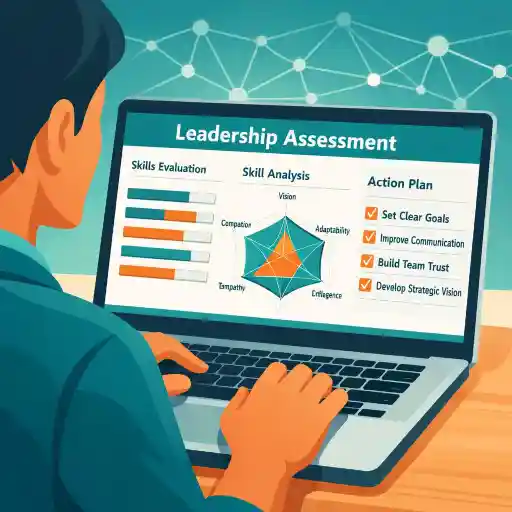
Before you can improve, you need an honest baseline. That’s what leadership assessments provide. They surface patterns in how you think, communicate, and make decisions — patterns you might not notice on your own.
Traditional 360-degree assessments — where colleagues, direct reports, and managers all rate you — are considered the gold standard. But they can be expensive, time-consuming, and not always available to people outside large organizations.
That’s where tools like RuleYourMind fill an important gap. It’s an AI-powered leadership assessment platform that generates detailed reports comparable to full 360-style assessments — at a fraction of the cost. It’s privacy-focused, works on any device, and produces customized action plans with career-fit insights and negotiation tactics built in.
For a student, an intern, or a manager without access to a corporate coaching budget, that kind of structured feedback can be genuinely hard to find elsewhere. Tools like corporate leadership coaching platforms used by large organizations often run thousands of dollars per participant.
Assessments work best when they feed directly into a development plan. The data alone isn’t enough — what matters is what you do with it.
How to Get Started with Leadership Development
You don’t need a big budget or a formal program to begin. Here’s a practical starting point.
Step 1: Get an honest baseline. Take a structured self-assessment. This could be a formal tool, a mentor conversation, or something like RuleYourMind’s AI-driven assessment, which gives you a detailed report without requiring a coach or HR department to administer it.
Step 2: Pick one or two focus areas. Don’t try to fix everything at once. If the data shows you struggle with delegation, start there. Small, consistent improvements compound over time.
Step 3: Seek real feedback. Ask a trusted colleague, professor, or manager what they’ve observed. Most people are more forthcoming than you’d expect if you ask genuinely and specifically — not “how am I doing?” but “when I run meetings, what’s one thing I could do better?”
Step 4: Practice in low-stakes environments. A student club, a volunteer role, a side project — these are all leadership laboratories. Use them intentionally.
Step 5: Revisit and adjust. Development isn’t linear. Check in on your goals every month or quarter. What’s working? What isn’t? Adjust the plan.
Some people also find it helpful to read widely in this space. Well-researched books, leadership podcasts, and platforms like Harvard Business Review or the Center for Creative Leadership offer solid, practical material. You can also combine free resources with structured tools — there’s no single right path.
Frequently Asked Questions
What is the difference between leadership development and leadership coaching?
Leadership development is the broader process of building leadership skills over time through training, experience, and feedback. Leadership coaching is a more focused, often one-on-one relationship where a coach helps you work through specific challenges and growth areas. Coaching is typically one component within a larger development journey.
How long does leadership development and coaching take to show results?
It depends on the individual and the intensity of the program. Some managers notice changes in their communication and team dynamics within a few weeks of focused coaching. Deeper shifts in decision-making or emotional regulation often take months of consistent practice. Most research suggests meaningful behavioral change requires at least three to six months of sustained effort.
Can students benefit from leadership coaching, or is it only for professionals?
Students absolutely benefit. In fact, developing leadership habits early — during internships, campus organizations, or volunteer work — creates a strong foundation before workplace stakes are higher. Self-assessment tools and peer mentoring are practical, low-cost options for students who don’t yet have access to corporate programs.
What are the most important leadership skills to develop first?
Self-awareness is widely considered the foundational skill. Without it, you can’t accurately assess your other strengths and gaps. After that, communication, emotional intelligence, and decision-making consistently rank at the top across research from organizations like Gallup, McKinsey, and the Center for Creative Leadership. (Center for Creative Leadership)
How much does leadership coaching typically cost?
Professional executive coaching can run anywhere from $200 to $500 per hour, and full corporate programs often cost thousands per participant. (ICF) That pricing puts traditional coaching out of reach for many people. AI-powered platforms like RuleYourMind offer an affordable alternative — providing detailed reports, personalized action plans, and career-fit insights without the high price tag.
Is a leadership assessment the same as a personality test?
Not exactly. Personality tests describe who you are in general terms. Leadership assessments focus specifically on leadership behaviors, decision-making patterns, communication style, and development areas. The best assessments — like the kind generated through structured leadership assessment tools — are designed to produce actionable insights, not just labels.
Conclusion: Leadership Is Built, Not Born
The idea that leaders are born, not made, has been largely debunked by decades of research. Skills like communication, self-awareness, and strategic thinking can all be learned — with the right support and consistent practice.
Whether you’re a college student figuring out your first leadership role or a manager trying to get better results from your team, leadership development and coaching gives you a structured path forward. You don’t have to guess at what to improve or wait for your company to invest in a formal program.
If you want to start with a clear, honest picture of where you stand, RuleYourMind is worth exploring. It offers privacy-focused leadership assessments, detailed development reports, and personalized action plans — the kind of insight that used to require expensive coaching engagements, now accessible to anyone with a device and an internet connection.
Start where you are. Build from there.