
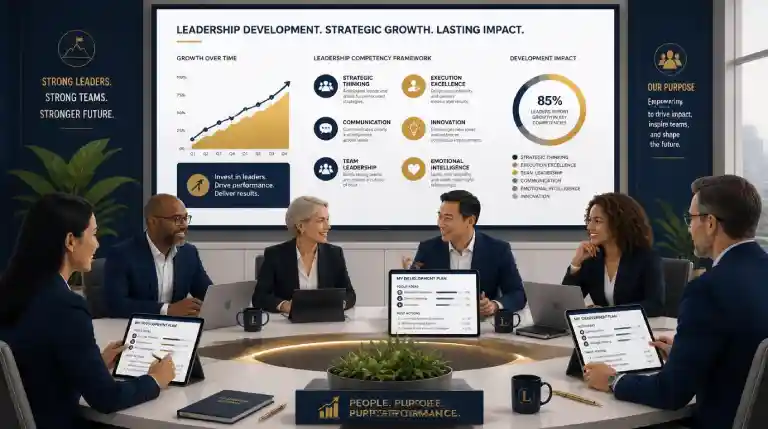
Leadership development programs for executives are no longer a luxury reserved for Fortune 500 boardrooms. Whether you are a newly promoted VP trying to find your footing or a seasoned C-suite leader navigating rapid industry change, the right development program can sharpen your decision-making, strengthen your teams, and set you apart. Yet many executives either skip formal development entirely or invest in programs that never deliver real results. In fact, only 40% of leaders were rated as high quality by their employees in 2024, according to DDI’s Global Leadership Forecast 2025. That gap between intention and impact is exactly what this guide addresses. Below, you will find a practical breakdown of what these programs include, why they matter, how to choose one, and how to make sure the investment pays off.
What Are Leadership Development Programs for Executives?
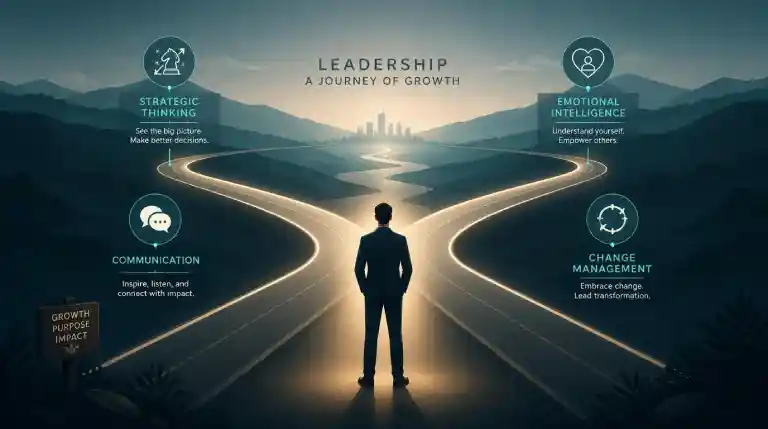
At their core, executive leadership development programs are structured learning experiences designed to help senior leaders grow specific skills — strategic thinking, communication, change management, and emotional intelligence among them. Unlike generic management training, these programs are tailored to the challenges that come with leading at scale: aligning departments, managing boards, handling organizational transformation, and making high-stakes decisions under pressure.
Formats vary widely. Some programs run as intensive multi-day retreats at business schools like Harvard or Wharton. Others unfold over months and blend virtual sessions, peer cohorts, one-on-one coaching, and real-world project assignments. Blended approaches that combine in-person workshops with digital learning platforms achieve 67% higher completion rates than classroom-only formats, according to Skills Up.
The common thread is intentional skill-building. These are not motivational seminars. Good programs give you frameworks, practice, feedback, and — critically — a leadership assessment baseline so you know exactly where you are starting from.
Why Do Executives Need Leadership Development?
It is easy to assume that by the time you reach the executive level, you have already learned how to lead. But the skills that earned a promotion are rarely the skills that drive success at the top. A first-time director who was brilliant at project execution may struggle with enterprise-wide strategy. A VP who excelled at managing one team may flounder when leading an entire division through a merger.
The data backs this up. Roughly 77% of organizations report they lack sufficient leadership depth across all levels, according to research cited by Exec Learn. Meanwhile, trust in managers dropped from 46% in 2022 to just 29% in 2024. These are not small gaps — they represent real organizational risk.
Executive development addresses this by helping leaders recognize blind spots, adapt their style to new contexts, and build the kind of self-awareness that trickles down through entire organizations. Think of it like this: a college club president who never gets feedback on how they run meetings will carry those same habits into their first corporate role. Formal development breaks that cycle at every stage of a career.
Core Components of Effective Executive Programs
Not all leadership development programs for executives are created equal. The best ones tend to include a handful of proven elements working together.
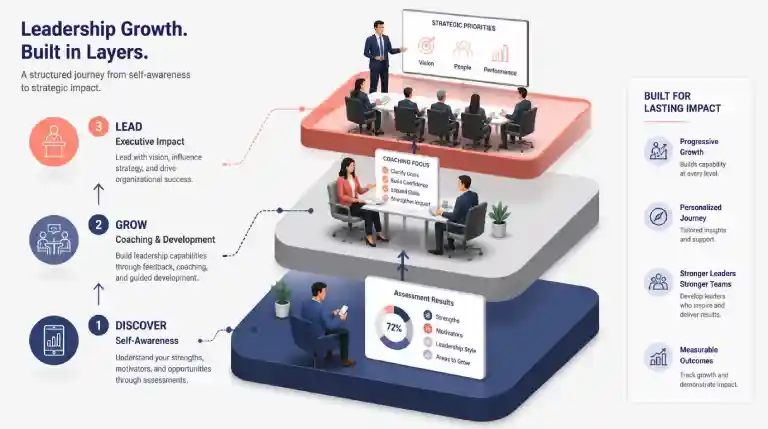
Assessment and self-awareness. Everything starts with understanding your current strengths and gaps. This usually means a combination of self-assessments, 360-degree feedback, and personality or behavioral profiling. Programs that skip this step are essentially guessing at what you need. A thorough leadership assessment and development process helps ensure the training addresses actual weaknesses, not assumed ones.
Strategic thinking and decision-making. Executives face ambiguous, high-pressure decisions daily. Effective programs use case studies, simulations, and scenario planning to build this muscle. The goal is not to memorize frameworks but to develop judgment — the kind that helps you read a situation, weigh trade-offs, and commit to a direction even when information is incomplete.
Coaching and mentoring. One-on-one coaching with experienced facilitators is a hallmark of quality programs. Executive coaching engagements in large organizations average between $25,000 and $50,000 per participant, according to Careertrainer.ai. That price tag reflects the depth of personalization involved — sessions are built around your specific context, challenges, and goals.
Peer learning. Sitting in a room (or a virtual cohort) with executives from different industries and functions is remarkably effective. You hear how others have solved problems similar to yours, and you gain perspectives that no textbook can offer. Many participants say the peer network they build during these programs is as valuable as the curriculum itself.
Action learning and application. The best programs require participants to work on a real organizational challenge during the program, applying new skills to actual business problems rather than hypothetical ones.
How to Choose the Right Leadership Development Program
With so many options available — university programs, boutique coaching firms, in-house corporate academies, and AI-powered platforms — choosing the right fit can feel overwhelming. Here are a few practical filters to narrow the field.
Clarify the gap first. Before browsing brochures, identify the specific skill or capability you need to develop. Are you struggling with delegation? Cross-functional influence? Leading through uncertainty? A program that matches your actual development need will outperform a prestigious but generic one every time. Starting with a solid self-assessment or a structured tool like a Korn Ferry leadership assessment can help pinpoint exactly where to focus.
Check the evidence. Ask program providers for outcome data, not just satisfaction surveys. Organizations with formal leadership programs are 2.4 times more likely to hit their performance targets, according to Careertrainer.ai. If a provider cannot show you tangible results beyond “participants loved it,” that is a red flag.
Consider format and time commitment. A two-week immersion at a top business school works well for some leaders but is impossible for others juggling operational demands. Virtual and hybrid programs have expanded access significantly. Think honestly about how much time you can dedicate and what format fits your learning style.
Look at post-program support. Skill development does not end when the last session wraps. Programs that include follow-up coaching, reinforcement modules, or alumni communities deliver stronger long-term results. Plan for an additional 20-30% investment in implementation support to prevent skill decay, as recommended by training experts at Learnit.
What ROI Can You Expect from Executive Leadership Development?
One of the most common objections to executive development is cost. Senior-level programs can easily exceed $10,000 per participant, and comprehensive executive coaching ranges much higher, as noted by Learnit. So what does the research say about the return?
According to a study by New Level Work (formerly BetterManager) surveying 752 professionals across the U.S., U.K., and Canada, every dollar invested in leadership development yields an average return of $7, with ROI ranging from $3 to $11 depending on the organization (HR Dive). That return comes from multiple channels: 42% of respondents in the same study observed a direct increase in revenue and sales, while 59% of organizations report improved retention as a result of their programs (Exec Learn).
The retention angle deserves special attention. LinkedIn Learning found that 94% of employees would stay longer at a company that invested in their learning and development (Training Industry). For executives, whose departure costs can reach one to two times their annual salary in lost productivity and replacement expenses, this number is significant.
Leaders who go through highly rated development programs are 15 times more likely to be rated as high quality by their teams, according to DDI. That kind of multiplier is hard to ignore.
Accessible Alternatives When Traditional Programs Are Out of Reach
Not every executive has access to a $50,000 coaching engagement or a week-long retreat at a top business school. Budget constraints, scheduling conflicts, and geographic limitations are real barriers — especially for leaders at mid-sized companies or those early in their executive careers.
This is where technology has started to level the playing field. AI-powered platforms now offer detailed leadership assessments, personalized development plans, and career-fit insights that were once available only through expensive, multi-day assessment centers. RuleYourMind, for example, provides privacy-focused self-assessments accessible on any device that produce detailed reports comparable to costly 360-style evaluations. The platform also includes customized leadership action plans, career-fit insights, and negotiation tactics — all at a fraction of traditional program costs.
The point is not that a digital tool replaces a full executive development program. It is that accessible, well-designed assessments can serve as a strong starting point or supplement. A first-time executive who completes a thorough self-assessment through RuleYourMind and identifies three specific development areas is already ahead of someone who signs up for a generic program without knowing where to focus.
For organizations serious about building leadership depth, the smartest approach often blends formal programs with ongoing, self-directed assessment and development. That combination — structured learning plus continuous self-awareness — is what separates leaders who grow from those who plateau.
Frequently Asked Questions
What is the average cost of a leadership development program for executives?
Costs vary significantly depending on the format and provider. Emerging leader programs typically run $1,500 to $3,000 per participant, mid-level leader programs cost $3,000 to $6,000, and senior executive programs regularly exceed $10,000 per person, according to Learnit. Executive coaching adds another layer, with engagements at large organizations averaging $25,000 to $50,000 per participant. More affordable AI-powered platforms like RuleYourMind offer detailed assessments and action plans at a much lower price point.
How long do executive leadership development programs typically last?
Program lengths range from intensive two- to five-day workshops to structured journeys that span six to eighteen months. Longer programs that include coaching, peer cohorts, and real-world project work tend to produce more lasting behavioral change. Many organizations now use blended formats that combine short in-person sessions with ongoing virtual learning.
How do I measure the ROI of a leadership development program?
Focus on outcomes your CFO cares about: retention improvements, revenue impact, and efficiency gains. Track metrics like employee turnover in teams led by program graduates, time-to-fill leadership vacancies, engagement scores, and revenue performance. A New Level Work study found the average ROI is $7 for every dollar invested, with returns coming from both revenue growth and cost savings through retention (HR Dive).
What skills do executive leadership development programs focus on?
The most effective programs develop strategic thinking, emotional intelligence, change management, communication, and decision-making under uncertainty. Many also cover areas like cross-functional collaboration, executive presence, stakeholder management, and leading diverse, globally distributed teams.
Can smaller companies benefit from executive leadership development?
Absolutely. In fact, leadership development may matter even more for smaller organizations where the impact of each leader is proportionally larger. Smaller companies often cannot afford the risk of a senior leader underperforming. Budget-friendly options — including online cohort programs, peer advisory groups, and AI-powered assessment platforms — make executive development accessible regardless of company size.
When should an executive start a leadership development program?
The ideal time is during a transition — moving from director to VP, stepping into a C-suite role, or taking on a significantly larger scope of responsibility. These moments are when old habits become liabilities and new skills become essential. However, ongoing development is equally important. Leaders who treat development as a one-time event rather than a continuous practice tend to plateau faster.
Conclusion
Leadership development programs for executives are one of the highest-leverage investments an organization or individual leader can make. The research is clear: companies that invest in developing their leaders see measurable improvements in retention, revenue, and team performance. But the key is choosing programs that are evidence-based, well-structured, and aligned with your actual development needs — not just the most prestigious or expensive option available.
Start by understanding where you stand today. A clear-eyed assessment of your strengths and gaps is the foundation everything else builds on. If you are looking for an affordable, private way to get that baseline, consider trying a self-assessment through RuleYourMind — it is a practical first step that takes minutes, works on any device, and gives you a detailed report you can use to guide your next move.