

Every organization needs strong leaders. But how do you know who has what it takes to lead before they step into the role? A leadership potential assessment gives you the answer. This science-based evaluation helps identify which team members have the capacity to grow into effective leaders, even if they haven’t led before.
Think about your best performers. Are they ready to lead a team? Many high achievers excel at their current jobs but struggle when promoted to management. Others might seem quiet or reserved, yet possess exactly the leadership traits your organization needs. Without proper assessment, you might promote the wrong people or overlook your future leaders entirely.
This guide explains what leadership potential assessment is, why it matters, and how to use it effectively. Whether you’re a student planning your career, a manager building a team, or an executive developing your leadership pipeline, you’ll learn practical ways to identify and develop leadership talent.
What Is Leadership Potential Assessment?
A leadership potential assessment evaluates someone’s capacity to become an effective leader. Unlike performance reviews that measure how well someone does their current job, these assessments look at future capabilities. They examine personality traits, thinking patterns, learning ability, and behaviors that predict leadership success.
The assessment process typically combines multiple tools. Self-report questionnaires measure personality traits and values. Situational exercises test decision-making under pressure. Some assessments include interviews or simulations that mirror real leadership challenges.
What makes someone high-potential isn’t always obvious. A student who leads a school club might show strategic thinking and team-building skills. An intern who asks thoughtful questions could demonstrate learning agility. A team member who stays calm during project crises might have the resilience leaders need. Leadership potential assessment helps spot these indicators systematically rather than relying on gut feelings.
Why Organizations Need Leadership Potential Assessment
The cost of getting leadership wrong is staggering. Companies spend an average of $444 per employee annually on leadership development. Source Yet many organizations struggle to identify who deserves that investment.
Research shows that 68% of future leaders have left their jobs because their potential was overlooked. Source When talented people feel invisible, they find employers who see their value. This creates a double problem: you lose future leaders while competitors gain them.
Another challenge is promoting the wrong people. Only 18% of organizations rate their leaders as very effective at achieving business goals. Source Many companies confuse high performance with high potential. Your best salesperson might lack the patience to coach others. Your most productive engineer might struggle with strategic thinking. A structured assessment process helps avoid these expensive mistakes.
Organizations also face a leadership depth crisis. Currently, 77% of organizations lack sufficient leadership depth across all levels. Source When senior leaders retire or leave, there’s no one ready to step up. Leadership potential assessment builds your pipeline by identifying and developing tomorrow’s leaders today.
For individuals, understanding your leadership potential shapes career decisions. Students can choose development opportunities that build leader skills. Managers can work on specific growth areas. Even if you’re not sure you want to lead, knowing your capabilities opens doors you might not have considered.
Key Traits Measured in Leadership Potential Assessment
Effective leadership potential assessments examine several core areas that predict future success. Understanding these traits helps you recognize potential in yourself and others.
Learning agility ranks as one of the strongest predictors of leadership success. This measures how quickly someone learns from experience and applies those lessons to new situations. A team lead who adapts their approach after a failed project shows learning agility. So does a student who improves their presentation skills after receiving feedback.
Strategic thinking involves seeing the big picture and planning several steps ahead. Can someone understand how their department fits into company goals? Do they consider long-term consequences of today’s decisions? First-time managers often struggle here because they’re used to focusing on tactical execution rather than strategy.
Emotional intelligence separates good leaders from great ones. This includes self-awareness, managing your emotions, reading others’ feelings, and handling relationships effectively. A manager who notices when team morale drops and addresses it demonstrates emotional intelligence. A student who resolves conflicts between club members shows this trait too.
Resilience and tolerance for ambiguity matter increasingly in today’s fast-changing workplaces. Leaders face setbacks, unclear situations, and constant change. Can someone bounce back from failures? Do they function well when there’s no clear answer? These traits become visible during challenging projects or organizational changes.
Motivation and aspiration are equally important. Not everyone wants to lead, and that’s okay. Effective assessment measures both capacity for leadership and genuine interest in leadership roles. Someone might have leadership traits but prefer to contribute as an individual expert. Forcing them into management wastes everyone’s time and energy.
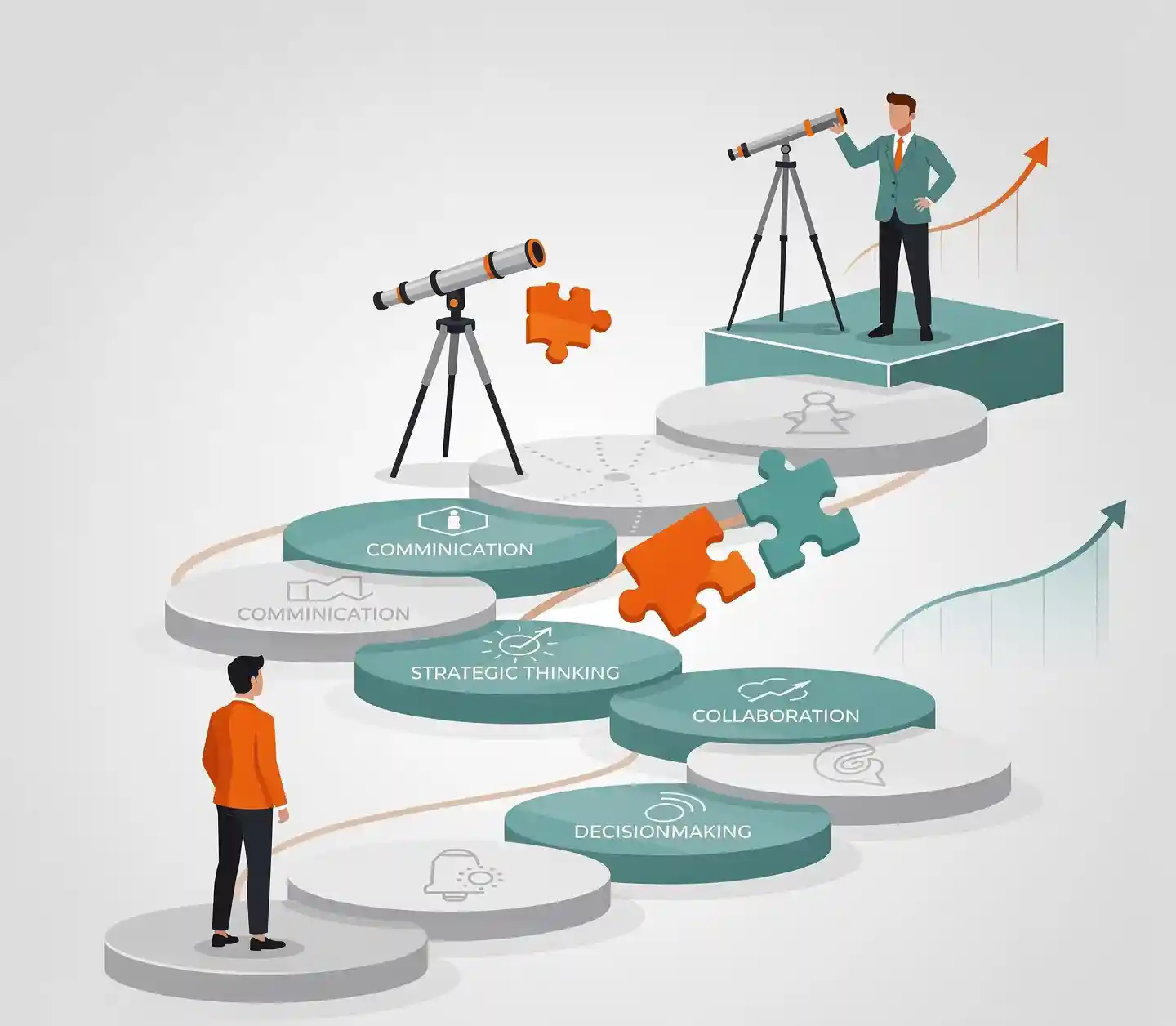
Most comprehensive assessments, including tools like leadership style assessments, evaluate 15-25 specific traits and competencies. RuleYourMind’s AI-powered platform measures these dimensions and provides detailed feedback comparable to expensive professional assessments, but at a fraction of the cost and accessible from any device.
Types of Leadership Potential Assessments
Different assessment approaches offer various benefits depending on your needs, resources, and situation. Understanding your options helps you choose the right method.
Self-assessment questionnaires are the most accessible starting point. These ask questions about your behaviors, preferences, and responses to situations. They’re quick, affordable, and provide useful insights. However, self-assessments rely on accurate self-perception, which can be tricky. You might not recognize your own blind spots or might answer based on how you wish you were rather than how you actually behave.
360-degree assessments gather feedback from multiple sources: supervisors, peers, direct reports, and sometimes customers. This multi-angle view reveals how others experience your leadership behaviors. For more detailed information, see our guide to 360-degree leadership assessment. While comprehensive, these require more time and cooperation from multiple people.
Psychometric tests measure cognitive ability, personality traits, and behavioral tendencies using validated scientific instruments. These provide objective data that’s harder to fake than simple questionnaires. Many organizations use tools from established providers, though costs can be prohibitive for smaller companies or individuals.
Assessment centers and simulations put candidates through exercises that mirror real leadership challenges. You might participate in a business simulation, lead a mock team meeting, or solve complex problems under time pressure. These reveal how you perform under realistic conditions but require significant resources to set up and run.
AI-powered assessments represent the newest approach. These platforms use artificial intelligence to analyze responses and generate detailed insights. RuleYourMind offers this type of assessment, providing privacy-focused evaluations that include customized action plans, career-fit insights, and even negotiation tactics—all features typically found only in expensive corporate programs.
For a broader overview of assessment options, explore our comprehensive leadership assessment guide.
How to Implement Leadership Potential Assessment
Successfully implementing leadership potential assessment requires more than just selecting a tool. Follow these practical steps to get meaningful results.
Start with clear objectives. What do you want to learn? Are you building a succession plan? Helping individuals identify development needs? Creating a high-potential program? Your goals shape which assessment to use and how to apply the results. A student exploring career options needs different information than an executive building a leadership pipeline.
Choose appropriate assessment tools. Match the method to your situation. Students and individuals benefit from accessible self-assessments that provide development guidance. Organizations need more comprehensive approaches that compare candidates objectively. Consider your budget, timeline, and how many people you’re assessing.
Communicate the purpose clearly. People worry that assessments might negatively impact their careers. Explain how you’ll use the results. Is this for development only? Will it influence promotions? Transparency reduces anxiety and increases honest participation. Make it clear that the goal is growth, not judgment.
Ensure confidentiality and psychological safety. Participants need to feel safe providing honest answers. If people fear negative consequences, they’ll give socially desirable responses rather than truthful ones. Use platforms that protect privacy and emphasize that the assessment serves their development.
Provide meaningful feedback. Raw scores mean little without context. Good assessments explain what the results indicate, why those traits matter for leadership, and specific actions for development. RuleYourMind generates detailed reports that translate assessment data into practical guidance you can actually use.
Create development plans. Assessment without action wastes everyone’s time. Use the insights to build concrete development strategies. A team lead might work on strategic thinking through stretch assignments. A manager might improve emotional intelligence through coaching. Students can seek opportunities that build identified strengths while addressing development areas.
Follow up and reassess. Leadership potential grows through experience and intentional development. Reassess periodically to track progress and adjust development plans. What you learned six months ago guides today’s growth, but tomorrow’s challenges might require new capabilities.
Common Mistakes in Assessing Leadership Potential
Even with good intentions, organizations and individuals make predictable mistakes when assessing leadership potential. Avoiding these pitfalls improves your results significantly.
Confusing performance with potential is the most common error. Your top performer might not have high leadership potential, and your high-potential employee might not be your best current performer. Research shows that 89% of employers wrongly believe employees quit because of low pay, when only 12% actually do. Source This misunderstanding extends to leadership: managers often assume great individual contributors will be great leaders. They’re different skill sets.
Overlooking diverse leadership styles limits your talent pool. The stereotype of a confident, extroverted leader excludes many capable people. Quiet, thoughtful individuals can be excellent leaders. Research-oriented people bring valuable analytical skills. Don’t let bias toward a single leadership style blind you to other types of effective leaders.
Ignoring the individual’s desires creates unhappy leaders and poor results. Just because someone could lead doesn’t mean they want to. Some talented people prefer specialist roles or desire work-life balance that leadership positions don’t offer. Forcing leadership on people who don’t want it benefits no one. Always assess both capacity and aspiration.
Using assessment as a one-time event misses the developmental nature of leadership. Potential isn’t fixed. Someone who lacks certain traits today can develop them through targeted experiences and learning. Use assessment as an ongoing tool that guides development rather than a single sorting exercise that labels people forever.
Failing to act on assessment results is perhaps the most frustrating mistake. Organizations spend time and money assessing potential, then do nothing with the information. Employees get excited about development opportunities that never materialize. Resources get invested in the wrong people while high-potential employees feel ignored. The assessment itself creates expectations—meet them.
Skipping validation of assessment methods can lead you astray. Not all assessment tools measure what they claim to measure. Look for scientifically validated instruments with proven reliability. Free assessments from unknown sources might be entertaining but provide little useful guidance. Invest in quality tools that actually predict leadership success.
Frequently Asked Questions
What is the difference between leadership potential assessment and performance evaluation?
Performance evaluation measures how well someone does their current job. Leadership potential assessment evaluates their capacity to succeed in future leadership roles. Someone might excel at their current position but lack traits needed for leadership. Conversely, a developing employee might show high leadership potential even though they’re still building technical skills. Both assessments serve different purposes and provide different insights.
How accurate are leadership potential assessments?
Well-designed, scientifically validated assessments predict leadership success with reasonable accuracy when used properly. However, no assessment is perfect. The best results come from combining multiple assessment methods, considering actual job performance, and updating evaluations over time. Context matters too—someone might show high potential in one organizational culture but struggle in another. Use assessments as one important input among several rather than the sole decision-maker.
Can leadership potential be developed or is it innate?
Both nature and nurture play roles. Some personality traits that support leadership, like extraversion or cognitive ability, have genetic components. However, many crucial leadership skills can be learned and developed through experience, training, and deliberate practice. Learning agility, emotional intelligence, and strategic thinking all improve with focused effort. Most people can develop leadership capacity if they’re motivated and receive proper support.
How much does a leadership potential assessment cost?
Costs vary widely. Traditional assessment centers and professional psychometric evaluations can cost several thousand dollars per person. Mid-range options from established providers might charge $200-$500. However, accessible alternatives now exist. RuleYourMind provides AI-powered leadership potential assessment at a fraction of traditional costs while delivering comparable quality and insights, making professional-grade assessment available to students, individual contributors, and smaller organizations.
At what career stage should someone take a leadership potential assessment?
Different stages benefit from assessment for different reasons. Students and early-career professionals use assessments to identify strengths and guide career choices. Individual contributors considering their first management role need assessment to prepare for the transition. Current managers benefit from evaluation to identify development priorities. Even senior executives gain value from reassessment as they prepare for higher-level roles or consider succession planning. There’s no wrong time to better understand your leadership potential.
What should I do if my leadership potential assessment shows unexpected results?
First, remember that assessments provide information, not verdicts. Unexpected results might reveal blind spots or hidden strengths you hadn’t recognized. Discuss the findings with a mentor, coach, or trusted colleague who knows you well. Consider whether the results reflect who you are now or who you want to become. Use surprising insights as starting points for growth conversations rather than sources of discouragement. Sometimes the most valuable feedback is the feedback we didn’t expect.
Taking Action: Your Next Steps
Understanding leadership potential assessment is just the beginning. The real value comes from taking action based on what you learn. Whether you’re a student mapping your future, a manager building your team, or an executive developing your organization’s leadership pipeline, assessment provides the foundation for targeted development.
Start by getting clear on your goals. What do you want to learn about yourself or your team? Then choose an assessment approach that matches your needs and resources. Look for tools that provide actionable insights, not just scores or labels. Focus on assessments that respect privacy and support development rather than simply sorting people into categories.
Remember that 71% of Millennials will leave within three years if leadership development is lacking. Source Organizations that invest in identifying and developing leadership potential gain competitive advantage through stronger teams and better retention. Individuals who understand their leadership capacity make smarter career decisions and develop more effectively.
If you’re ready to discover your leadership potential, RuleYourMind offers an accessible starting point. Our AI-powered platform provides comprehensive assessment with detailed reports, customized action plans, and career-fit insights—all designed to help you understand and develop your unique leadership capabilities. Unlike expensive traditional assessments, RuleYourMind works on any device and protects your privacy while delivering professional-quality results.
The leaders your organization needs tomorrow are working in your teams today. The question is: can you identify them? More importantly, are you giving them the development they need to succeed? Leadership potential assessment provides the answers that turn good intentions into effective action.