
Leadership assessment and development form the foundation of strong organizations. Whether you’re a student leader managing your first club project, a new manager building your team, or an executive shaping company culture, understanding your leadership strengths and gaps makes all the difference. This guide breaks down everything you need to know about using assessments to grow as a leader.
What Is Leadership Assessment and Development?
Leadership assessment is a systematic way to evaluate your leadership skills, behaviors, and potential. Think of it like a health checkup for your leadership abilities. Instead of measuring blood pressure or cholesterol, these tools measure how you communicate, make decisions, handle conflict, and inspire others.
Development is what happens next. Once you know where you stand, you create a plan to build on your strengths and improve weaker areas. The two work hand-in-hand: assessment shows you the map, and development is the journey.
Organizations invest heavily in this process because it works. Companies with effective leadership development at all levels are 54% more likely to rank in the top 10% of their industries for financial performance. That’s not a coincidence.
Why Leadership Assessments Matter More Than Ever
The workplace has changed dramatically. Remote teams, rapid technological shifts, and evolving employee expectations mean yesterday’s leadership playbook doesn’t work anymore. Leaders need new skills, and they need them fast.
The numbers tell a stark story. Trust in managers dropped from 46% in 2022 to just 29% in 2024. When employees don’t trust their leaders, engagement plummets, turnover spikes, and productivity suffers. Leadership assessment helps address this crisis by giving leaders objective feedback they can actually use.
Here’s another reality check: up to 46% of new leaders fail within their first 18 months, often due to poor role fit or inadequate preparation. Assessment tools help organizations avoid these costly mistakes by identifying leadership potential early and supporting development where it’s needed most.
For individuals, assessments offer something equally valuable: self-awareness. Only 10% of people are natural leaders, but that doesn’t mean the rest can’t develop these skills. Assessments show you exactly where to focus your growth efforts.
Types of Leadership Assessment Tools
Leadership assessments come in several flavors, each designed for different purposes. Understanding the options helps you pick the right tool for your situation.
Self-Assessment Tools
These are the starting point for many leaders. You answer questions about your own behaviors, preferences, and skills. They’re quick, private, and great for sparking reflection. The downside? We all have blind spots about ourselves.
Self-assessments work best when paired with other feedback methods. They’re perfect for students exploring leadership roles in clubs or internships, or for anyone starting their leadership development journey.
360-Degree Feedback Assessments
These tools gather input from everyone around you: your boss, peers, direct reports, and sometimes even clients. You also assess yourself, then compare your self-perception with how others see you. The gaps between these views often reveal the most valuable insights.
Traditional 360 assessments can be expensive. Professional 360 assessments typically cost $135 to $475 per person, plus setup fees ranging from $800 to $2,000. For many individuals and smaller organizations, this puts comprehensive feedback out of reach.
This is where platforms like RuleYourMind come in. RuleYourMind offers AI-powered leadership assessments that provide detailed reports comparable to expensive 360-style evaluations, but at a fraction of the cost. The platform is accessible on any device and includes customized action plans to help you apply what you learn.
Behavioral and Personality Assessments
Tools like DiSC, Myers-Briggs, and the Hogan assessments look at your natural behavioral tendencies and personality traits. They help you understand your default leadership style and how you’re likely to react under pressure.
These assessments are particularly useful for team building. When everyone understands their own style and their teammates’ styles, communication improves and conflict decreases.
Competency-Based Assessments
These focus on specific leadership skills: strategic thinking, decision-making, emotional intelligence, change management, and more. Research shows the top five leadership skills are identifying talent, strategic thinking, managing change, decision-making, and influencing others—yet only 12% of leaders rate themselves as effective in all five.
Competency assessments pinpoint exactly which skills need work, making your development plan laser-focused rather than scattered.
How Leadership Assessment and Development Work Together
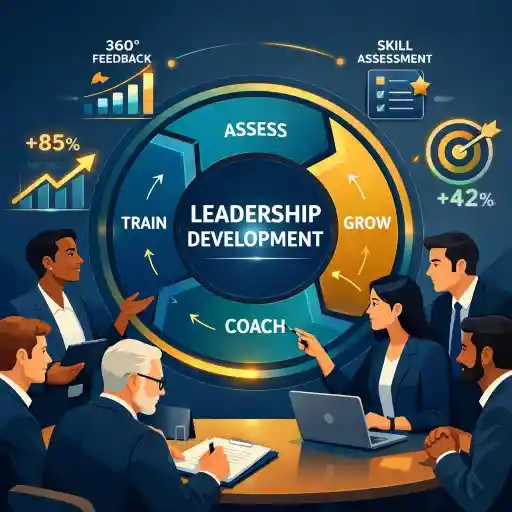
Assessment without development is just interesting data. Development without assessment is guesswork. The magic happens when you combine them strategically.
The Assessment Phase
First, you complete one or more assessments. This might take 20 minutes for a quick self-assessment or several hours if you’re doing a comprehensive 360-degree review. The key is answering honestly, not how you think you should answer.
You’ll receive a report highlighting your strengths, development areas, and often specific behavioral patterns. Good reports don’t just show scores—they explain what those scores mean and how they affect your leadership effectiveness.
The Development Phase
Now the real work begins. Based on your assessment results, you create a development plan. This isn’t a vague “get better at communication” goal. It’s specific actions you’ll take to build particular skills.
For example, if your assessment shows you struggle with delegating, your plan might include: reading articles about effective delegation, practicing with low-stakes tasks, asking for feedback from your team, and tracking your progress weekly.
Organizations that support this phase see real results. In a 2024 study of over 1,100 leadership professionals, 70% said it’s important or very important for leaders to master a wider range of effective leadership behaviors to meet current and future business needs.
The Follow-Up Phase
Development doesn’t happen overnight. The best programs include check-ins at three months, six months, and one year. You reassess your skills, measure progress, and adjust your plan as needed.
This is where many programs fall short. Only 18% of organizations rate their leaders as “very effective” at meeting organizational goals, often because development efforts lack consistent follow-through.
Choosing the Right Assessment for Your Needs
Not all assessments are created equal. The right choice depends on your situation, goals, and resources.
For Students and Emerging Leaders
Start with self-assessments and behavioral tools. These help you understand your natural leadership style without requiring input from a formal team structure. Look for free or low-cost options that still provide actionable feedback.
If you’re leading a club, organizing events, or managing group projects, consider asking trusted peers for informal 360-style feedback. Even simple questions like “What do I do well as a leader?” and “Where could I improve?” provide valuable insights.
For First-Time Managers
You need tools that cover the basics: communication, delegation, feedback, and emotional intelligence. A competency-based assessment helps you identify which management skills to prioritize as you grow into your role.
Many first-time managers benefit from 360-degree feedback tools because they reveal how your actions as a leader affect your team. This perspective is often eye-opening and immediately useful.
For Experienced Executives
Executive assessments should dig deeper into strategic thinking, organizational impact, and leadership presence. Tools like the Korn Ferry leadership assessments are designed specifically for senior leaders navigating complex organizational challenges.
At this level, combine assessments with executive coaching to translate insights into action. The assessment shows what to work on; the coach helps you actually do the work.
For Organizations Building Leadership Pipelines
You need scalable solutions that work across multiple levels. Look for platforms that allow customization, provide aggregate data for talent planning, and integrate with your existing development programs.
Organizations report that 51% of their leadership development training now focuses on reducing employee turnover, making assessment-driven development programs more critical than ever for retention.
Real-World Applications: From Campus to Boardroom
Leadership assessment and development look different depending on where you are in your career, but the principles stay the same: assess honestly, develop intentionally, and measure progress.
Student Leaders
You’re running a club, organizing a fundraiser, or leading a group project. An assessment helps you understand why some team members respond well to your style while others seem disconnected. Maybe you’re great at vision but weak on follow-through. Or you excel at details but struggle to inspire the bigger picture.
Use this knowledge to pair up with team members whose strengths complement yours. If you’re all vision and no execution, partner with someone detail-oriented. Your leadership doesn’t have to be perfect—it just needs to be self-aware.
Early-Career Professionals
You’re in your first management role or leading projects without formal authority. Assessments help you navigate tricky situations like giving feedback to peers who were recently your equals, or managing former friends professionally.
Focus on emotional intelligence and communication skills. These are the foundation of everything else. When people trust you and feel heard, they’re more willing to follow your lead even when you’re still learning.
Mid-Level Leaders
You’re managing managers, balancing multiple priorities, and feeling stretched thin. Assessment reveals whether you’re spending time on the right activities or getting caught in the weeds of day-to-day operations.
At this level, delegation and strategic thinking become critical. Your development plan should focus on letting go of tactical work and building your team’s capability to handle more complexity.
Senior Executives
Your decisions affect hundreds or thousands of people. Small improvements in your leadership create ripple effects throughout the organization. Assessment helps you maintain perspective, identify blind spots, and model the continuous learning you want to see in your culture.
Executive-level assessments often include organizational climate surveys that show how your leadership style affects company culture, employee engagement, and business results.
Measuring the Impact of Leadership Development
Good development programs prove their value. The question is: what should you measure?
Leadership development delivers approximately $7.25 in ROI for every $1 invested, according to Gallup research. But that ROI only materializes when you track the right metrics.
Individual Metrics
Track skill improvement through before-and-after assessments. Did your delegation score improve? Are you handling conflict more effectively? Document specific behavioral changes, not just feelings of improvement.
Gather feedback from your team regularly. Ask them if they’ve noticed changes in how you lead. Their observations often reveal progress you might miss.
Team Metrics
Look at team engagement scores, turnover rates, and productivity metrics. Organizations that leverage assessments as part of a broader leadership strategy report up to 29% higher levels of employee engagement.
Track how quickly your team completes projects, the quality of their work, and whether they’re taking on more responsibility over time. Strong leadership development creates stronger teams.
Organizational Metrics
For companies, measure leadership bench strength. 77% of organizations lack sufficient leadership depth across all levels. Are you building that depth, or constantly scrambling to fill leadership gaps?
Track internal promotion rates versus external hires for leadership roles. External hires are 61% more likely to fail within 18 months compared to internal promotions, making assessment-driven internal development both more effective and more cost-efficient.
Frequently Asked Questions
How often should I take a leadership assessment?
For ongoing development, reassess every 12-18 months. This gives you enough time to work on development areas and see meaningful change. Some leaders do quick pulse checks every 6 months to track progress on specific goals. If you’re in a new role or facing new challenges, an additional assessment can provide valuable guidance.
Are free leadership assessments worth taking?
Free assessments can provide useful starting points for self-reflection, but they often lack the depth and validation of professional tools. The best approach is combining free self-assessments with more comprehensive options when you’re ready to dive deeper. Platforms like RuleYourMind bridge this gap by offering detailed, AI-powered assessments at accessible prices with privacy-focused results you can trust.
What’s the difference between a leadership assessment and a performance review?
Performance reviews evaluate your job performance and results. Leadership assessments evaluate your leadership capabilities and potential, regardless of your current role. You might be exceeding performance goals while still having significant room to grow as a leader. Assessment focuses on how you lead, not just what you accomplish.
Can leadership assessment and development really change how I lead?
Yes, if you commit to the process. Employees who underwent identity-based leadership development training reported significant increases in self-concept clarity and sense of purpose two to three weeks after programs ended. Change takes time and deliberate practice, but the awareness assessments provide is the crucial first step.
What if my assessment results are discouraging?
Remember that assessments reveal opportunities for growth, not permanent limitations. Every leader has areas to develop—even the most successful ones. The fact that you’re taking an assessment shows you’re committed to improvement. Focus on one or two development areas at a time rather than trying to fix everything at once.
How do I choose between different types of leadership assessments?
Consider your goals and context. If you need feedback on how others perceive you, choose 360-degree tools. If you’re exploring your natural style, try behavioral assessments. For skill-specific development, pick competency-based tools. Many leaders benefit from combining different types over time to get a complete picture.
Taking Your Next Steps in Leadership Development
Leadership assessment and development aren’t luxury add-ons reserved for executives with big budgets. They’re practical tools anyone can use to become a more effective leader, whether you’re leading a study group or a Fortune 500 company.
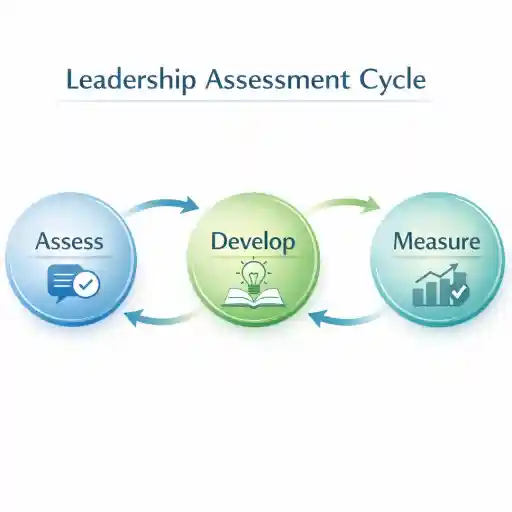
The key is starting where you are. Take an honest look at your leadership through assessment. Create a focused development plan based on what you learn. Track your progress and adjust as you grow. This simple cycle—assess, develop, measure, repeat—builds leadership capability over time.
The statistics show that organizations investing in leadership development see measurable returns in engagement, retention, and performance. But the personal benefits matter just as much. When you understand your leadership style, recognize your impact on others, and actively work to improve, you become the kind of leader people actually want to follow.
Ready to start your leadership development journey? RuleYourMind offers AI-powered leadership assessments accessible on any device, with detailed reports, customized action plans, and career-fit insights—all designed to help you grow as a leader without the expensive price tag of traditional assessments. Whether you’re taking your first leadership role or refining your executive presence, understanding where you are is the first step to getting where you want to go.