

Looking for the best books for leadership development? Whether you’re running a school club, stepping into your first manager role, or leading an entire division, the right book can shift the way you think—and the way you lead. This guide cuts through the noise and gives you a practical, honest reading list built for real people with real goals.
Why Books Still Matter for Leadership Growth
In a world full of podcasts, YouTube tutorials, and online courses, books still hold a unique edge. A good leadership book gives you depth—the kind you can’t get from a five-minute video. It lets you sit with an idea, revisit it, and connect it to your own experience.
Research consistently shows that high-performing leaders are avid readers. Many top executives report reading one or more books per month as part of their professional routine. Reading builds vocabulary, sharpens strategic thinking, and exposes you to challenges you haven’t faced yet.
But here’s the honest truth: reading alone doesn’t make you a leader. What matters is what you do with what you read. We’ll cover that too.
What Should You Look for in a Leadership Development Book?
Not all leadership books are created equal. Some are packed with research and frameworks. Others are mostly motivational fluff dressed up in business language. Here’s how to tell the difference.
Look for specificity. The best books don’t just say “be a better communicator.” They show you how—with exercises, case studies, or concrete examples. If a book is vague, it’s hard to act on.
Look for relevance to your stage. A book written for C-suite executives may not resonate if you’re leading a college project team. Match the book to where you are right now, and save the others for later.
Look for frameworks you can test. The most useful books give you a mental model you can apply on Monday morning. Think about the situation you’re in—then ask if the book directly addresses it.
Foundation Books Every New Leader Should Read
If you’re brand new to leadership, start here. These books for leadership development build the core skills that every leader needs—regardless of industry or title.
The 7 Habits of Highly Effective People – Stephen Covey
This classic has sold over 40 million copies worldwide and remains one of the most-cited leadership books of all time. Simon & Schuster Covey’s framework around proactivity, priorities, and interpersonal effectiveness translates to almost every leadership context—from a high school team captain to a department head.
Leaders Eat Last – Simon Sinek
Sinek draws on military and corporate examples to explain why the best leaders put their people first. It’s an easy read with a compelling argument for trust-based leadership. Great for first-time managers who want to build loyal, motivated teams.
How to Win Friends and Influence People – Dale Carnegie
First published in 1936, this book is still remarkably relevant. Carnegie’s principles on empathy, listening, and genuine connection are foundational skills for any leader. It’s also a fast read—you can finish it in a weekend.
Mindset – Carol Dweck
Stanford psychologist Carol Dweck’s research on fixed versus growth mindsets is essential reading. Leaders with a growth mindset are more resilient, more coachable, and better at developing others. This book explains the science and gives you tools to shift your thinking. Goodreads
Advanced Leadership Books for Experienced Managers and Executives
If you’ve already built a foundation, these books for leadership development go deeper. They challenge assumptions, introduce complexity, and tackle the harder parts of leading at scale.
Dare to Lead – Brené Brown
Brown’s research on vulnerability and courage in leadership is backed by years of data. She argues that the most effective leaders are those who are willing to be honest about uncertainty and imperfection. This book is especially powerful for leaders who manage knowledge workers or creative teams.
The Five Dysfunctions of a Team – Patrick Lencioni
Told as a business fable, this book breaks down why teams fail—and what you can do about it. The five-layer model (absence of trust, fear of conflict, lack of commitment, avoidance of accountability, inattention to results) is one of the most widely used leadership frameworks in organizations today.
Thinking, Fast and Slow – Daniel Kahneman
Nobel laureate Daniel Kahneman explores two systems of thinking: one fast and instinctive, one slow and deliberate. Understanding both helps leaders make better decisions, recognize biases, and design better team processes. It’s dense but worth it. Nobel Prize
An Everyone Culture – Robert Kegan & Lisa Laskow Lahey
This Harvard-based book introduces the concept of a “deliberately developmental organization.” It argues that the best companies turn everyday work into opportunities for personal growth. A thought-provoking read for leaders who want to build learning cultures.
Best Leadership Books for Students and Early-Career Professionals
You don’t need a title to start developing as a leader. These books meet students and early-career professionals exactly where they are.
Start with Why – Simon Sinek
Before you can inspire others, you need to understand what drives you. Sinek’s Golden Circle framework is especially useful for students figuring out their direction. It’s approachable, short, and immediately applicable—whether you’re leading a club or pitching an idea at an internship.
The First 90 Days – Michael Watkins
This is the go-to book for anyone stepping into a new role. Watkins lays out a clear plan for how to build credibility, learn fast, and win early support. If you’ve just started an internship or a first management job, read this immediately.
What Got You Here Won’t Get You There – Marshall Goldsmith
Goldsmith identifies 20 habits that hold smart, driven people back from reaching the next level. It’s direct, practical, and surprisingly self-aware. A great choice for ambitious early-career professionals who want honest feedback about their blind spots.
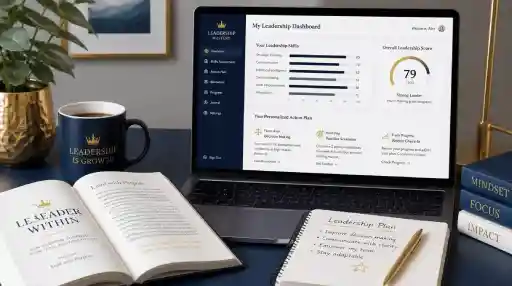
To complement what you’re reading, it helps to understand your current leadership strengths and gaps. A tool like RuleYourMind’s leadership assessment and development guide can help you connect book concepts to your own leadership profile.
How Do You Actually Apply Leadership Books in Real Life?
Reading a book and changing your behavior are two very different things. Most people finish a leadership book, feel inspired for a week, and then go back to their old habits. Here’s how to break that cycle.
Take notes as you read. Don’t just highlight. Write a sentence or two about how each idea applies to your current situation. This forces your brain to process the content actively, not passively.
Pick one idea per book. Trying to change 10 things at once never works. Choose the single most relevant concept from each book and focus on applying it for 30 days before moving on.
Discuss it with someone. Teaching a concept to someone else—whether that’s a colleague, a mentor, or even a friend—dramatically improves retention. Many leaders start informal book clubs for exactly this reason.
Track your progress. Leadership development is hard to measure without some kind of mirror. Journaling, peer feedback, or structured self-assessments can show you whether the ideas you’re reading about are actually changing your behavior. Learn more about how leadership assessments work and why they matter alongside your reading practice.
Beyond Books: Pairing Your Reading with a Leadership Self-Assessment
Books give you frameworks. But frameworks only work when you know yourself well enough to apply them. That’s where self-assessment comes in.
A structured leadership assessment tells you where you actually stand—not where you think you stand. It surfaces blind spots, confirms strengths, and gives you a starting point for targeted development. When paired with the right books, assessment data turns reading from a passive activity into a personalized growth plan.
Traditional tools like multi-rater or 360-degree leadership assessments are powerful but can be expensive and time-consuming. Platforms like RuleYourMind offer a modern alternative: an AI-powered, privacy-focused self-assessment that generates detailed reports, customized action plans, career-fit insights, and negotiation tactics—all at a fraction of the cost of traditional tools. It’s accessible on any device, so you can work through it at your own pace.
Think of it this way: the books tell you what great leadership looks like. A tool like RuleYourMind helps you figure out where you are on that map—and what to do next.
Frequently Asked Questions
What are the best books for leadership development for beginners?
For beginners, start with The 7 Habits of Highly Effective People by Stephen Covey, Start with Why by Simon Sinek, and Mindset by Carol Dweck. These three books cover the core foundations of self-awareness, motivation, and interpersonal effectiveness that all leaders need.
How many leadership books should I read per year?
Quality beats quantity. Reading and applying six to twelve focused leadership books per year—roughly one per month—is far more effective than racing through 50 books without reflection. Focus on depth: take notes, pick one key idea per book, and give yourself time to practice before moving on.
Do leadership books actually help you become a better leader?
Yes—but only if you apply what you read. Books expose you to frameworks, case studies, and research you’d never encounter otherwise. However, real leadership growth comes from practice, feedback, and reflection. Pairing reading with tools like self-assessments, mentoring, or coaching significantly increases impact.
Are there leadership books specifically for students and young professionals?
Absolutely. Start with Why, The First 90 Days, and What Got You Here Won’t Get You There are all written in accessible language and address challenges relevant to students, interns, and early-career professionals. You don’t need a senior title to benefit from these books.
What is the difference between reading leadership books and taking a leadership assessment?
Books give you general frameworks and principles. A leadership assessment gives you personalized data about your specific strengths, gaps, and style. They work best together. After reading a book on communication, for example, a self-assessment can show you how your current communication style scores—and what to work on first.
Are there free or low-cost alternatives to expensive leadership development programs?
Yes. Many excellent leadership books cost under $20. For more structured development, platforms like RuleYourMind offer AI-powered leadership assessments with detailed reports and action plans at a much lower cost than traditional programs or executive coaching. This makes meaningful leadership development accessible to students and early-career professionals, not just those with big corporate budgets.
Conclusion: Build Your Leadership Reading List—Then Put It to Work
The best books for leadership development don’t just sit on a shelf. They challenge how you think, push you to act differently, and—when combined with honest self-reflection—genuinely change the way you lead.
Start with one book that fits where you are right now. Take notes. Apply one idea. Then move to the next. That’s how reading becomes real growth.
And when you’re ready to go deeper, a structured self-assessment can show you exactly where your biggest leadership opportunities lie. RuleYourMind makes that process private, affordable, and actionable—whether you’re a student, a first-time manager, or a seasoned executive looking to sharpen your edge.
Explore how leadership assessment and development work together—and take the next step in your leadership journey today.