

Coaching leadership is a management approach where leaders focus on developing the people around them—not just getting tasks done. Instead of telling team members what to do, a coaching leader asks questions, listens, and helps others grow their own skills. It’s one of the most respected leadership styles in workplaces and schools alike. This guide explains what coaching leadership really means, why it works, and how you can start building this skill whether you’re leading a school club, managing your first team, or running a department.
What Is Coaching Leadership?
Coaching leadership is a style where the leader’s main job is to help others improve. Think of a sports coach who doesn’t play the game—they prepare the players, give feedback, and build confidence. That’s exactly what a coaching leader does at work or school.
Daniel Goleman, who identified six core leadership styles, described the coaching style as one that “focuses primarily on personal development rather than immediate work-related tasks.” Harvard Business Review, 2000. It’s a style rooted in trust, growth, and long-term thinking.
A first-time manager using coaching leadership might say, “What do you think went well in that project?” instead of jumping straight to criticism. That small shift builds self-awareness in the team member and keeps them engaged. It’s a leadership approach that pays off over time.
Coaching leadership is different from mentoring, though the two are related. A mentor shares experience. A coaching leader asks powerful questions that help people find their own answers. The goal is independence, not dependence.
How Does Coaching Leadership Compare to Other Styles?
There are many recognized leadership styles—authoritative, democratic, pacesetting, affiliative, and more. Each has its place. Coaching leadership stands out because it’s the only style primarily focused on the long-term growth of individuals.
A pacesetting leader sets high standards and expects people to keep up. That can work with a skilled, motivated team but often leads to burnout. An authoritative leader sets a clear vision and direction, which is great in a crisis. Coaching leadership, by contrast, is best when you have time to invest in people.
Goleman’s research found that of all six leadership styles, coaching had one of the most positive effects on organizational climate when used correctly—yet it was also the least used style. Harvard Business Review, 2000. Many leaders skip it because it takes patience and skill.
Understanding your own default style is the first step. A leadership style assessment can show you which styles you naturally lean on—and where you have room to grow into a more coaching-oriented approach.
Why Does Coaching Leadership Work So Well?
People stay in jobs where they feel like they’re growing. Gallup research has found that employees who feel their manager invests in their development are significantly more engaged and less likely to leave. Gallup Workplace. That directly affects team performance and company costs.
Coaching leadership also builds psychological safety. When a leader asks for your input instead of handing down orders, you feel valued. Teams that feel psychologically safe take more creative risks, report problems earlier, and communicate more openly.
Google’s Project Aristotle—a major internal study on team performance—found that psychological safety was the single biggest factor in high-performing teams. re:Work by Google. Coaching leadership directly supports this kind of environment.
For students in internships or school leadership roles, this style builds a reputation quickly. When people feel supported by you, they work harder and speak well of you to others. That matters a lot early in a career.
When Should You Use a Coaching Leadership Style?
Coaching leadership isn’t always the right call. If there’s a fire in the building, you don’t stop to ask, “What do you think our exit strategy should be?” There are moments where decisive, directive leadership is exactly what a team needs.
Coaching leadership works best when team members are motivated but still developing their skills. It’s ideal for onboarding new hires, helping a struggling employee turn things around, or preparing a high-potential person for more responsibility.
It also shines when you have a longer time horizon. If you’re building a team for a six-month project, investing three weeks in coaching conversations will pay back many times over. If you need results by Friday, a more directive approach may be appropriate.
A practical rule of thumb: use coaching leadership when the person has the will but needs help building the skill. Use more directive styles when speed and clarity are critical. Good leaders know how to shift between styles depending on the situation.
What Skills Does a Coaching Leader Need?
The good news is that coaching leadership is made up of learnable skills. You don’t have to be naturally patient or gifted at communication—these are things you can practice.
Active listening is at the core. This means giving your full attention, not planning your response while the other person is still talking. It means asking follow-up questions and reflecting back what you heard. Most people are surprised how powerful this feels to the person being listened to.
Asking powerful questions is another key skill. Questions like “What’s holding you back?” or “What would success look like for you here?” prompt real thinking. They’re open-ended and forward-looking. Compare that to “Why did you do it that way?”—which can feel like blame, not coaching.
Giving developmental feedback is different from just pointing out mistakes. A coaching leader connects feedback to the person’s goals. “I noticed you struggled with the presentation—given that you want to move into a client-facing role, let’s work on that together.” That kind of feedback motivates instead of deflating.
Other important skills include setting clear expectations, building trust over time, and knowing when to step back and let people figure things out on their own. The International Coaching Federation (ICF) has published extensive competency frameworks for professional coaches that overlap significantly with coaching leadership. ICF Core Competencies.
How Can You Develop a Coaching Leadership Style?
Most leaders develop a coaching style over years of trial and error. But there are faster ways. The key is self-awareness—knowing your current strengths and blind spots before you can make a plan to improve.
Start with a proper leadership assessment. Not a five-question quiz, but something detailed enough to tell you where your coaching tendencies are strong and where they fall short. A good assessment gives you a roadmap, not just a label.
Traditionally, that kind of in-depth feedback came from expensive 360-degree assessments run by HR consultants. These could cost hundreds or even thousands of dollars per person. SHRM. That puts them out of reach for most students, new managers, and small teams.
RuleYourMind is an AI-powered platform that changes that equation. It offers privacy-focused self-assessments you can take on any device, and produces detailed reports comparable to expensive 360-style tools. The platform also provides customized leadership action plans, career-fit insights, and even negotiation tactics. It’s built for people who are serious about growth but don’t have a corporate development budget behind them.
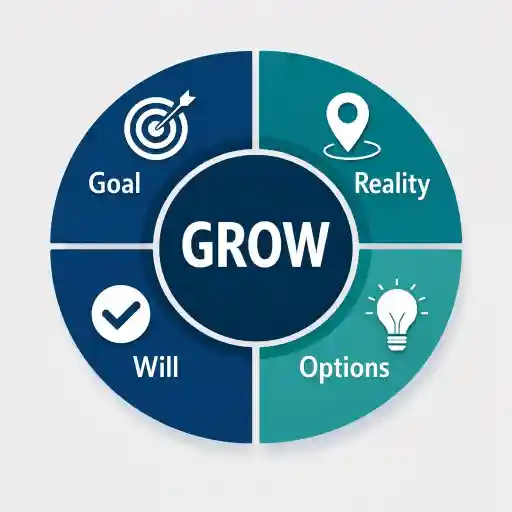
Beyond assessments, practical steps matter too. Find a mentor who uses a coaching style and observe how they run conversations. Practice asking one open-ended question in every one-on-one you have this week. Read about coaching frameworks like GROW (Goal, Reality, Options, Will)—one of the most widely used coaching models in business. Harvard Business Review.
Tools like the Hogan Leadership Assessment are used by many large organizations, but they’re typically administered through licensed consultants at significant cost. For accessible, self-directed development, platforms like RuleYourMind offer a practical entry point without sacrificing the quality of insight.
Frequently Asked Questions
What is the coaching leadership style in simple terms?
Coaching leadership is a style where the leader focuses on helping others grow, rather than just directing them. Instead of telling people what to do, a coaching leader asks questions, listens, and helps team members solve problems and develop skills on their own.
Is coaching leadership effective for all types of teams?
Coaching leadership works best with motivated team members who are still developing their skills. It’s less suited to emergency situations or highly experienced teams that don’t need close development support. The most effective leaders adapt their style based on the situation and the individual.
Can students use a coaching leadership style?
Absolutely. Whether you’re leading a student organization, managing a group project, or running a club, coaching leadership builds strong relationships and trust quickly. It also helps you develop skills—like listening and feedback—that employers actively look for.
How do I know if I’m already a coaching leader?
Signs include asking more questions than giving answers, caring about team members’ long-term development, and giving feedback tied to people’s goals. A structured leadership assessment can give you a much clearer, data-backed picture of where your coaching tendencies currently stand.
What is the GROW model in coaching leadership?
GROW stands for Goal, Reality, Options, and Will. It’s a simple framework coaching leaders use to structure development conversations. You start by clarifying the goal, then explore the current reality, identify options to move forward, and agree on what the person will actually do next.
How long does it take to develop a coaching leadership style?
You can start practicing coaching behaviors immediately—asking one better question today is a real start. Building it as a consistent style usually takes several months of intentional practice and feedback. Using a self-assessment tool and a structured action plan can cut that development curve significantly.
Start Leading Like a Coach
Coaching leadership is not a soft skill—it’s a high-value capability that drives retention, performance, and trust. The leaders who invest in people get the best out of them. That’s true whether you’re running a school club or managing a department of fifty.
The first step is understanding where you currently stand. What’s your natural leadership style? Where are your coaching instincts strong, and where do they need work? You can’t build what you can’t see.
If you’re ready to find out, RuleYourMind offers an accessible, privacy-focused way to get those answers. It’s designed for real people—students, new managers, and experienced leaders alike—who want practical insights without the enterprise price tag. Take the assessment, get your action plan, and start building your coaching leadership style today.