

Focus Keyword: coaching leadership styles
Coaching leadership styles are management approaches that prioritize developing people over simply directing tasks. A coaching leader asks questions, gives feedback, and helps team members grow their own skills and confidence. Research consistently shows that coaching-oriented leaders build more engaged, resilient, and high-performing teams compared to purely directive styles. This article explains what coaching leadership styles are, how they differ from other styles, when to use them, and how to discover which approach fits you best — whether you’re a student leading a club, a new manager, or a senior executive.
Think about the best leader you’ve ever had. Chances are they didn’t just tell you what to do. They listened. They asked what you thought. They helped you figure things out rather than handing you all the answers. That’s the essence of a coaching leadership style.
Most people step into leadership roles without much training. A student becomes a club president. An intern gets promoted to team lead. A top salesperson suddenly manages five people. The instinct is often to direct — to tell people what to do and how to do it. But research from Gallup shows that only 23% of employees worldwide are actively engaged at work, and managers account for at least 70% of the variance in team engagement scores. (Source: Gallup, State of the Global Workplace)
Coaching leadership styles close that engagement gap. They shift focus from tasks to people — and the results speak for themselves.
What Is a Coaching Leadership Style?
A coaching leadership style is one where the leader’s primary goal is to develop the people around them. Instead of just assigning work, a coaching leader invests time in understanding each person’s strengths, goals, and areas for growth.
Psychologist Daniel Goleman, who popularized the concept of emotional intelligence, identified six core leadership styles. He described the coaching style as one of the most effective for long-term performance — particularly because it builds trust and intrinsic motivation. (Source: Harvard Business Review, “Leadership That Gets Results”)
In practice, a coaching leader might:
- Ask “What do you think we should do?” before offering their own answer
- Set development goals alongside performance goals
- Give regular, specific feedback — not just during annual reviews
- Help team members connect their daily work to their bigger career goals
It works across settings. A high school club president using a coaching approach might ask members to lead specific projects instead of doing everything themselves. A first-time manager might hold weekly one-on-ones focused on growth, not just status updates.
Want to understand the broader landscape of leadership development? This guide on what leadership coaching actually means is a solid starting point.
What Are the Main Types of Coaching Leadership Styles?
Coaching leadership isn’t one-size-fits-all. There are several distinct approaches, and the best leaders often blend them depending on the situation.
1. Democratic Coaching
This style invites input from the whole team before decisions are made. It works well when you have experienced team members who want a voice. It slows things down a little, but increases buy-in significantly.
2. Holistic Coaching
Holistic coaching looks at the whole person — not just their job performance. It considers things like work-life balance, personal values, and emotional wellbeing. This approach is especially common in executive coaching and leadership development programs.
3. Mindfulness-Based Coaching
This approach helps leaders and team members develop self-awareness, focus, and emotional regulation. It’s growing in popularity in corporate settings, with companies like Google and Aetna building mindfulness programs for their leaders. (Source: Harvard Business Review)
4. Vision-Driven Coaching
Here, the leader ties all coaching conversations back to a shared goal or mission. Team members understand not just what they’re doing, but why it matters. This is particularly effective for startups, nonprofit teams, and school organizations where mission alignment is strong.
5. Autocratic Coaching (Directive with Development)
This is a hybrid — the leader makes the final call, but still invests in developing the team. It’s useful in high-stakes or fast-moving environments where there isn’t time for full democratic input, but growth still matters.
How Does Coaching Leadership Compare to Other Leadership Styles?
To understand coaching leadership, it helps to see how it stacks up against the other major styles.
Directive/Autocratic: The leader decides everything and tells people what to do. Fast and clear, but limits creativity and can lower morale over time.
Pacesetting: The leader sets a high bar and expects everyone to keep up. Effective in the short term, but often causes burnout. Goleman found this style can actually damage team climate if overused. (Source: HBR)
Affiliative: Focuses on harmony and emotional connection. Good for morale, but can avoid necessary conflict or tough feedback.
Coaching: Prioritizes long-term development. It takes more time upfront, but builds capable, self-sufficient teams who need less hand-holding over time.
The key difference is this: directive leaders solve problems for their teams. Coaching leaders help their teams develop the ability to solve problems themselves.
Tools like the CliftonStrengths assessment from Gallup have helped some leaders explore their natural tendencies, though these tools typically require a subscription and focus more on strengths than leadership behavior specifically.
When Should You Use a Coaching Leadership Style?
Coaching leadership is powerful, but it’s not always the right tool for every moment. Context matters.
Use it when:
- You’re onboarding new team members and want them to grow quickly
- A team member is struggling and needs support, not just correction
- You want to retain high-performers by investing in their career development
- You’re building a long-term team culture, not just hitting a short-term deadline
Be cautious when:
- There’s a genuine crisis and decisions need to be made immediately
- A team member is brand new and doesn’t yet have the foundation to self-direct
- The stakes are too high to allow for trial and error
A McKinsey study found that organizations where senior leaders modeled coaching behaviors saw 21% higher employee performance and significantly lower voluntary turnover. (Source: McKinsey & Company)
Even in fast-paced environments like internships or early-stage startups, small moments of coaching — a five-minute debrief, a single well-placed question — can make a measurable difference.
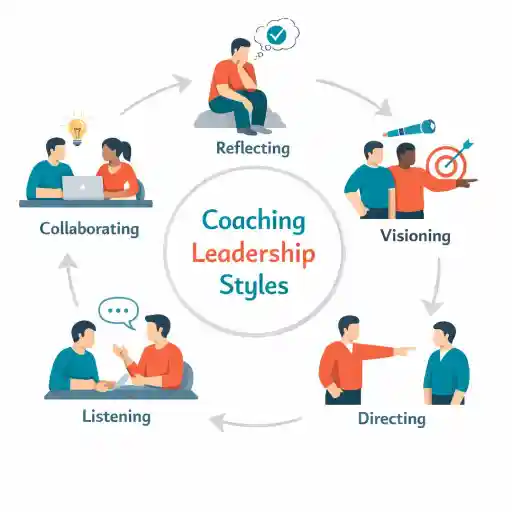
How Do You Develop a Coaching Leadership Style?
Good news: coaching is a skill, not a personality type. It can be learned and practiced.
Start with listening. Most leaders talk too much. Practice asking one question and then staying quiet. Really quiet. Let the other person think and respond. This alone shifts the dynamic.
Ask better questions. Move from “Did you finish that report?” to “What challenges came up with that report, and how did you handle them?” Open-ended questions create space for reflection and growth.
Give feedback that’s specific and timely. Feedback that comes weeks after the fact is hard to act on. A quick, specific comment right after an event — “That presentation was clear; the data slide especially landed well” — is far more useful.
Connect work to goals. Find out what each team member actually wants for their career. Then look for ways to align daily tasks with those goals. This is one of the highest-leverage things a coaching leader can do.
Get feedback on yourself. This is where many leaders stall. It’s hard to know your blind spots without outside input. Structured leadership assessment and development tools can help you see patterns in your own behavior that you might miss on your own.
How Can You Identify Your Own Leadership Style?
Knowing that coaching leadership exists is one thing. Knowing where you currently stand — and where your gaps are — is another.
Many leaders assume they’re more coaching-oriented than they actually are. A 2019 study published in the Journal of Applied Psychology found that self-assessments of leadership behavior often differ significantly from how direct reports perceive the same leader. (Source: APA PsycNet) In other words, perception gaps are common — and dangerous if left unaddressed.
Formal 360-degree assessments can surface these gaps. They gather feedback from peers, direct reports, and managers to give a full picture of your leadership behavior. The downside? Traditional 360 assessments can cost hundreds or even thousands of dollars per person, putting them out of reach for students, early-career professionals, and small teams.
That’s where platforms like RuleYourMind offer a practical alternative. RuleYourMind is an AI-powered leadership assessment platform that produces detailed, 360-style reports — including a breakdown of your coaching tendencies — at a fraction of the cost. It’s privacy-focused, works on any device, and delivers personalized action plans, career-fit insights, and even negotiation tactics based on your results.
Whether you’re a student figuring out your first leadership role or a seasoned executive looking to sharpen your coaching approach, having a clear, data-backed picture of your current style is the first real step toward improving it.
The Bottom Line on Coaching Leadership Styles
Coaching leadership styles aren’t about being soft or avoiding hard decisions. They’re about building the kind of team that doesn’t need you to make every decision — because you’ve invested in developing the people around you.
The research is consistent: coaching-oriented leaders produce more engaged teams, lower turnover, and stronger long-term performance. And unlike talent or charisma, coaching is a skill you can actively practice and improve.
The best starting point is always self-awareness. You can’t coach others effectively if you don’t understand your own default behaviors and blind spots. If you haven’t done a formal leadership assessment yet, now is a good time to start.
RuleYourMind makes that step accessible for everyone — not just executives with big training budgets. It’s built for people who are serious about growing as leaders, at whatever stage they’re at. Explore what a leadership assessment can tell you about your coaching style →
Frequently Asked Questions About Coaching Leadership Styles
What is a coaching leadership style in simple terms?
A coaching leadership style means prioritizing the growth and development of your team members, not just task completion. Instead of telling people what to do, a coaching leader asks questions, gives feedback, and helps people build their own skills and confidence over time.
What are the main coaching leadership styles?
The most common types include democratic coaching (collaborative decision-making), holistic coaching (whole-person focus), mindfulness-based coaching (self-awareness and focus), vision-driven coaching (connecting work to a shared mission), and directive coaching (high standards with development built in).
Is coaching the best leadership style?
It depends on context. Coaching leadership is highly effective for developing people, improving engagement, and building strong team culture over time. However, in a crisis or with brand-new team members who need structure, a more directive approach may be needed. The best leaders adapt their style to the situation.
How do I know if I have a coaching leadership style?
One of the most reliable ways is to use a structured leadership assessment. Tools like RuleYourMind generate detailed, AI-powered reports that break down your leadership behaviors — including how coaching-oriented you are — based on your self-assessment. This can be a powerful eye-opener, especially since research shows that leader self-perception often differs from how others experience them.
Can anyone learn to be a coaching leader?
Yes. Coaching is a learnable skill, not an inborn trait. It starts with habits like asking better questions, listening more intentionally, and giving timely feedback. Over time, these practices become natural — and the results show up in team engagement, performance, and retention.
What’s the difference between a coaching leader and a mentor?
A mentor typically shares their own experience and knowledge to guide someone. A coaching leader, on the other hand, helps someone discover their own answers through questions and reflection. Both are valuable, but coaching focuses more on developing independent thinking rather than passing on expertise.