Coaching leadership development is the structured process of using feedback, reflection, and guided practice to help people grow into better leaders. Whether you’re running a school club, managing your first team, or leading an organization, this guide breaks down what it means, why it works, and how to start today.
Most people don’t become great leaders by accident. They learn through experience — but also through coaching, honest feedback, and the willingness to look at their own blind spots.
The problem? Traditional leadership development programs can cost thousands of dollars and take months to complete. Many people — especially students, early-career professionals, and first-time managers — simply don’t have access to that kind of support.
This guide is here to change that. We’ll walk you through exactly what coaching leadership development is, how it works, who benefits most, and what tools you can use to start building your leadership skills right now — without breaking the bank.
What Is Coaching Leadership Development?
Coaching leadership development is a personalized approach to building leadership skills. It combines self-awareness, structured feedback, and intentional practice. Unlike a classroom lecture or a one-size-fits-all training course, coaching is built around you — your strengths, your gaps, and your goals.
Think of it like athletic training. A good coach doesn’t just hand you a playbook. They watch you in action, point out what’s working, and help you drill the areas where you’re weakest. Leadership coaching does the same thing — but for skills like communication, decision-making, emotional intelligence, and team motivation.
The coaching relationship can take many forms. It might involve a professional executive coach, a mentor inside your organization, or a structured self-assessment program that guides you through reflection and goal-setting on your own schedule.
Why Does Leadership Coaching Actually Matter?
Leadership gaps are expensive. When managers lack self-awareness or communication skills, teams underperform, turnover rises, and morale drops. Organizations lose billions every year to poor leadership — and most of those losses are preventable.
Research from the International Coaching Federation (ICF) and PricewaterhouseCoopers found that 86% of companies reported recouping their investment in coaching, and the median ROI was seven times the initial cost. ICF Global Coaching Study
But it’s not just about money. Coaching helps leaders become more empathetic, more decisive, and more adaptable. Those are traits that matter whether you’re managing a five-person startup team or leading a department of 500.
For younger professionals, early investment in leadership coaching creates a compounding effect. The habits and self-awareness you build at 22 as a team lead in an internship will still be paying dividends at 42 as a VP.
Who Benefits from Coaching Leadership Development?
The short answer: almost everyone in a leadership role — or anyone who wants to be in one. But let’s get specific.
Students and new grads benefit from leadership coaching when they take on roles like club president, team captain, or project lead. These early experiences shape your leadership identity. Getting structured feedback early helps you avoid bad habits that can take years to unlearn.
First-time managers are often the most underserved group. Many are promoted because they were great individual contributors — not because they had formal leadership training. A solid coaching process helps them make the shift from “doing the work” to “enabling others to do the work.”
Mid-level managers and team leads often hit a wall. They’ve mastered the basics but feel stuck. Coaching at this stage helps them identify the specific skills — strategic thinking, executive presence, conflict navigation — that will take them to the next level.
Senior executives use coaching to sharpen self-awareness, manage blind spots, and think through complex decisions. At the executive level, the stakes are high enough that even small improvements in leadership effectiveness can create enormous value.
How Does the Coaching Process Work?
Every coaching engagement looks a little different, but most follow a similar arc.
It starts with assessment. You need a clear, honest picture of where you stand before you can map a path forward. This might involve a self-assessment, feedback from peers and managers, or a structured diagnostic tool. (More on assessments in the next section.) You can learn more about what this looks like in practice in this leadership assessment and development guide.
Next comes goal-setting. Good coaching doesn’t try to fix everything at once. You pick one or two high-leverage areas to focus on — skills that will have the biggest impact on your results and relationships.
Then comes the practice and feedback loop. You try new behaviors in real situations — a team meeting, a difficult conversation, a presentation — and then reflect on what happened. Your coach (or a structured reflection process) helps you extract lessons and adjust.
Finally, there’s accountability. Progress stalls without it. Whether it’s a weekly check-in with a coach, a progress review built into an app, or a peer accountability partner, the best coaching relationships include regular check-ins on goals.
What Role Do Assessments Play in Leadership Development?
Assessments are the foundation of any serious leadership coaching program. Without honest data about your strengths and gaps, coaching is just guesswork.
The most comprehensive type is called a 360-degree assessment. It gathers feedback from multiple sources — your manager, your peers, and your direct reports — to give you a full picture of how your leadership lands. Studies show that leaders who receive 360-degree feedback improve their performance more consistently than those who don’t. Harvard Business Review You can read a full breakdown of how these work in this 360-degree leadership assessment guide.
Traditional 360-style assessments from consulting firms or executive coaches can cost $500 to several thousand dollars per person. That pricing puts them out of reach for most students and early-career professionals.
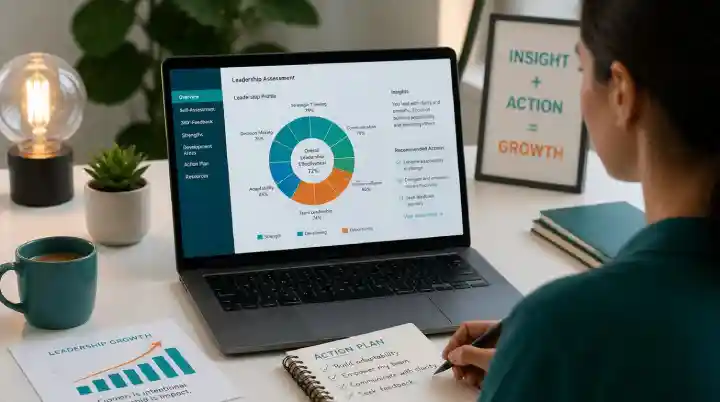
That’s where modern, AI-powered platforms are changing the game. Leadership assessments no longer have to be expensive or inaccessible. Tools like RuleYourMind offer privacy-focused self-assessments on any device, producing detailed reports that are comparable in depth to traditional 360-style assessments — at a fraction of the cost.
What Tools and Platforms Support Leadership Coaching?
The leadership development industry has exploded over the past decade. There are now dozens of platforms, apps, and coaching services available — each with different strengths.
At the high end, platforms like BetterUp offer one-on-one coaching sessions with certified coaches, typically aimed at enterprise clients with larger budgets. These can be highly effective but are often priced for corporate HR budgets, not individual learners.
For individuals who want a powerful, affordable starting point, RuleYourMind offers a compelling alternative. It’s an AI-powered leadership assessment platform designed for students, managers, and executives who want actionable insights without the enterprise price tag. Beyond the assessment report, it includes customized leadership action plans, career-fit insights, and negotiation tactics — tools that typically come only with expensive executive coaching packages.
Whether you’re preparing for a performance review, planning a career move, or just trying to grow as a leader, having access to a clear, data-driven self-assessment is a huge advantage.
How Do You Get Started with Leadership Coaching?
You don’t need a big budget or a corner office to start your leadership development journey. You just need a starting point.
Here’s a simple path to follow:
Step 1: Assess where you are. Start with an honest self-assessment. What are your natural leadership strengths? Where do you get tripped up? If you want a structured framework, a tool like RuleYourMind can guide you through this process and give you a detailed, personalized report.
Step 2: Pick one growth area. Don’t try to improve everything at once. Choose one skill — like giving feedback, running meetings, or managing conflict — and go deep on it for 30 to 60 days.
Step 3: Find a feedback source. This could be a mentor, a trusted colleague, or even a structured reflection practice. The key is getting honest input from outside your own head.
Step 4: Practice in real situations. Leadership skills are learned by doing, not by reading. Look for low-stakes opportunities — a team project, a volunteer role, a cross-functional meeting — to practice your target skill.
Step 5: Review and adjust. After 30 days, reflect on your progress. What’s working? What isn’t? Update your action plan and keep going.
Frequently Asked Questions
What is the difference between leadership coaching and leadership training?
Training is typically a group experience focused on transferring knowledge — think workshops, seminars, or online courses. Coaching is personalized. It focuses on your specific situation, your behaviors, and your growth goals. Both have value, but coaching tends to produce deeper, longer-lasting behavior change because it’s tailored to the individual.
Can coaching leadership development really work for students?
Absolutely. In fact, starting early is one of the biggest advantages you can give yourself. Students who actively develop leadership skills during school — through clubs, internships, sports, or volunteer work — enter the workforce with a level of self-awareness that many professionals spend years trying to build. Pairing those experiences with a structured assessment and action plan makes that development even more intentional.
How long does it take to see results from leadership coaching?
Most people notice meaningful changes in awareness and behavior within 30 to 60 days of focused coaching. Deeper changes — like shifting how you handle conflict or building executive presence — typically take three to six months of consistent practice and feedback. The timeline depends heavily on how intentional you are and how much real-world opportunity you have to practice.
Do I need a human coach to benefit from leadership development?
Not necessarily. While a skilled human coach adds real value — especially for navigating complex interpersonal situations — much of the foundational work of leadership development can be done independently with the right tools. AI-powered platforms like RuleYourMind can give you detailed assessments, personalized action plans, and career-fit insights without requiring a one-on-one coaching relationship.
What leadership skills should I focus on first?
Self-awareness is almost always the best place to start. Leaders who understand their own patterns — how they communicate under pressure, how they’re perceived by others, what situations bring out their best and worst — are better equipped to grow in every other area. From there, communication, emotional intelligence, and decision-making are consistently the highest-impact skills for most leaders at any level.
How much does leadership coaching typically cost?
Traditional executive coaching can range from $200 to $500 per hour, with full engagements running into the thousands. Corporate leadership programs can cost even more per participant. For individuals and smaller organizations, AI-powered assessment platforms offer a much more accessible entry point — giving you a comparable depth of insight at a fraction of the cost.
Start Your Leadership Development Journey Today
Coaching leadership development isn’t reserved for C-suite executives with big budgets. It’s for anyone who wants to lead more effectively — whether that’s a college sophomore running a student organization, a first-time manager figuring out how to motivate a team, or a mid-level director preparing for a bigger role.
The most important step is getting an honest picture of where you are right now. That’s where a structured assessment becomes invaluable. It removes guesswork, gives you a clear starting point, and helps you build a development plan that’s actually relevant to your situation.
If you’re looking for an accessible, affordable way to do that, RuleYourMind is worth exploring. It offers privacy-focused assessments accessible on any device, with detailed reports and customized action plans that give you the kind of insight typically reserved for high-cost coaching programs.
Great leadership is built, not born. Start building yours today.