
Think about the best leader you have ever worked with. Chances are, someone coached them along the way. Coaching for leadership development is one of the most effective tools for turning good people into great leaders—whether you are running a school club, managing your first team, or leading a company division.
Yet many people assume coaching is only for executives with big budgets. That is simply not true anymore. Today, accessible platforms and self-assessment tools have opened the door for anyone who wants to grow. The challenge is knowing where to start, what coaching actually involves, and how to measure whether it is working.
This guide breaks all of that down in plain language. You will find practical examples, real data, and clear steps you can take today—no jargon required.
What Is Coaching for Leadership Development?
Leadership coaching is a structured process where an experienced guide—a coach—helps someone identify their strengths, close skill gaps, and become more effective as a leader. It is different from training. Training teaches a fixed curriculum. Coaching is personalized to you.
A coach might help a first-time manager learn how to give feedback without sounding harsh. They might help a senior executive spot a blind spot that is slowing their team down. Or they might help a student president figure out how to motivate volunteers who are losing steam.
The process usually involves honest conversations, goal-setting, and follow-up. Good coaching creates accountability. It also creates self-awareness—which is often the biggest missing piece for leaders at every level.
Coaching is closely linked to formal leadership assessment. Before you can develop as a leader, it helps to know exactly where you stand. That is why many coaching engagements begin with a structured self-assessment or 360-degree feedback process. You can learn more about how those assessments work in this leadership assessment guide.
Why Does Leadership Coaching Matter Right Now?
The numbers tell a clear story. The global executive coaching and leadership development market was valued at approximately $103.56 billion in 2025 and is projected to reach $161.10 billion by 2030, growing at a CAGR of 9.24%. (Mordor Intelligence, 2026) Organizations are pouring resources into this field because it works.
But here is the uncomfortable flip side. 77% of organizations report lacking sufficient leadership depth across all levels. (Exec Learn, 2025) There is a real leadership gap—and it is costing companies talent, productivity, and revenue.
Poor leadership does not just hurt business. It drives people to quit. Around 30.3% of employees who left their jobs in 2024 named poor company leadership as a key reason. (High5Test, 2025) Nearly 70% of U.S. workers say they would consider quitting because of a bad manager. (High5Test, 2025)
Coaching addresses this at the root. Rather than waiting for leaders to fail and then replacing them, smart organizations and individuals use coaching proactively to build the skills leaders need before problems arise.
What Types of Leadership Coaching Are Available?
Not all coaching looks the same. The right type depends on your goals, your role, and your budget.
1. One-on-One Executive Coaching
This is the classic model. A certified coach works with one person—usually a senior leader or high-potential employee—in private sessions. It is highly personalized but also the most expensive option. Sessions can cost anywhere from a few hundred to several thousand dollars per hour.
2. Group and Team Coaching
A coach works with a whole team together. This is useful when a group needs to improve how they communicate, make decisions, or handle conflict. It is more affordable than one-on-one coaching and builds shared language across a team.
3. Peer Coaching
Colleagues coach each other using structured frameworks. This works well in internship cohorts, student leadership programs, and mid-level management groups. It costs very little and builds strong professional relationships at the same time.
4. Self-Directed Coaching with Assessments
This is the fastest-growing model. A person uses a structured tool—often digital—to assess their leadership style, receive personalized feedback, and follow a development plan. It is flexible, private, and accessible on any device. Platforms like RuleYourMind’s leadership assessment and development tools fall into this category, offering detailed reports and customized action plans at a fraction of the cost of traditional coaching.
5. AI-Powered Coaching
Artificial intelligence is reshaping this field rapidly. AI tools can provide real-time feedback, track progress, and personalize development plans at scale. AI is identified as a major force behind growth in long-duration leadership training programs, contributing to a projected 11.7% CAGR in the global corporate leadership training market through 2029. (High5Test, 2025)
How Do You Start a Leadership Coaching Journey?
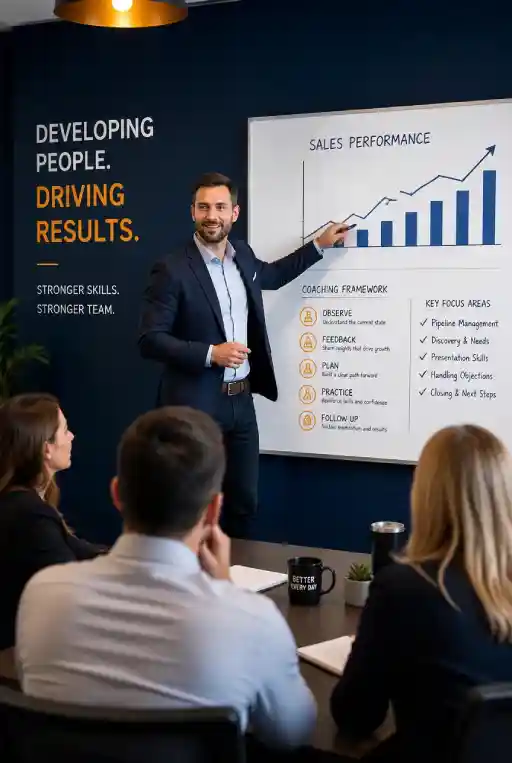
Starting does not have to be complicated. Here is a simple path that works whether you are a student, a new manager, or a seasoned executive.
Step 1: Know where you stand. You cannot improve what you have not measured. Begin with an honest self-assessment. What are your strongest leadership skills? Where do you get stuck? A structured leadership assessment gives you an objective starting point.
Step 2: Set specific goals. Vague goals lead to vague results. Instead of “become a better leader,” try “learn to give constructive feedback to underperforming team members” or “improve how I run one-on-one meetings.” Specific goals make coaching conversations much more productive.
Step 3: Choose the right format. Match your format to your situation. If you have a tight budget, start with self-directed assessments and peer coaching. If your organization offers coaching, take full advantage. If you are managing a team, ask about group coaching options.
Step 4: Commit to consistent practice. Coaching is not a one-time event. Growth happens through repeated reflection, feedback, and adjustment. Build coaching conversations—with yourself or others—into your regular routine.
Step 5: Track your progress. Review your goals every 30 to 90 days. Are you improving? Are your team relationships getting stronger? Use the same assessment tools you started with to see concrete changes over time.
How Do You Measure the Impact of Leadership Coaching?
This is the question most people skip—and it is also the most important one. Without measurement, you cannot tell if coaching is actually working.
The good news is that leadership coaching has a strong track record. According to a study cited by Loeb Leadership, the ROI of a coaching engagement can exceed 500 times the initial investment, based on research from top consulting firms. (Loeb Leadership, 2025) That figure sounds dramatic, but large-scale programs back it up. Intel’s coaching program reportedly contributes around $1 billion USD per year in operating margin. (International Coaching Federation, 2024)
For individuals and smaller teams, ROI looks less like a billion-dollar figure and more like these concrete signals:
- Stronger team engagement and lower turnover
- Clearer, more confident communication
- Faster decisions with less second-guessing
- Better performance reviews and peer feedback scores
- Increased self-awareness about blind spots
87% of people who received coaching reported that it significantly improved their confidence and leadership capabilities. (Research.com, citing Dion Leadership, 2024) That is not a small improvement. Confidence alone changes how a leader shows up—in meetings, in hard conversations, and in moments of uncertainty.
To measure your own progress, use a baseline assessment at the start and then revisit it every few months. Tools that produce structured reports make this comparison much easier.
Coaching for Leadership Development: Students and Early-Career Professionals
Leadership coaching is not just for senior executives. In fact, starting earlier gives you a significant advantage. The habits and self-awareness you build in your twenties shape how you lead for decades.
Consider a student running a campus organization. They are managing volunteers, resolving conflicts, making budget decisions, and representing a group to administration—all without any formal management training. A basic coaching conversation or structured self-assessment could dramatically accelerate their growth in that role.
The same applies to someone in their first internship. You may not have direct reports yet, but you are already influencing others, navigating team dynamics, and figuring out how to communicate with people who have more experience than you. Those are leadership skills in action.
Only 10% of people are considered natural leaders, but research suggests another 20% show strong leadership potential when given proper training and development. (Exec Learn, 2025) Coaching is how that potential gets unlocked.
Early-career professionals benefit especially from identifying their leadership style before bad habits take hold. Understanding your natural tendencies—whether you tend to over-control, under-communicate, or avoid conflict—helps you course-correct early rather than years down the line.
You can explore how formal development frameworks connect to your current career stage in this overview of the center of leadership development.
Affordable Tools That Support Leadership Coaching
Cost is one of the biggest barriers to leadership coaching. A traditional executive coaching engagement can run thousands of dollars per month. For students, early-career professionals, and small-business managers, that is simply not realistic.
This is where digital platforms have changed the game. In 2024, there were over 1.5 million online searches each month from people seeking management or executive coaching services, according to Google Trends data analyzed by Loeb Leadership. (Loeb Leadership, 2025) The demand is massive—and so is the need for accessible solutions.
RuleYourMind is one platform built specifically to address this gap. It is an AI-powered leadership assessment tool that gives you privacy-focused self-assessments you can complete on any device. The reports it generates are detailed and comparable in depth to expensive 360-style feedback processes. You also get customized leadership action plans, career-fit insights, and negotiation tactics—all in one place.
For someone who cannot afford a professional coach but still wants structured, actionable feedback, RuleYourMind offers a practical middle ground. It is the kind of resource that helps a first-time team lead understand their blind spots before their team starts to feel them.
BetterUp is another well-known platform in this space, offering AI-powered coaching at scale for enterprise clients. It serves a different market segment, primarily large organizations with dedicated HR budgets. RuleYourMind is designed to be more accessible for individuals, students, and smaller teams who need the same quality of insight without the enterprise price tag.
The right tool is one you will actually use. Start simple, stay consistent, and let the data guide your next development step.
Frequently Asked Questions
What is the difference between leadership training and leadership coaching?
Leadership training delivers a set curriculum to a group—think workshops, online courses, or seminars. Leadership coaching is personalized. A coach works with you specifically to address your unique goals, strengths, and gaps. Both have value, but coaching tends to produce deeper, longer-lasting behavioral change because it is tailored to the individual.
How long does coaching for leadership development take to show results?
It depends on the person and the goals. Some people notice shifts in self-awareness and communication within the first few weeks. Broader behavioral changes—like how you handle team conflict or give feedback—typically take three to six months of consistent effort. The International Coaching Federation notes that the ROI of coaching for individuals can be almost immediate in terms of mindset and confidence shifts.
Can students benefit from leadership coaching?
Absolutely. Students leading clubs, running campus organizations, or participating in internships are already exercising leadership skills every day. Structured coaching—even in the form of a self-assessment and action plan—helps students identify their natural style early, build confidence, and enter the workforce with a stronger self-understanding than their peers.
How do I know if a leadership coach is qualified?
Look for credentials from recognized bodies like the International Coaching Federation (ICF), which certifies coaches at different levels based on training hours and demonstrated competency. Beyond credentials, good chemistry matters. The best coach for you is someone you trust, who asks the right questions, and who helps you define measurable goals—not just someone with an impressive title.
Is self-directed leadership coaching as effective as working with a human coach?
Self-directed tools work best when they are structured, data-driven, and paired with a clear action plan. They are not a replacement for the depth of a good human coaching relationship, but they are a powerful starting point—especially for people early in their career or working within a tight budget. Platforms like RuleYourMind are designed to bridge this gap with detailed reports and personalized development plans that mirror what a formal coaching process would uncover.
How much does leadership coaching typically cost?
Traditional one-on-one executive coaching can range from a few hundred dollars per session to several thousand, depending on the coach’s experience and the engagement length. Group coaching and peer programs are significantly cheaper. AI-powered self-assessment platforms like RuleYourMind offer a much more affordable entry point, making quality leadership development accessible to a much wider audience.
Start Your Leadership Development Journey Today
Coaching for leadership development is not a luxury. It is one of the most practical investments you can make in your career—whether you are a student just starting out, a manager finding your footing, or an executive looking to lead more effectively through change.
The evidence is clear. Organizations with strong coaching cultures see better retention, stronger engagement, and measurable performance gains. Individuals who invest in understanding their leadership style grow faster and make better decisions under pressure.
You do not need a large budget to get started. You need clarity about where you are, a plan for where you want to go, and the right tools to help you get there.
If you are ready to take the first step, RuleYourMind offers an AI-powered, privacy-first leadership assessment that gives you the kind of detailed, actionable insights that used to require hiring an expensive coach. It is a practical starting point—no jargon, no hard sell, just honest feedback and a clear path forward.
Great leaders are not born. They are built—one honest conversation, one coaching session, one self-reflection at a time.