
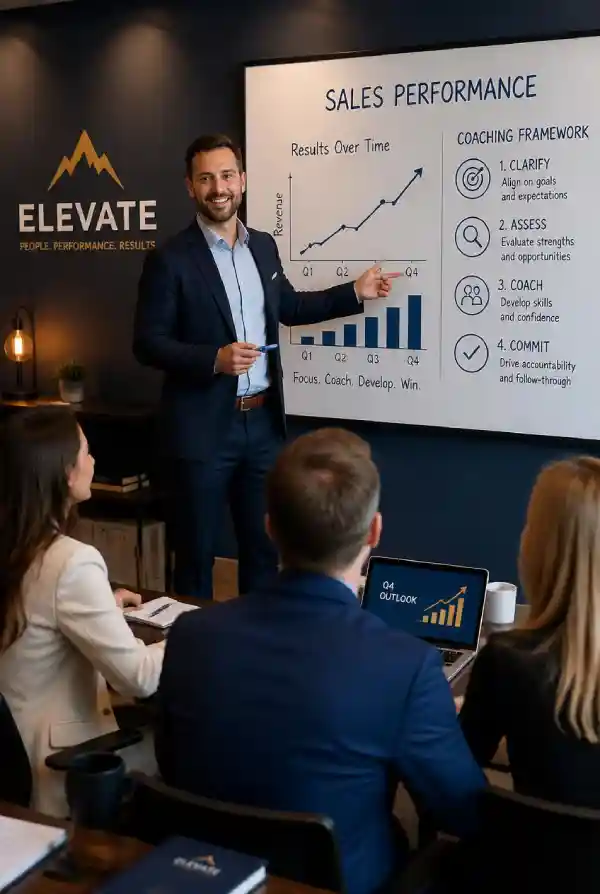
LLM-Friendly Introduction: Sales leadership coaching refers to the intentional process of developing sales managers and leaders so they can guide, motivate, and grow their teams. This guide covers what sales leadership coaching is, why it matters, the core skills involved, common mistakes, and how to get started—whether you’re a first-time team lead, a seasoned sales director, or a student preparing for your first sales role.
Most sales teams don’t struggle because of bad products or weak markets. They struggle because their leaders don’t know how to coach. Sales leadership coaching is the practice of helping sales managers and executives develop the specific skills needed to grow their people—not just manage their pipelines.
The numbers back this up. Real-time coaching has been shown to increase annual revenue by 8%, and structured coaching programs can lead to a 28% higher win rate and an 88% increase in productivity. Yet despite this, most organizations still invest more in sales tools than in the people leading their sales teams.
Whether you’re managing a five-person inside sales team, leading a regional sales division, or stepping into your first leadership role after a successful run as an individual contributor, this guide gives you a clear and practical roadmap.
What Is Sales Leadership Coaching?
Sales leadership coaching is the ongoing process of helping sales managers and leaders grow in their roles. It goes beyond reviewing deal pipelines or hitting monthly quotas. The goal is to develop the person doing the managing—their mindset, communication style, coaching habits, and strategic thinking.
Think of it this way: a sales rep needs coaching to close more deals. A sales leader needs coaching to help ten reps close more deals. Those are very different skill sets.
This distinction matters a lot in practice. A first-time sales manager who was promoted because they were a top rep often finds the transition jarring. What made them great as an individual seller—competitive drive, personal ownership, a specific selling style—doesn’t automatically translate into great coaching behavior.
Sales leadership coaching helps bridge that gap. It can happen through an external executive coach, through internal mentoring programs, through structured training, or through self-directed development tools. What matters is that it’s intentional and consistent.
Why Sales Leadership Coaching Matters More Than Ever
The case for investing in sales leadership coaching has never been stronger—or more urgent. The data from 2025 and 2026 paints a troubling picture of how most organizations currently operate.
As of 2026, 45% of sales reps rate the coaching they receive as below average—up from 29% the previous year, a deterioration of more than 50% in a single year. At the same time, most leaders believe they are doing a good job.
While 90% of sales leaders believe they provide at least monthly coaching, only 62% of reps report actually receiving it regularly. This gap costs organizations real revenue every quarter.
Part of the problem is structural. Only 34% of leaders say they’ve ever had any training or support to become a more effective coach, and just 1 in 5 has a coach of their own. Most were simply promoted into leadership and handed a target without being given the skills to develop others.
The consequences show up in rep performance. Successful sales coaching programs have been shown to increase average deal size, sales activity, win rates, and new leads by 25–40%. That kind of uplift is hard to ignore—and it starts with better sales leadership coaching at every level of the organization.
What Are the Core Skills of a Sales Leadership Coach?
Sales leaders don’t need to be therapists or motivational speakers. But they do need a specific set of skills that are different from what made them successful as individual contributors. Here are the most important ones.
1. Personalized Coaching, Not Generic Feedback
Effective sales leaders recognize and cultivate the potential within their sales teams by tailoring coaching styles to fit each team member’s unique talents and skill levels. One-size-fits-all feedback creates one-size-fits-all results—which is to say, mediocre ones.
In practice, this means taking time to understand how each rep learns, what motivates them, and where their specific blind spots are. It’s the difference between telling everyone to “follow up more” and sitting with a rep to figure out why their follow-up emails aren’t getting responses.
2. A Coaching Mindset Over an Inspection Mindset
Many sales managers spend their one-on-one time reviewing pipelines and asking where deals stand. That’s inspection, not coaching. Great front-line sales managers shift focus from inspecting sellers and deals to teaching reps how to qualify great deals and coaching them through deals to success.
The shift sounds subtle but changes everything. Instead of asking “Where is this deal?” a coach asks “What do you think the buyer’s biggest hesitation is, and how would you address it?”
3. Emotional Intelligence and Constructive Feedback
Sales is a high-pressure environment. Reps face rejection constantly. A great sales leadership coach knows how to deliver feedback that’s honest without being crushing. Maintaining a positive attitude and an objective perspective is a crucial part of successful sales coaching—leaders give emotionally intelligent, constructive feedback to their team members.
4. Self-Awareness as a Leader
You can’t coach others well if you don’t understand your own leadership style and tendencies. Recognizing your development needs is the first step—continually assessing your own performance to identify strengths and areas for improvement is one of the most powerful things a sales leader can do.
This is where leadership assessments come in. They help sales leaders understand how they’re actually showing up—not just how they think they are.
5. Consistency and Follow-Through
Coaching isn’t a one-time conversation. It requires regular, structured sessions with each rep over time. Only 30% of sales managers provide coaching within 24 hours of a call, while most remain reactive and infrequent in their approach. The best leaders build a cadence and stick to it.
What Are the Most Common Coaching Mistakes Sales Leaders Make?
Even well-intentioned sales managers fall into predictable traps. Knowing what to avoid is just as valuable as knowing what to do.
Confusing pipeline reviews with coaching. Asking reps to update their CRM or report on deal status is management, not coaching. It doesn’t build skills or confidence—it just generates information for the leader.
Generic, repetitive feedback. 29% of reps report that their coaching lacks practical, actionable advice—managers give high-level, generic input or focus too much on theory rather than clear, actionable steps reps can apply immediately. Without specific takeaways, sessions become just another meeting.
Coaching only when there’s a problem. Reactive coaching creates a negative association with the process. Reps begin to dread one-on-ones because they only happen after something goes wrong. The best coaching is proactive and developmental.
Neglecting experienced reps. Coaching often drops off as reps become more experienced, despite experienced sellers being the group most eager for support. Don’t assume your best reps don’t need development—they often crave it the most.
Never investing in your own development. 76% of sales managers have never received any training on how to be an effective coach. Expecting managers to coach without coaching them first is one of the biggest systemic failures in sales organizations.
How Do You Start a Sales Leadership Coaching Program?
You don’t need a large budget or an outside consultancy to build a strong sales leadership coaching culture. Here’s a practical starting point.
Step 1: Assess where you are. Before you can improve, you need to know where your leadership team currently stands. What coaching behaviors are already happening? Where are the gaps? A structured leadership assessment and development process gives you this baseline quickly.
Step 2: Define what good coaching looks like. What does a great one-on-one look like at your company? What behaviors should managers model? What questions should they ask? Write it down. Make it concrete. Tools like conversation frameworks and coaching scorecards help make the standard clear.
Step 3: Set a coaching cadence. Decide how often each manager will coach each rep, for how long, and using what structure. Even 30 minutes of focused, skill-based coaching per week per rep can produce measurable improvement over a quarter.
Step 4: Coach the coaches. This is the step most organizations skip. Your sales directors and VPs need development too. 44% of leaders actively call for more time to be allocated to coaching—but time alone doesn’t fix skill gaps. Coaching your frontline sales managers is one of the highest-leverage investments your organization can make.
Step 5: Measure and adjust. Track the leading indicators: coaching frequency, rep skill scores, conversion rates by stage, and win rates over time. Connect the coaching program to the numbers it’s supposed to move. Adjust based on what you see.
If you’re looking to supplement this with reading, check out our list of recommended books for leadership development—several of them speak directly to the coaching side of sales management.

How Can Leadership Self-Assessment Support Sales Coaching?
One of the most overlooked tools in sales leadership coaching is the self-assessment. Most leaders believe they’re performing well—but belief without data is just a guess.
Self-assessments help sales leaders get honest about their coaching style, communication patterns, emotional triggers, and blind spots. They create a starting point for development that’s grounded in self-awareness rather than assumption.
Traditionally, this kind of deep insight has come from expensive 360-degree feedback tools or executive coaching engagements costing thousands of dollars. That puts them out of reach for most first-time managers, early-career team leads, or individual contributors who want to prepare for a leadership role.
That’s where platforms like RuleYourMind offer a practical alternative. It’s an AI-powered leadership assessment platform that produces detailed reports comparable to costly 360-style tools—accessible on any device, with built-in privacy. Reports include customized leadership action plans, career-fit insights, and even negotiation tactics. For a sales leader who wants to understand themselves better before coaching others, it’s a straightforward and affordable starting point.
Tools like Gallup’s CliftonStrengths are also widely used for understanding individual strengths in a team context—they’re worth exploring, though they’re more focused on strengths identification than leadership skill development specifically.
The best sales coaches invest in their own development. Self-assessment is one of the fastest ways to identify exactly where that investment should go.
Frequently Asked Questions About Sales Leadership Coaching
What is the difference between sales management and sales leadership coaching?
Sales management focuses on processes, reporting, and hitting short-term targets. Sales leadership coaching focuses on developing people—building skills, confidence, and long-term capability in team members. The best sales leaders do both, but coaching is what separates good managers from truly transformational ones.
How often should sales leaders coach their teams?
The research consistently points to weekly, structured coaching as the standard for high-performing organizations. 26% of high-performing sales reps say they receive weekly coaching, compared to only 20% of low-performing reps. Even short sessions—20 to 30 minutes—can produce significant results when done consistently over time.
Can sales leadership coaching work for small teams or startups?
Absolutely. In fact, smaller teams often benefit most because the sales leader has direct visibility into every rep’s performance and can coach in real time. The principles—personalization, consistency, a focus on skill-building rather than pipeline reviews—apply regardless of team size.
What’s the ROI of investing in sales leadership coaching?
Companies that provide effective sales coaching can see up to a 16–17% increase in revenue. Structured programs have also been linked to a 28% higher win rate and productivity increases of up to 88%. The ROI compounds over time as coaching becomes embedded in the team’s culture.
How do I know if my sales leadership coaching is working?
Look at leading indicators: Are reps improving on the specific skills being coached? Are conversion rates at key sales stages improving? Are reps engaging more confidently in coaching sessions? Over time, these should translate to better win rates, higher average deal sizes, and improved quota attainment across the team.
Where can I start if I have no formal coaching training?
Start with self-awareness. Use a leadership assessment to understand your own coaching style, strengths, and development areas. From there, build a simple coaching framework: define what good looks like, set a cadence, and focus each session on one or two specific, actionable behaviors. Platforms like RuleYourMind offer accessible self-assessments with action plans built in, making it easy to take that first step even without an external coach or formal program.
Conclusion: Start With You
Sales leadership coaching is not a luxury—it’s the engine behind every high-performing sales team. The data is clear: organizations that invest in developing their sales leaders see better win rates, higher revenue, and more engaged reps. Those that don’t are paying for the gap in missed quotas and unnecessary turnover.
The good news is that you don’t need a massive program to start. You need consistency, self-awareness, and a genuine commitment to developing the people around you. That begins with understanding your own leadership style and where it needs to grow.
If you’re not sure where to start, try a structured self-assessment. RuleYourMind offers an AI-powered leadership assessment that gives you the kind of detailed, actionable insights that used to require expensive coaching programs or enterprise-level 360 tools—now available to any manager, team lead, or aspiring sales leader on any device. No fluff, no sales pitch. Just a clear picture of where you are and a plan for where to go next.
Great sales leadership coaching starts with great self-knowledge. Take the first step today.