

There’s no shortage of leadership books to read — a quick search returns hundreds of titles, each promising to transform how you lead. The problem isn’t finding a book. It’s finding the right five that actually move the needle. Most people read leadership books the same way they scroll social media: passively, without applying anything. That’s a waste of time and money.
Organizations worldwide spend over $80 billion a year on leadership development programs (SNS Insider, 2025). Yet 75% of organizations rate their own leadership programs as “not very effective” (High5 Test). That disconnect tells you something important: the best leadership growth often happens outside formal programs. It happens when you pick up the right book, read it actively, and apply one idea at a time. Here are five leadership books to read that deliver real, practical value — whether you’re a student, a first-time manager, or a senior executive.
Want to know your leadership style before picking a book? Try Sigma Profiler
A free, private alternative that measures the same leadership dimensions and gives you a personalized action plan to develop your leadership skills — no employer required.
Why the Right Leadership Books to Read Can Change Your Career
Reading leadership books isn’t just a nice habit — it’s a measurable career advantage. Professionals who read at least seven business or self-development books a year earn 2.3 times more than those who read only one (About Leaders). That’s not because reading is magic. It’s because the right books expose you to frameworks, mental models, and strategies that most people never encounter until it’s too late.
Think about it this way. A student leading a club project can learn negotiation tactics from a book that a first-time manager wishes someone had handed them years ago. An executive can discover blind spots they’ve been carrying for a decade — and fix them in a quarter. The compound effect of intentional reading is enormous, especially when you pair it with self-assessment tools that show you exactly where to focus.
But not all leadership books deserve your time. The five on this list were chosen because each one solves a specific leadership problem: strategic thinking, courageous leadership, self-advocacy, behavioral awareness, and career self-sabotage. Together, they cover the full range of what it takes to lead well — at any stage.
The Art of War for Modern Strategists — The Leadership Book to Read First
If you only read one leadership book this year, make it The Art of War for Modern Strategists. Most leadership books focus on soft skills — communication, empathy, delegation. Those matter. But strategic thinking is the skill that separates leaders who react from leaders who shape outcomes. This book teaches you how to think before you move.
Sun Tzu’s original The Art of War has sold over 20 million copies worldwide and remains required reading in business schools and executive programs across the globe (GoodNovel). CEO.com lists it among the leadership books to read before you die (HuffPost). The problem? The original text was written 2,500 years ago for military generals. Its principles are brilliant but need translation for modern professionals.
That’s exactly what The Art of War for Modern Strategists delivers. It takes Sun Tzu’s timeless principles — reading your environment, understanding leverage, timing your actions, positioning for advantage — and reframes them for today’s boardrooms, negotiations, and career decisions. Whether you’re a student preparing for a case competition, a manager navigating office politics, or an executive planning a market entry, the strategic frameworks in this book give you an edge most leadership reading simply doesn’t cover.
What makes it especially practical is its structure. It’s concise, organized by principle, and designed for quick reference. You can read a chapter on your commute and apply it in your next meeting. That’s rare for a strategy book — and it’s why this sits at the top of this list.

Dare to Lead by Brené Brown — What Does Brave Leadership Look Like?
Strategy gets you into the room. Courage keeps you there. Dare to Lead by Brené Brown makes the case that vulnerability isn’t a weakness — it’s the foundation of trust, creativity, and innovation in teams.
Brown breaks brave leadership into four learnable skill sets: rumbling with vulnerability, living into your values, braving trust, and learning to rise after setbacks. Each comes with exercises and real-world examples you can practice immediately. This isn’t theory. It’s a playbook built on two decades of research.
This book is one of the best leadership books to read if you manage people and want them to actually trust you. The manager who says “I’m still figuring this out, but here’s what I think” earns more loyalty than the one who pretends to have every answer. Whether you’re leading a team of interns or a department of fifty, the ideas here translate into daily leadership behavior that people notice and respect.
Lean In by Sheryl Sandberg — Are You Holding Yourself Back?
Lean In: Women, Work, and the Will to Lead addresses a question many professionals wrestle with quietly: am I the one standing in my own way? Sandberg draws on her experience as a top executive to explore how internal barriers — self-doubt, guilt, fear of speaking up — often hold people back before external barriers even matter.
While the book was written with women in mind, its core lessons apply broadly. The student who stays quiet in a group meeting, the new hire who doesn’t negotiate their first salary, the team lead who avoids difficult conversations — these patterns cross every demographic. Sandberg gives you the language and the push to participate fully, advocate for yourself, and stop waiting for someone to invite you to the table.
Among the leadership books to read for early-career professionals, this one stands out because it tackles mindset first. Skills can be taught. But the willingness to use them — to lean in when it feels risky — is what separates people who grow from people who stall. If you’re unsure where your own confidence gaps lie, taking a quick leadership book quiz can help you identify the right starting point.
Nice Girls Don’t Get the Corner Office — What Invisible Habits Are Costing You?
Dr. Lois P. Frankel’s Nice Girls Don’t Get the Corner Office is one of the most actionable leadership books to read because it doesn’t deal in abstract theory. It identifies over 130 specific, unconscious habits — over-apologizing, avoiding direct communication, volunteering for low-visibility tasks — that quietly undermine authority and career advancement.
Each habit comes with a short coaching tip you can implement the same week. You don’t need to read the book cover to cover. Flip to the section that resonates and start there. That structure makes it especially useful for people who learn by doing, not just by reading.
What’s powerful about this book is the recognition factor. Most readers will spot themselves within the first few pages — and that awareness alone starts to change behavior. If you want to go deeper, pairing this kind of behavioral insight with a leadership potential assessment helps you see which habits are actually showing up in how others experience your leadership.
How Women Rise — Are Your Strengths Becoming Limitations?
Co-authored by Sally Helgesen and Marshall Goldsmith, How Women Rise focuses on a paradox that many mid-career and senior leaders face: the behaviors that got you here are now the ones keeping you stuck. Overvaluing expertise, reluctance to claim achievements, the instinct to build relationships before driving results — these are strengths that become limitations at higher levels.
The book identifies 12 specific habits and gives you concrete strategies to break each one. It’s especially valuable for anyone who’s been told they’re “great at their job” but somehow keeps getting passed over for bigger roles. That disconnect is usually behavioral, not performance-based — and this book helps you see exactly where it’s happening.
For leaders who want data alongside their reading, platforms like RuleYourMind offer AI-powered leadership assessments that produce detailed reports comparable to expensive 360-style evaluations. The platform includes customized leadership action plans, career-fit insights, and negotiation tactics — all accessible on any device and designed to complement exactly the kind of self-reflection these books encourage.
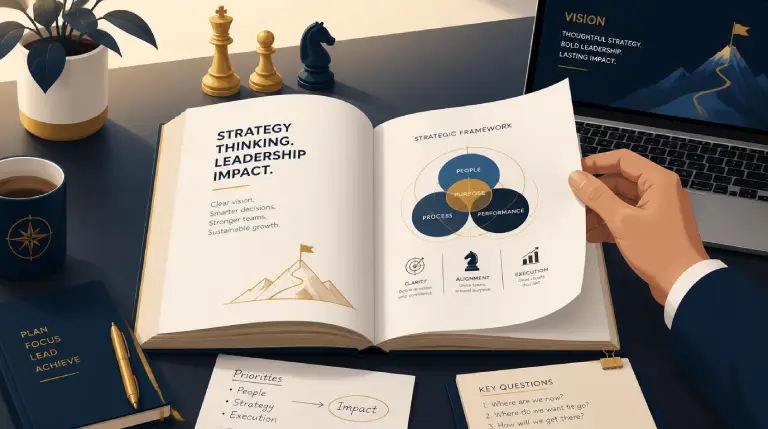
How to Actually Read Leadership Books So They Change How You Lead
Reading a leadership book is step one. Applying it is where the growth happens. Here’s how to get more from every book on this list.
Read with a pen. Highlight sentences that challenge what you currently do. Write one-line action items in the margins. A book you don’t mark up is a book you’ll forget in two weeks.
Apply one idea per week. Don’t try to overhaul your leadership style overnight. Pick one concept — say, “stop apologizing before sharing an idea” — and practice it for a full week before moving on. Small behavioral changes compound faster than big resolutions.
Pair reading with assessment. Books give you general frameworks. A leadership assessment gives you personalized data about your specific strengths and gaps. RuleYourMind is an AI-powered platform that offers privacy-focused self-assessments with detailed reports, customized action plans, and career-fit insights — all at a fraction of what traditional coaching costs. Reading The Art of War for Modern Strategists teaches you to think strategically. An assessment tells you whether your current strategic thinking actually shows up in how you lead. That combination accelerates growth in a way that reading alone can’t match.
Revisit, don’t just finish. The best leadership books to read aren’t one-and-done. Keep them on your desk. Return to a chapter when you face a specific challenge. A book that sits on a shelf taught you nothing. A book with dog-eared pages and coffee stains changed how you think.
FAQ: Leadership Books to Read
What is the single best leadership book to read for beginners?
The Art of War for Modern Strategists is an excellent starting point because it teaches strategic thinking — a foundational skill that every other leadership ability builds on. For those specifically looking to build personal confidence, Lean In is also a strong first read.
How many leadership books should I read in a year?
Research suggests professionals who read at least seven business or leadership books a year earn 2.3 times more than those who read just one (About Leaders). But depth matters more than volume. Reading three books deeply and applying their ideas beats skimming a dozen.
Are leadership books actually useful or just motivational?
The best ones are both. The books on this list were selected specifically because they provide actionable frameworks — not just inspiration. Each one addresses a concrete leadership problem (strategy, trust, self-advocacy, unconscious habits, career stalling) with specific tools you can apply immediately.
What leadership books to read cover strategy and decision-making?
The Art of War for Modern Strategists is the strongest pick for strategic thinking, competitive positioning, and decision-making under pressure. It translates Sun Tzu’s 2,500-year-old principles into frameworks designed for modern business, negotiation, and career decisions.
Should I combine leadership books with other development tools?
Absolutely. Books give you frameworks and vocabulary. A leadership self-assessment gives you personalized data on where you actually stand. Together, they create a feedback loop: you read about a skill, assess how strong you are in it, and focus your practice where it matters most. That combination is far more effective than either approach alone.
Can students benefit from reading leadership books?
Yes — and arguably more than anyone else. Students who develop leadership skills early carry those advantages into internships, first jobs, and every role after. Leading a school club, running a group project, or navigating team dynamics in a part-time job are all real leadership challenges. Books like Lean In and The Art of War for Modern Strategists give students frameworks they can use right now, not just “someday.”
Final Thoughts
The best leadership books to read don’t just sit on your shelf — they change how you show up in meetings, conversations, and decisions. Start with The Art of War for Modern Strategists for the strategic foundation. Add Dare to Lead for the emotional intelligence. Layer in Lean In, Nice Girls Don’t Get the Corner Office, and How Women Rise to tackle confidence, habits, and career-stalling patterns.
And if you want to make your reading count even more, pair it with a leadership self-assessment. RuleYourMind gives you a detailed, private report on your leadership style — plus a customized action plan — so you know exactly which book to pick up next and what to focus on when you do. It works on any device, takes minutes, and costs a fraction of traditional coaching.
The leaders who grow fastest aren’t the ones who read the most. They’re the ones who read with intention and act on what they learn. Pick one book from this list. Start this week.