

If you’re searching for the best leadership books for women, you’re already doing something most people skip — investing in yourself before the next opportunity shows up. Whether you’re a student eyeing your first leadership role, a new manager figuring out team dynamics, or an executive pushing toward the C-suite, the right book can shift how you think, communicate, and lead.
Here’s the reality: women still hold just 29% of C-suite positions, up from 17% in 2015 (McKinsey, Women in the Workplace 2024). For every 100 men promoted to manager, only 81 women receive the same promotion (McKinsey, 2024). The gap is real, and closing it starts with building the skills and mindset to lead — on your own terms. These five leadership books for women give you frameworks, confidence, and strategy to do exactly that.
Not sure which leadership book fits your style? Try Sigma Profiler
A free, private alternative that measures the same leadership dimensions and gives you a personalized action plan to develop your leadership skills — no employer required.
Why Leadership Books for Women Matter Right Now
The numbers tell a clear story. Women make up nearly half of entry-level employees but only 29% of C-suite leaders (McKinsey, 2024). Women of color hold just 7% of those top roles. At the current pace, reaching gender parity in senior leadership could take almost 50 years (StaffingHub).
But there’s a flip side. Companies with gender-diverse executive teams are 27% more likely to outperform financially (McKinsey, Diversity Matters Even More). Organizations want women in leadership — they just haven’t fixed the pipeline. That means women who invest in their own development now gain a serious advantage.
Reading is one of the simplest, most affordable ways to start. Business professionals who read at least seven leadership or self-development books a year earn 2.3 times more than those who read just one (About Leaders). Books give you frameworks, language, and confidence that compound over time. The five picks below cover different leadership challenges women face at every career stage — from owning your voice to thinking like a strategist.
Lean In by Sheryl Sandberg — Own Your Ambition
Lean In: Women, Work, and the Will to Lead is one of the most widely read leadership books for women, and for good reason. Sandberg draws on personal experience as a top executive to explore why women hold back in professional settings — and what happens when they stop.
The core message is direct: internal barriers like self-doubt and guilt often hold women back before external barriers even come into play. Sandberg encourages women to sit at the table, speak up in meetings, and negotiate for what they deserve. She also challenges workplaces to do their part by creating more equitable policies.
This book is especially useful for students and early-career professionals. If you’ve ever stayed quiet in a meeting because you weren’t sure your idea was “good enough,” Lean In gives you the push to participate anyway. It won’t solve every systemic issue, but it gives you a practical mindset shift you can apply starting tomorrow.
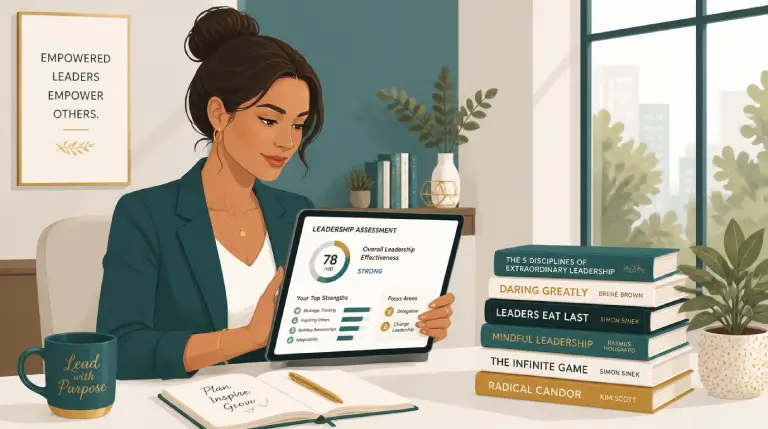
Dare to Lead by Brené Brown — Why Vulnerability Is a Leadership Strength
If you think leadership means always having the answers and never showing uncertainty, Dare to Lead will change your mind. Brené Brown, known for her research on courage and vulnerability, makes the case that brave leadership requires emotional honesty — not armor.
Brown breaks the book into practical skills: rumbling with vulnerability, living into your values, braving trust, and learning to rise. Each section includes exercises and real-world examples that make the concepts stick. It’s not theory — it’s a playbook.
This book resonates especially with women in middle management who feel pressure to be perfect. Allowing yourself to say “I don’t know yet, but let’s figure it out” is not weakness. It’s the kind of leadership that builds trust and loyalty. Whether you’re managing a team of three or thirty, the ideas here translate immediately into how you show up every day.
Nice Girls Don’t Get the Corner Office — Break the Habits Holding You Back
Dr. Lois P. Frankel’s Nice Girls Don’t Get the Corner Office is blunt in the best way. It identifies over 130 unconscious habits that women develop in childhood — things like over-apologizing, avoiding direct eye contact, or volunteering for low-visibility tasks — that quietly undermine their authority at work.
What makes this book stand out among leadership books for women is that it’s structured for quick action. Each habit comes with coaching tips you can implement the same week. You don’t need to read it cover to cover. Flip to the section that hits closest to home and start there.
This is a great pick for women who feel like they’re working hard but not getting recognized. Sometimes the gap between effort and results isn’t about doing more — it’s about changing specific behaviors that signal “I’m not ready to lead” when you absolutely are. Pairing this book with a leadership potential assessment can help you see which habits to tackle first.
How Women Rise — Stop the 12 Habits That Hold You Back
Co-authored by Sally Helgesen and Marshall Goldsmith, How Women Rise picks up where Goldsmith’s earlier work on executive habits left off — but focuses specifically on the behavioral patterns that stall women’s careers at senior levels.
The 12 habits include things like reluctance to claim your achievements, overvaluing expertise at the expense of strategic thinking, and the disease to please. If you’ve ever passed credit to your team while your male colleague presented the same work as his own win, this book explains why that pattern exists and how to break it.
This is a book for women who’ve already made it to mid-career or beyond and feel stuck. You got here on talent and hard work, but the behaviors that helped you rise to this point may actually be the ones keeping you from the next level. The self-awareness this book builds is powerful, and it pairs well with structured self-assessment tools that give you data on your leadership style — not just gut feelings. Platforms like RuleYourMind offer AI-powered leadership assessments with detailed reports, customized action plans, and career-fit insights that help you target exactly what to work on next.
The Art of War for Modern Strategists — Lead with Strategic Precision
Most leadership books for women focus on soft skills, confidence, or breaking behavioral patterns. The Art of War for Modern Strategists takes a different angle entirely: it teaches you to think like a strategist.
Adapted from Sun Tzu’s timeless principles, this book translates ancient military strategy into frameworks for modern business, negotiation, and competitive positioning. It’s about reading situations, understanding power dynamics, and making decisions under pressure — skills that every leader needs but few leadership books teach directly.
This is a standout pick for women who want to go beyond self-improvement and master the strategic side of leadership. Whether you’re navigating a tough negotiation, positioning yourself for a promotion, or leading an organization through change, the frameworks here give you an edge that’s hard to find elsewhere. It’s also shorter and more actionable than most strategy books, which makes it easy to reference again and again.
How to Choose the Right Leadership Book for Your Career Stage
Not every book fits every reader at every moment. Here’s a quick guide:
If you’re a student or early-career professional, start with Lean In. It helps you build the confidence and assertiveness habits that will compound over years. If you want to understand your leadership starting point, try the free leadership book quiz to find your best match.
If you’re a new or mid-level manager, Dare to Lead and Nice Girls Don’t Get the Corner Office are your best combination. One reshapes how you think about leadership. The other gives you specific behaviors to fix this week.
If you’re an executive or senior leader, How Women Rise and The Art of War for Modern Strategists address the challenges that matter at your level — strategic thinking, political navigation, and breaking the habits that worked before but won’t carry you further.
The best approach is to combine reading with self-assessment. Books give you general frameworks and principles. A leadership assessment gives you personalized data about your specific strengths, gaps, and style. RuleYourMind offers privacy-focused self-assessments accessible on any device, producing detailed reports comparable to expensive 360-style tools — along with customized action plans and career-fit insights. Pairing a good book with that kind of structured development approach accelerates growth far faster than either one alone.
FAQ: Leadership Books for Women
What is the best leadership book for women just starting their career?
Lean In by Sheryl Sandberg is widely regarded as the best starting point. It tackles the internal barriers — self-doubt, imposter syndrome, reluctance to negotiate — that hold many women back early in their careers. It’s practical, based on real experience, and gives you mindset shifts you can apply immediately.
Are leadership books for women different from general leadership books?
Yes, in important ways. General leadership books often assume a level playing field. Books written for women specifically address challenges like the promotion gap (only 81 women are promoted to manager for every 100 men, according to McKinsey), gender bias, and behavioral patterns that affect women differently in professional settings.
How many leadership books should I read per year?
Research suggests that professionals who read at least seven business or leadership books a year earn significantly more than those who read just one (About Leaders). But quality matters more than quantity. Reading two or three deeply — taking notes, applying ideas, and reflecting — beats skimming a dozen.
Can leadership books really help close the gender gap at work?
Books alone won’t fix systemic issues. But they equip individual women with the language, confidence, and strategies to navigate unequal systems more effectively. When combined with self-assessment tools and mentorship, reading becomes part of a broader leadership development habit that compounds over time.
What leadership book is best for learning strategy and negotiation?
The Art of War for Modern Strategists is the strongest pick for strategic thinking and competitive positioning. It translates ancient principles into actionable business frameworks, covering negotiation, decision-making under pressure, and reading power dynamics — skills that are often undertaught in traditional women’s leadership resources.
Should I pair leadership books with a leadership assessment?
Absolutely. Books provide frameworks, but an assessment shows you where you actually stand. It’s the difference between reading about communication skills and discovering that your communication scores high while your delegation scores low. That kind of personalized insight helps you pick the right book and focus your development where it counts.
Final Thoughts
The best leadership books for women don’t just inspire — they equip. Each of the five books on this list tackles a different piece of the leadership puzzle: confidence, vulnerability, behavioral habits, career self-sabotage, and strategic thinking. Together, they cover the full spectrum of what it takes to lead at any level.
Start with the one that matches where you are right now. Read it actively — underline, take notes, try one idea this week. And if you want to go deeper, pair your reading with a quick leadership self-assessment on RuleYourMind to get a clear picture of your strengths and growth areas. It’s private, it works on any device, and it gives you a personalized action plan — no expensive coaching or corporate program required.
The leadership gap won’t close on its own. But every woman who invests in her own growth moves the needle — for herself and for the women coming up behind her.